
Image

This website uses cookies to understand how you use the website and to improve your experience. By continuing to use the website, you accept the University of New England’s use of cookies and similar technologies. To learn more about our use of cookies and how to manage your browser cookie settings, please review our Privacy Notice.
For University of New England student Isabel Ryan, a summer research project in eastern Maine began months before she ever collected data.
It began with a conversation.
Ryan (’27), an environmental science major and public health minor, was interested in studying the connections between environmental change and human health. But before deciding what her research would examine, she and faculty mentor Sarah Ebel, Ph.D., met with the Sipayik Environmental Department of the Passamaquoddy Tribe to ask what kind of research would actually be useful to the community.
“I think a lot of times in research, it’s like, ‘I’m just going to research this, and it’ll be all good. I can publish,’” Ryan said. “But with working with the Tribe, it’s a little bit different. You have to really consider their needs and what their interests are.”
Those conversations, which began in December, developed into a Summer Undergraduate Research Experience (SURE) through UNE’s College of Arts and Sciences. Ryan spent the summer living near Sipayik, also known as the Pleasant Point Passamaquoddy Reservation, and working alongside the environmental department to develop an environmental needs assessment grounded in the One Health framework, which recognizes the interconnected health of people, animals, and the environment.
Ryan conducted six semi-structured interviews with Passamaquoddy Tribal members to inform the assessment. Because the findings belong to the Tribe and are not intended for publication, she is not sharing the results publicly. Instead, her work will return directly to the community as a resource identifying environmental priorities and potential areas for future action.
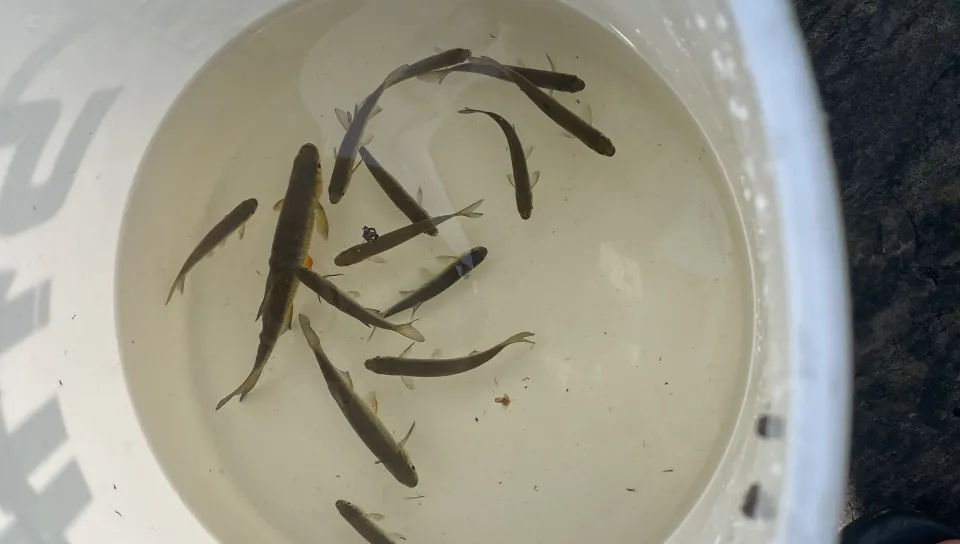
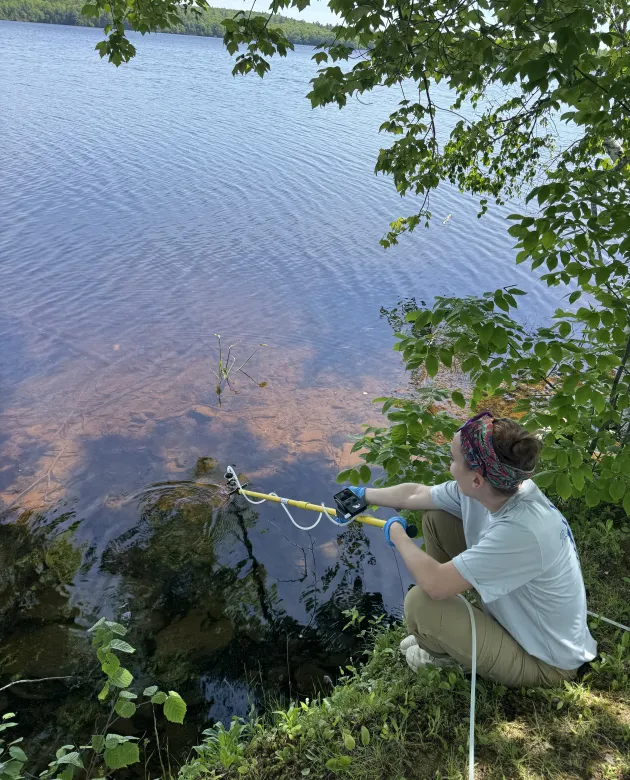
All onsite photos courtesy of Isabel Ryan
That approach was fundamental to the project, Ebel said.
“Isabel initiated a collaboration with the Passamaquoddy Tribe to co-define her research question and project to make sure it would be one that serves the Tribal community,” said Ebel, an assistant professor in UNE’s School of Marine and Environmental Programs. “The importance of taking this approach to research with communities can’t be understated, since scholarship should also serve the communities with whom we work.”
Research Rooted in Relationships
For Ryan, completing the assessment also meant becoming part of the environmental department’s day-to-day work. She relocated to the area for the summer because, she said, “it’s really hard to get to know a community when you’re not there.”
Alongside her own research, Ryan assisted with eel surveys, environmental DNA collection, and alewife otolith studies. The work gave her new experience with aquatic species and field research while allowing her to see connections between environmental and human health that can be difficult to understand in a classroom.
“Working with them on animal health, which is part of the One Health framework, really helped inform how animal health is interconnected to human health and environmental health,” she said. “Sometimes it’s hard to see that unless you’re out there in the field and seeing that in real life.”
It also reinforced Ryan’s interest in environmental justice and community health while reshaping how she thinks about working with communities.
“You really have to establish communication and relationships with the community you’re working in,” she said. “It takes a lot of time and effort and patience to build those relationships.”
Ryan said that consideration is especially important when conducting research with Indigenous communities, which have historically experienced research that extracted knowledge and data without adequately involving or benefiting the people being studied.
Her project deliberately takes a different approach.
“I’m not publishing this research. I’m not sharing my data,” Ryan said. “It’s going back to the Tribe because that’s what they wanted to have happen, and I totally respect that.”
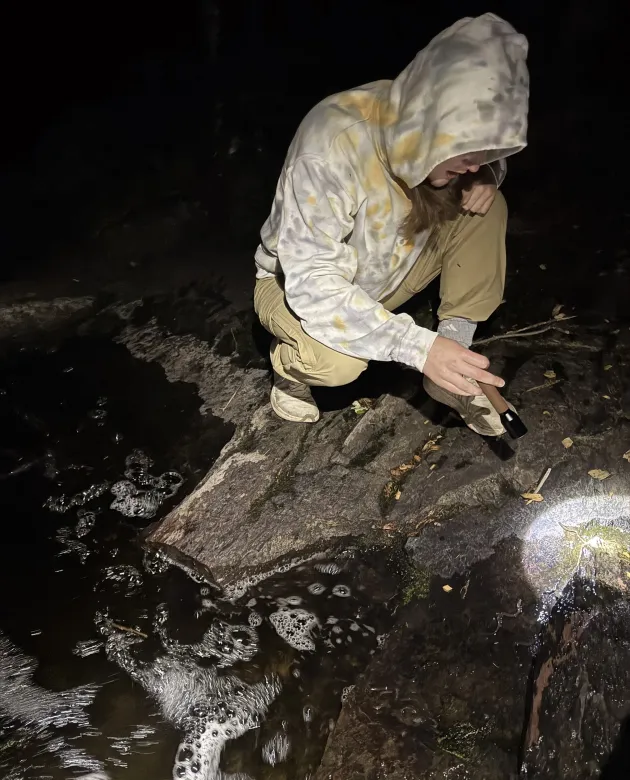
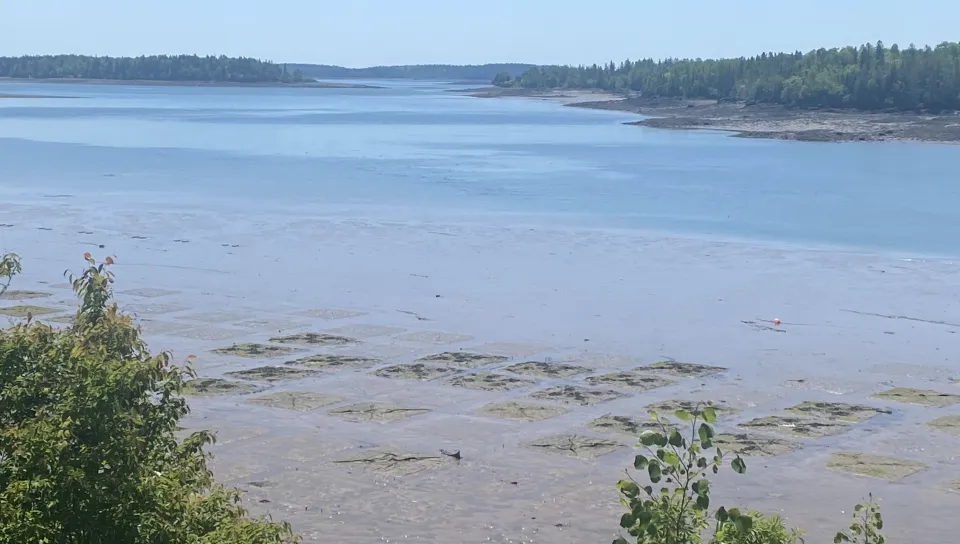
Ryan first became interested in pursuing the project through Ebel’s Indigenous Ecology course, where Ebel encouraged students to think beyond the classroom and consider potential research opportunities. Ryan approached her about developing a project, and the two began working together in the fall.
Ebel helped her learn the mechanics of conducting research, from designing semi-structured interviews to thinking through the eventual community workshop. For Ryan, who had never conducted research before, having a faculty mentor with whom she could regularly test ideas proved invaluable.
“Our professors are really invested in their students,” Ryan said. “We get opportunities to go out in the field more than I think most students do if they’re at a bigger school.”
That access, she said, has allowed her to pursue interests that span disciplines and develop skills through experiences she could not replicate in a classroom.
“There are so many things I’ve learned in the summer from actually being in a community and understanding their needs,” she said. “You have to really be out there and see people in real life going through their everyday life and what their struggles are and what they are looking for.”
Carrying the Work Forward
Ryan’s work will continue this academic year through UNE’s Shaw Innovation Fellowship. Her project, “Sipayik One Health Assessment: Community, Land, and Water,” brings together human health, planetary health, and impact storytelling. Through the fellowship, she plans to complete the environmental needs assessment and return to Sipayik for a workshop informed by what she learned through the interviews.
Ryan, who will graduate next May, is also considering applying for a Fulbright scholarship and hopes to pursue work involving environmental justice and community health.
Whatever form that work takes, her summer at Sipayik has given her a clearer sense of how she wants to approach it.
“You want to find that place that really draws you in and stick with that community and try to create some change for them,” she said.