
Image

This website uses cookies to understand how you use the website and to improve your experience. By continuing to use the website, you accept the University of New England’s use of cookies and similar technologies. To learn more about our use of cookies and how to manage your browser cookie settings, please review our Privacy Notice.
“The history of humanity also includes the history of women across millennia.”
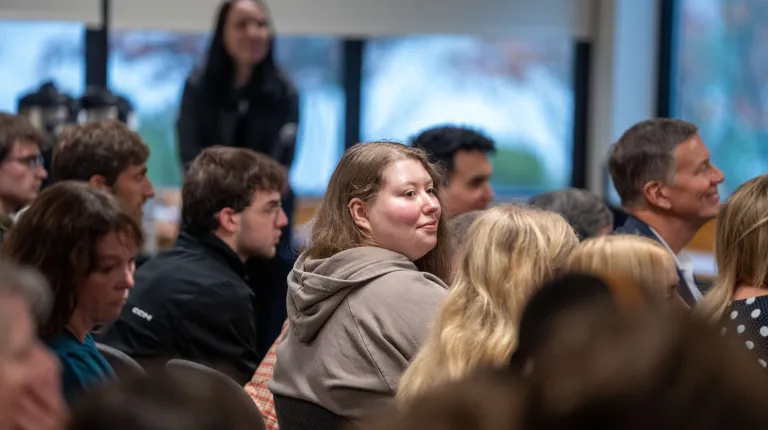
Those words appeared on the screen as Wolastoqey (Maliseet) elder, poet, and knowledge keeper Mihku Paul began her presentation at the University of New England’s 18th annual Donna M. Loring Lecture on Friday, Oct. 16, setting the stage for an exploration of women’s accomplishments throughout history and the enduring struggle to have their contributions recognized.
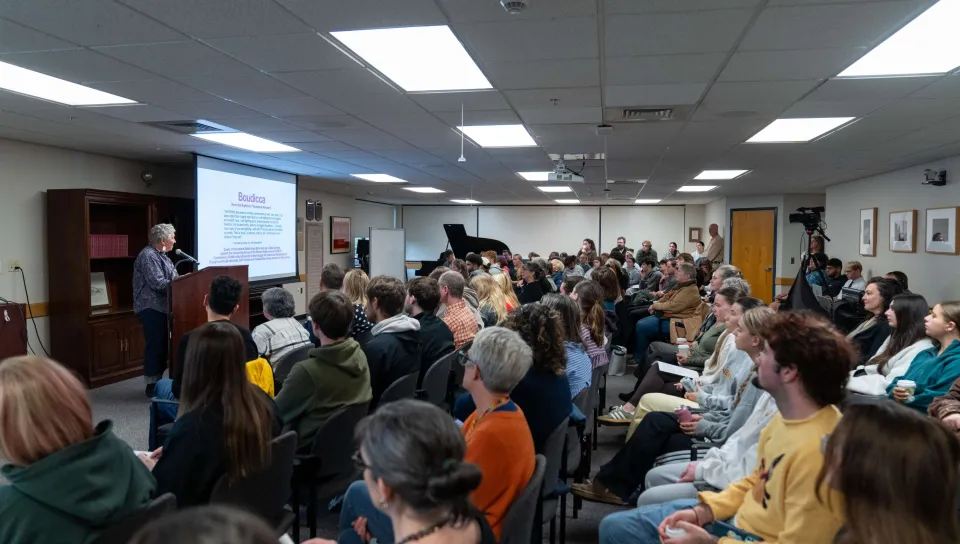
From Cleopatra, the formidable ruler of ancient Egypt, to Boudica, the Celtic warrior queen who challenged the Roman Empire, Paul traced the influence of women whose intelligence, leadership, and courage helped shape civilizations, often despite societies that sought to diminish their power.
But the lecture, titled “Psite ehpicik kcipokehtuwannuk: We Honor All Women,” was about more than celebrating historical achievements. It also served as a solemn reminder of the work still to be done to advance women's rights and ensure their stories are neither forgotten nor excluded from the historical record.
“We're here today to talk about human rights, and we're going to look at human rights through the lens of women's rights,” Paul told attendees gathered in the St. Francis Room of UNE's Jack S. Ketchum Library.
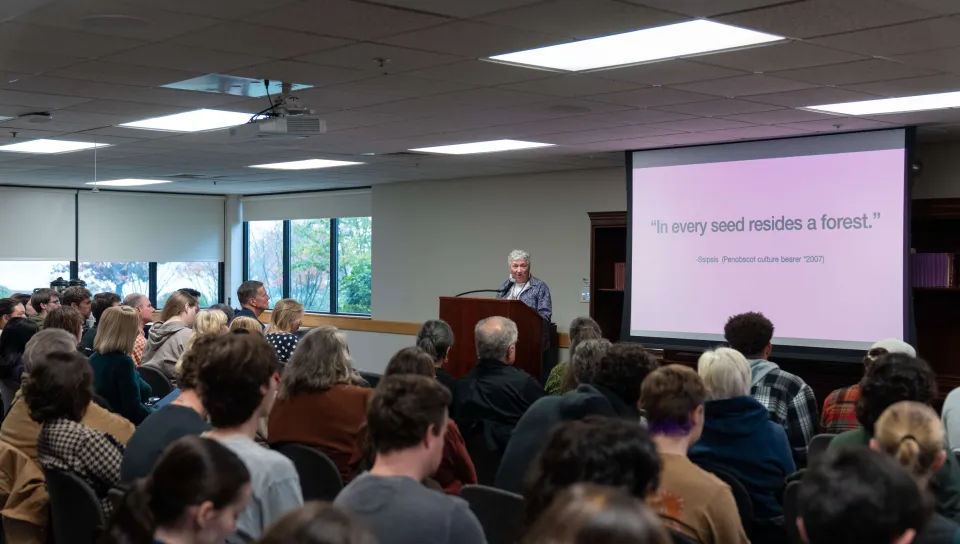
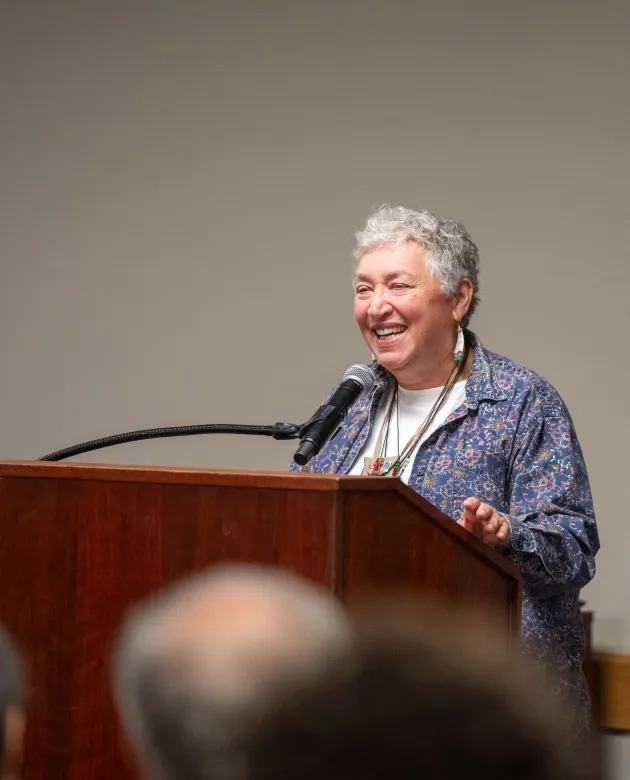
Presented by UNE's Maine Women Writers Collection, the lecture brought that global conversation closer to home, examining the often-overlooked achievements of Wabanaki women and the importance of making their stories accessible to future generations.
Paul reflected on her own upbringing, sharing how her mother, a single parent who earned her high school diploma at age 36, modeled resilience and determination in the face of hardship. Paul herself became the first in her family to graduate from high school, earn a bachelor's degree, and complete a terminal arts degree.
“My mother was a role model for tenacity and survival,” she said. “Like many Indigenous women, she ensured that I had the skills and the outlook necessary to thrive in the struggle that she knew awaited me out in the world.”
That experience informed Paul's vision for “Profiles of Waponahki Women,” a proposed collaborative project to document and celebrate Indigenous women's contributions across generations.
Envisioned as a digital resource, with the possibility of a limited print publication, the project would bring together community members, historians, students, and researchers to preserve stories of Wabanaki women whose accomplishments span the arts, sciences, education, public service, and cultural leadership.
Paul introduced several women whose lives exemplify that legacy, including Passamaquoddy artist and healer Mary Mitchell Selmore; Mi'kmaq poet Rita Joe, whose writing explored Indigenous identity and the trauma of residential schools; Penobscot World War II veteran Mary Theresa Patty Nelson Johnson; and Clarissa Sabattis, chief of the Houlton Band of Maliseet Indians.
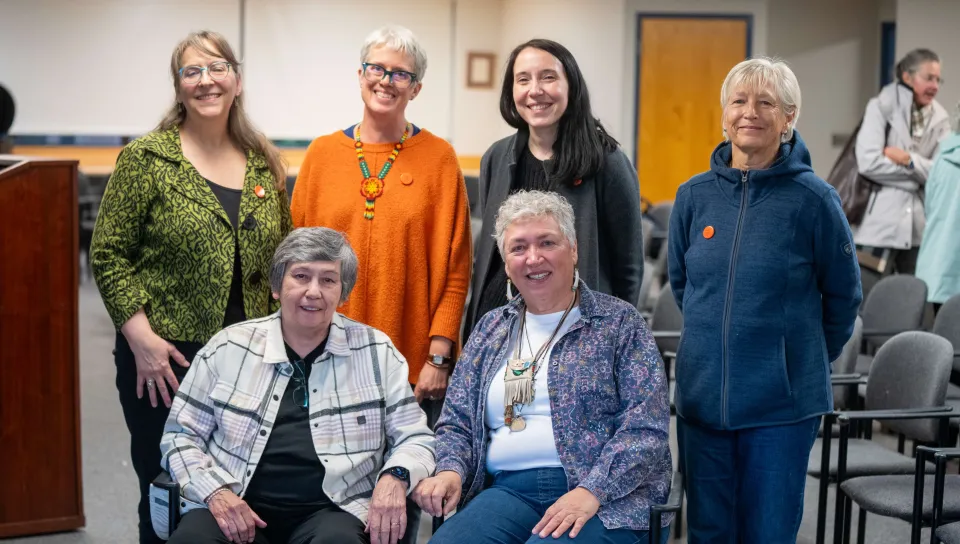
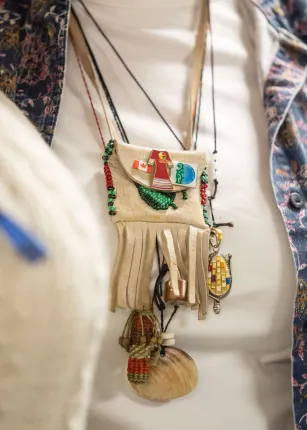
Together, their stories illustrated the breadth of Indigenous women's contributions and the importance of recognizing leadership that has too often gone undocumented or unacknowledged.
“Indigenous women deserve every respect, every opportunity to thrive,” Paul said. “We're already accomplished in survival. Our girls and young women must be provided with support for self-esteem, educational access at all levels, and recognition of their achievements.”
The proposed project exemplifies UNE's commitment to planetary health, advanced through interdisciplinary learning, research, and community engagement. As a humanities-centered approach to understanding health and well-being, storytelling plays an important role in preserving cultural identity, honoring lived experiences, and strengthening the relationships between people and the places they call home, a sentiment echoed by Paul and the Hon. Donna M. Loring, who attended and spoke at her namesake event.
Such work also offers opportunities for UNE students to engage directly with communities, learn from Indigenous knowledge keepers, and better understand how cultural preservation, history, and community well-being are connected, said Jennifer Tuttle, Ph.D., director of the Maine Women Writers Collection and UNE's Dorothy M. Healy Professor of Literature and Health.
Tuttle said such hands-on experiences reinforce the importance of approaching scholarship through listening, mutual respect, and recognition of the knowledge held within communities themselves. She also connected those themes to the University's location along the Saco River and its responsibility to the Indigenous histories embedded in the surrounding landscape.
“We pursue research that depends upon (the river). But those waters hold what our speaker, Mihku Paul, calls ‘ancestral memory,’” Tuttle said. “We're grateful that the Donna M. Loring Lecture has helped to create a space for listening and learning and healing and remembering.”
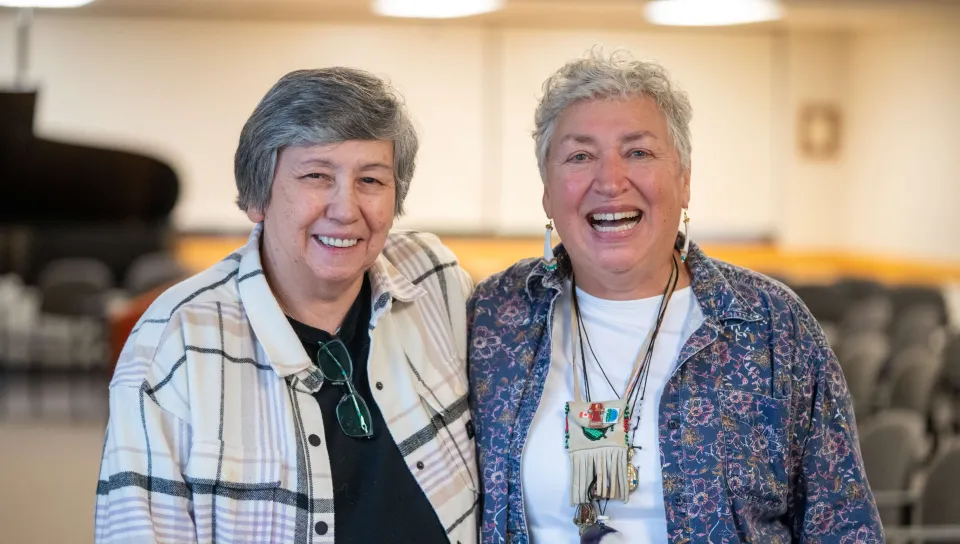
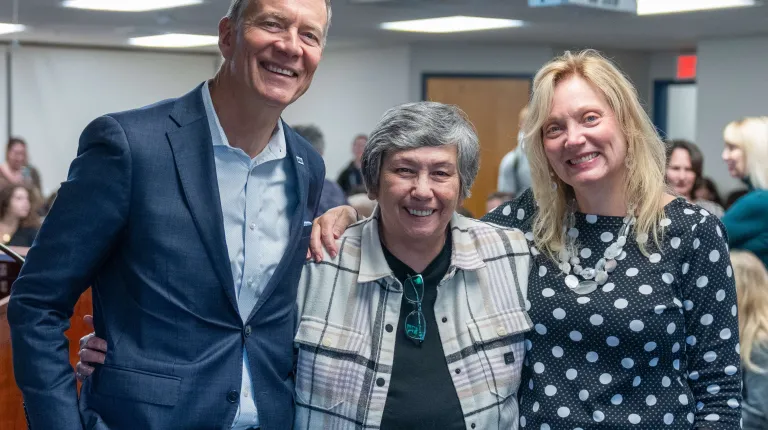
Held for the first time as part of UNE's Homecoming and Family Weekend, the free, public lecture also reflected the University's longstanding commitment to welcoming its neighbors to campus for opportunities to learn, exchange ideas, and deepen connections with the region's history and communities.
As part of this commitment, The Maine Women Writers Collection announced at the lecture that it is the new home of Paul’s papers, furthering its work to preserve a more inclusive and representative record of our region’s literary and cultural history.
The Maine Women Writers Collection, which also houses Loring’s papers, provides another avenue for students, scholars, and members of the public to engage with Indigenous literary and cultural history. The annual lecture, established in partnership with Loring in 2009, has become an important forum for discussions of Indigenous rights, social justice, and equity.
Paul concluded her presentation with an original poem written for the occasion, titled “We Are Not Things,” a reflection on the expectations and limitations imposed upon women and their determination to claim their identities and humanity.
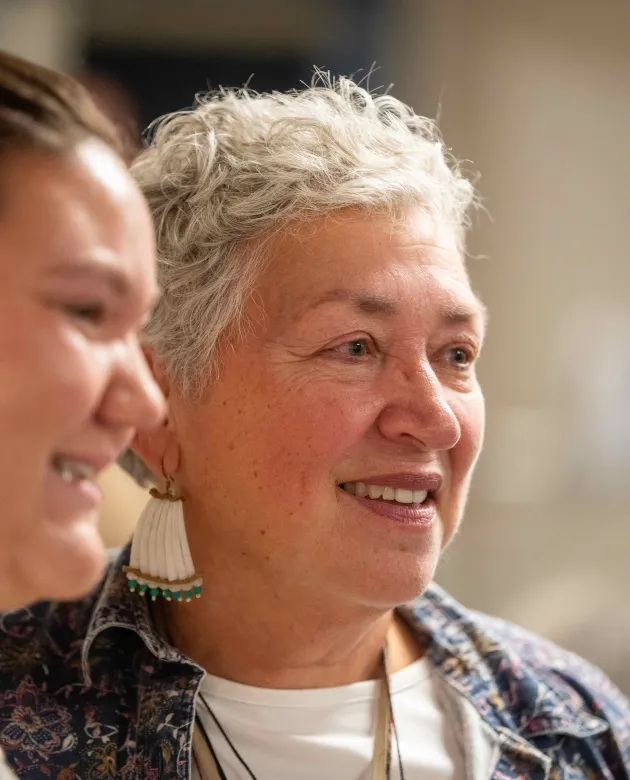
Maliseet elder, poet, and knowledge keeper Mihku Paul delivers UNE’s 18th annual Donna M. Loring Lecture on Friday, Oct. 16, 2026, in which she explores women’s accomplishments throughout history and the enduring struggle to have their contributions recognized.
The poem offered a fitting conclusion to a lecture exploring both the burdens women have carried and the extraordinary lives they have built despite them. It also reinforced the importance of ensuring that Indigenous women can tell their own stories, on their own terms, and have those stories preserved for the generations that follow.
That message was echoed by Loring, a Penobscot Nation elder and longtime advocate for Wabanaki people, who spoke about the historical exclusion of Indigenous perspectives from the American narrative and the power of storytelling to preserve identity and cultural memory.
“For generations, others have written our story, interpreted our actions, and defined who we are, often without listening to our voices,” Loring said.
“That is why our storytellers, historians, elders, writers, and young people are so important. They are preserving something that no government, no law, and no textbook has ever been able to completely erase: our memory of who we are. And that is why events like this matter.”