
Faculty, students learn from Wounded Warrior Project’s first Maine roundtable on UNE’s Portland Campus
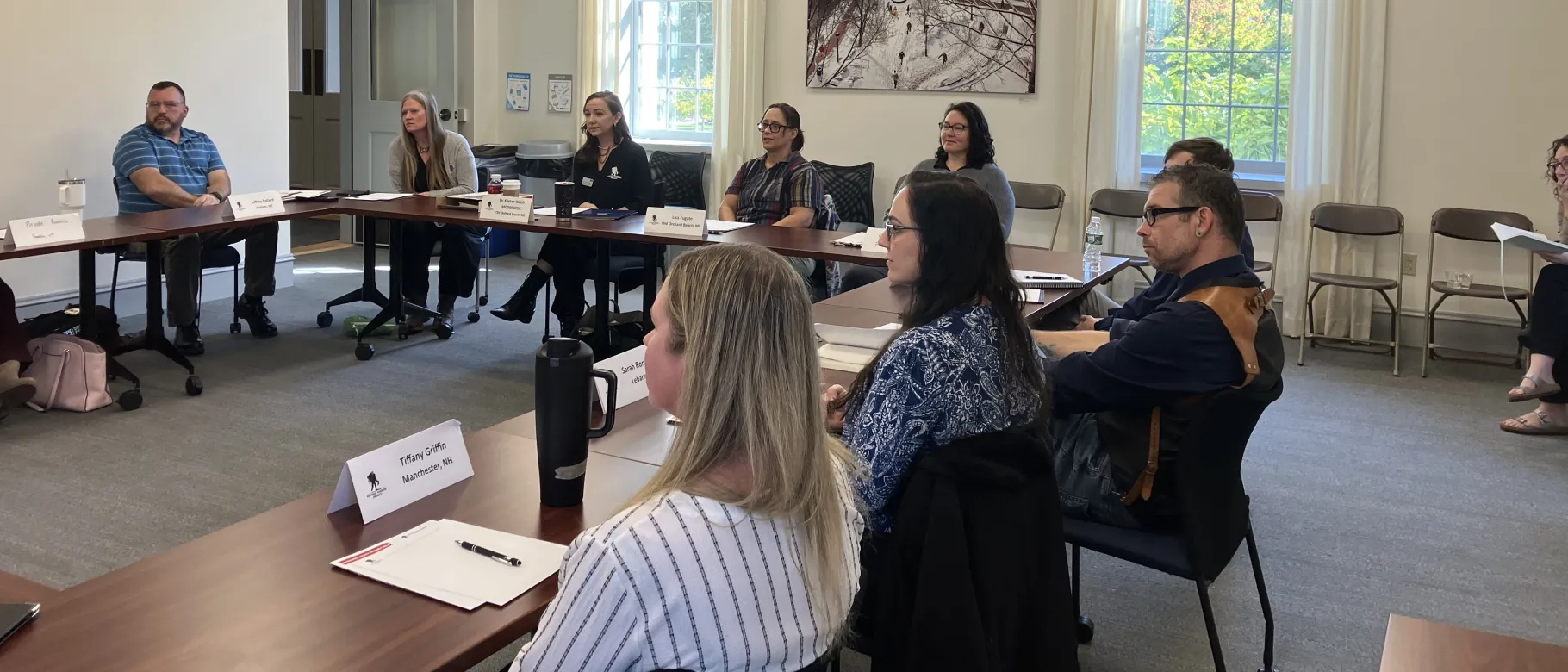
The University of New England hosted Wounded Warrior Project’s first-ever “Warrior Roundtable” in Maine on Wednesday, Oct. 7, bringing together a dozen veterans on the UNE Portland Campus for the Health Sciences for a discussion on the challenges, experiences, and issues faced by veterans today.
The event, organized and moderated by Kirsten Walsh, Ph.D, director of UNE’s undergraduate Social Work program, welcomed UNE faculty and students studying social work to listen and learn about the layered health struggles veterans face in an often-fragmented healthcare system.
Wounded Warrior Project, which serves more than 300,000 veterans and their families, provides programming and advocacy support to veterans and has held Warrior Roundtables since 2023. The event in Alumni Hall marked the organization’s first government affairs-focused roundtable held in Maine and also was attended by representatives from Sen. Susan Collins and Sen. Angus King’s offices.
Walsh, a U.S. Navy veteran who previously worked for Wounded Warrior Project, said it was the first such veteran-focused program she hopes to bring to UNE.
“There are an estimated 104,000 veterans in the state of Maine. And the population experiences unique struggles, such as accessing appropriate care for service-connected issues, navigating benefits and support, and recognition in the community,” Walsh said.
Brooke Rainville (Social Work, ’28), said it was valuable to hear first-hand from veterans about the challenges they face navigating a health care system that is often disconnected and marred by a lack of communication between providers.
On UNE’s Portland Campus for the Health Sciences, future healthcare providers are taught through interprofessional education programs and simulations that bring together students from different health care disciplines to learn interdisciplinary care.
Dr. Walsh, our professor, we look up to her a lot, and she's doing amazing things. And she gave us the opportunity to come to this. It’s important to gain a better perspective on things we don't know about.” — Brooke Rainville (Social Work, ’28)
Hearing the stories of how veterans struggle when they don’t experience this kind of coordinated care made an impact, Rainville said.
“It was good to hear the perspectives of people from different branches of the military," said Rainville, who is minoring in public health, psychology, and mental rehabilitation. “Dr. Walsh, our professor, we look up to her a lot, and she's doing amazing things. And she gave us the opportunity to come to this. It’s important to gain a better perspective on things we don't know about.”
The veterans were frank and detailed in their stories of trying to navigate health care services at Veteran Affairs Hospitals in Maine and New England. One veteran from central Maine shared a personal account of the trauma she faced after the Lewiston shootings, the largest mass shooting in Maine history.
Jennifer O’Neil, Ph.D., director of the UNE School of Social Work and associate dean in the College of Professional Studies, which oversees UNE’s Master of Social Work and Doctor of Social Work programs, welcomed the veterans and said she looked forward to Walsh bringing more of these kinds of results-oriented programs to UNE.
As Maine’s top educator of health care professionals, UNE exposes students in an array of healthcare fields with underserved communities through volunteer work, internships, and unique programs held on campus, like the Wounded Warrior Project’s roundtable, to help prepare the workforce needed to serve the state.
“This is such an important conversation … (and) we're grateful to Wounded Warrior Project for coming to campus to facilitate this conversation,” O’Neill said. “Thank you for being here.”
Junior Grace Riva (Criminology and Educational Studies, ’28) was impressed by how the veterans openly shared their medical journeys with each other, including stories of both the mental and physical healthcare they need.
“You see everything that goes on through TV or social media. And we’re learning about these experiences in class," said Riva, who is minoring in social work. “It’s nice to actually see real people talk about it and work through problems that they’re dealing with and see how those discussions go up the chain to policy makers.
As a social worker, you’re advocating for people who you need to help,” Riva added. “You want to make sure that they get the care they need.”
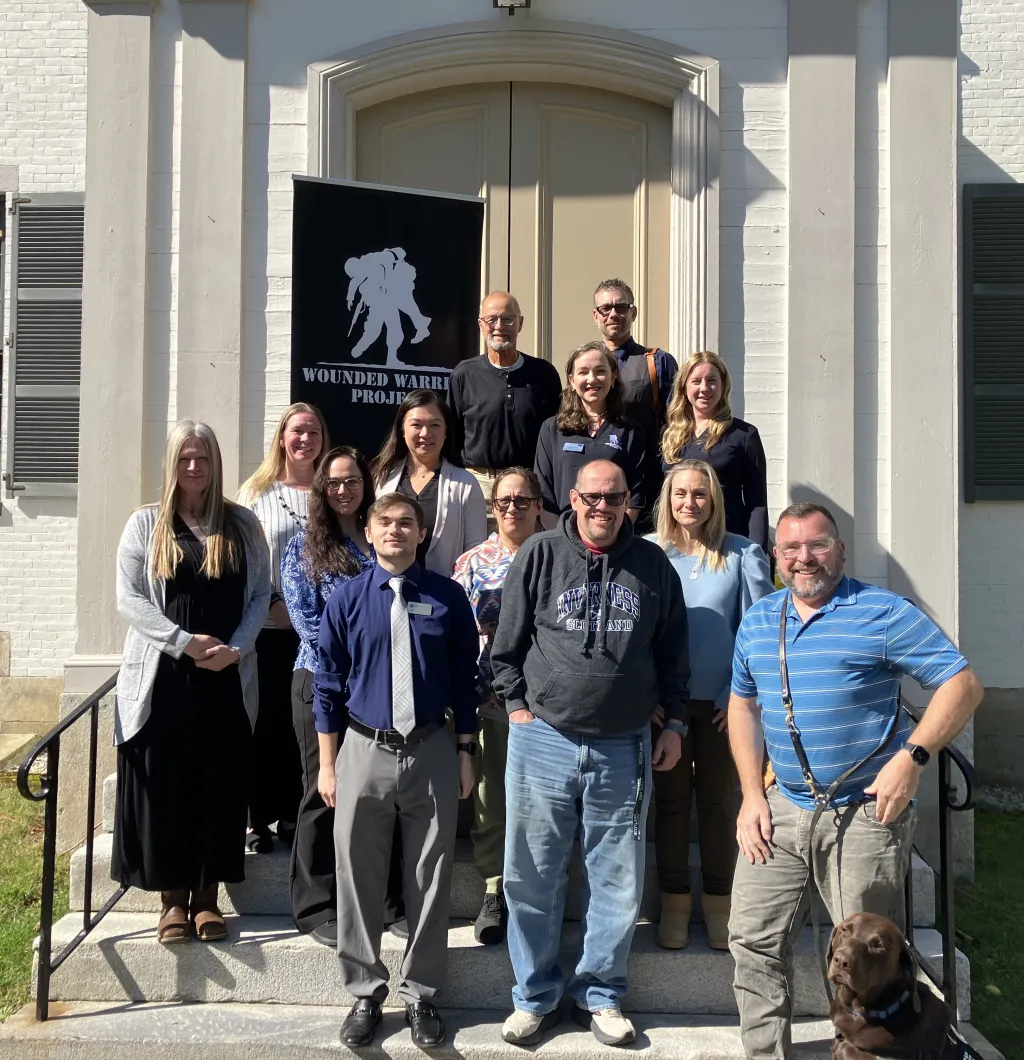
Veterans from across Maine joined the conversation.