
First Nations poet Mihku Paul to honor Wabanaki women at UNE’s annual Donna M. Loring Lecture
The Wolastoqey elder, writer, and knowledge keeper will explore a proposed collaborative project documenting the contributions of Wabanaki women
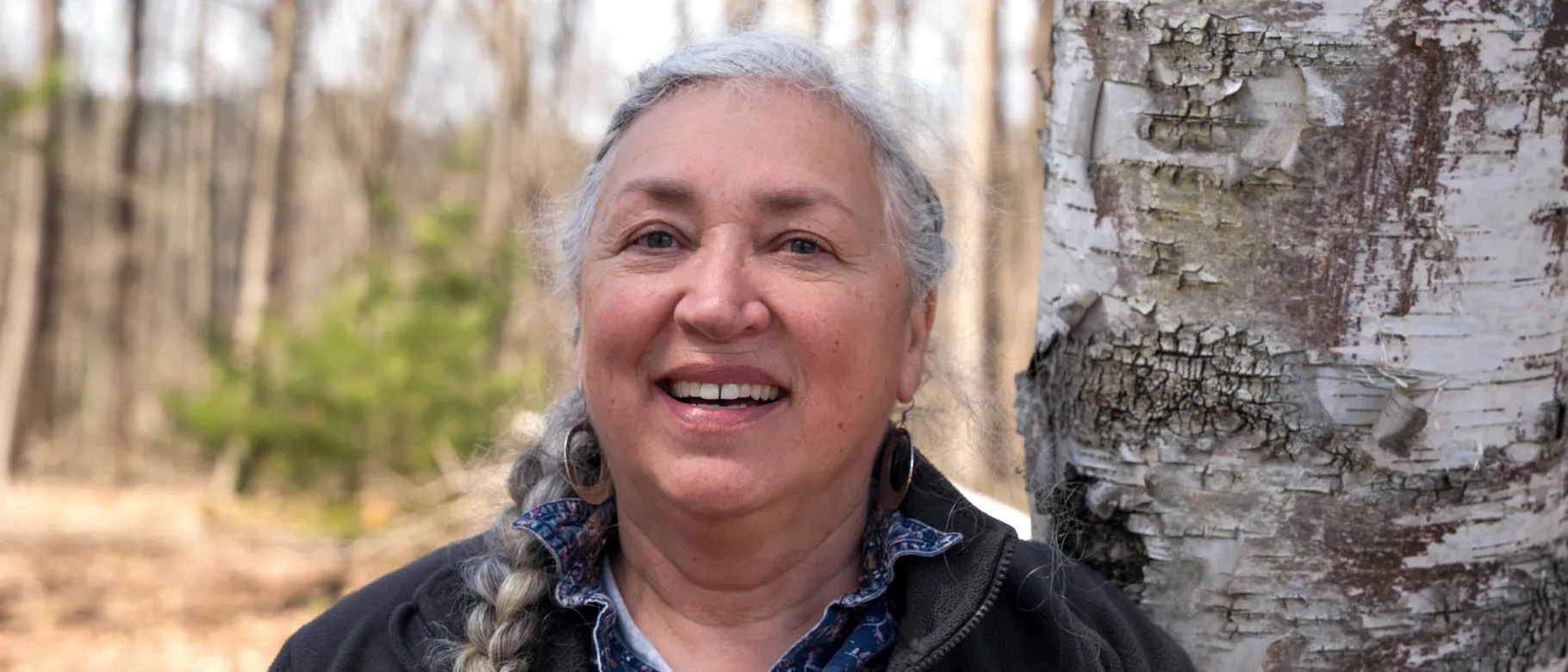
Photo courtesy of the Nature Based Education Consortium
Here in the Dawnland, Waponahki (Wabanaki) women have shaped their communities and advanced social, political, educational, and artistic life across Maine and beyond — but their contributions often go unnoticed.
To honor these women, and all women, in a continuing movement to maintain equity within the changing landscape of American society, the University of New England this month will welcome Wolastoqey (Maliseet) elder, writer, and knowledge keeper Mihku Paul to explore how those contributions can be more fully recognized, documented, and shared as she delivers UNE’s 18th annual Donna M. Loring Lecture, “Psite ehpicik kcipokehtuwannuk: We Honor All Women,” on Friday, Oct. 16.
Presented by UNE’s Maine Women Writers Collection, the event will take place from 2 to 3:30 p.m. in the St. Francis Room of Jack S. Ketchum Library on UNE’s Biddeford Campus and will also be livestreamed at une.edu/live. It is free and open to the public and is being offered for the first time this year as part of UNE’s Homecoming and Family Weekend.
Light refreshments will be served.
During the lecture, Paul will introduce her vision for “Profiles of Waponahki Women,” a proposed collaborative project that would bring together community members, students, historians, and others to highlight the achievements of Wabanaki women and create new opportunities for learning and dialogue.
Paul will also share a poem written especially for the occasion.
Jennifer Tuttle, Ph.D., Dorothy M. Healy Professor of Literature and Health and director of the Maine Women Writers Collection, said Paul’s proposed project offers opportunities for UNE students and faculty across disciplines to participate in preserving and sharing Indigenous history.
“This exciting opportunity gives UNE students and the broader community a chance to be a part of an effort that is in keeping with one of the annual Donna M. Loring Lecture’s main goals: to document, preserve, and uplift Indigenous voices, especially given that we reside on Native land,” Tuttle said. “A lot of students and faculty are interested in Indigenous history, museum studies, archives, and oral history. We hope this event will spark conversations about ways UNE students and the public can contribute to enhanced knowledge about the contributions of Wabanaki women and Indigenous cultures in the region.”
Paul is the executive editor and archivist of Dawnland Voices 2.0, an online journal dedicated to Indigenous literature in Northern New England. Raised along the Penobscot River, her family comes from Kingsclear First Nation in New Brunswick. She is the author of the poetry collection “20th Century PowWow Playland” and is also a food sovereignty grower and consultant, artist, and beadworker.
The Maine Women Writers Collection is also the new home of Paul’s papers, furthering its work to preserve a more inclusive and representative record of our region’s literary and cultural history.
“Women are essential members of their communities, but their contributions have not been fully appreciated and their voices not always heard,” Tuttle said. “It is vital that Indigenous women be part of that story. The collections of Donna Loring and Mihku Paul, two people who have had and continue to have such a wide-ranging impact in Maine and beyond, also create deeply meaningful learning opportunities for UNE students and our broader community of researchers.”
Sarah Baker, M.A., M.L.I.S., curator of the Maine Women Writers Collection, said incorporating the lecture into Homecoming and Family Weekend reflects an effort to welcome an even broader audience while maintaining a tradition that has become an important part of the collection’s work.
“For nearly two decades, the Donna M. Loring Lecture has created opportunities for learning, dialogue, and reflection around Indigenous rights, social justice, and issues of equity,” Baker said. “We’re grateful to continue that tradition while making this year’s program especially welcoming to students, families, and members of the wider community through sharing it as part of Homecoming.”
The Donna M. Loring Lecture was established with the Honorable Donna M. Loring, Penobscot Nation elder, former senior advisor on Tribal Affairs to Maine’s executive branch, and longtime advocate for Wabanaki people. The annual event addresses Indigenous rights alongside women’s issues, civil rights, fairness, and equality as they overlap with the concerns of Tribal peoples.
In 2009, Loring entrusted UNE and the Maine Women Writers Collection with her personal, professional, and literary papers and worked with the University to establish the lecture series.
For more information about this year’s lecture, visit the Maine Women Writers Collection.