New UNE research suggests no-cost educational resources enhance learning, accessibility in dental education
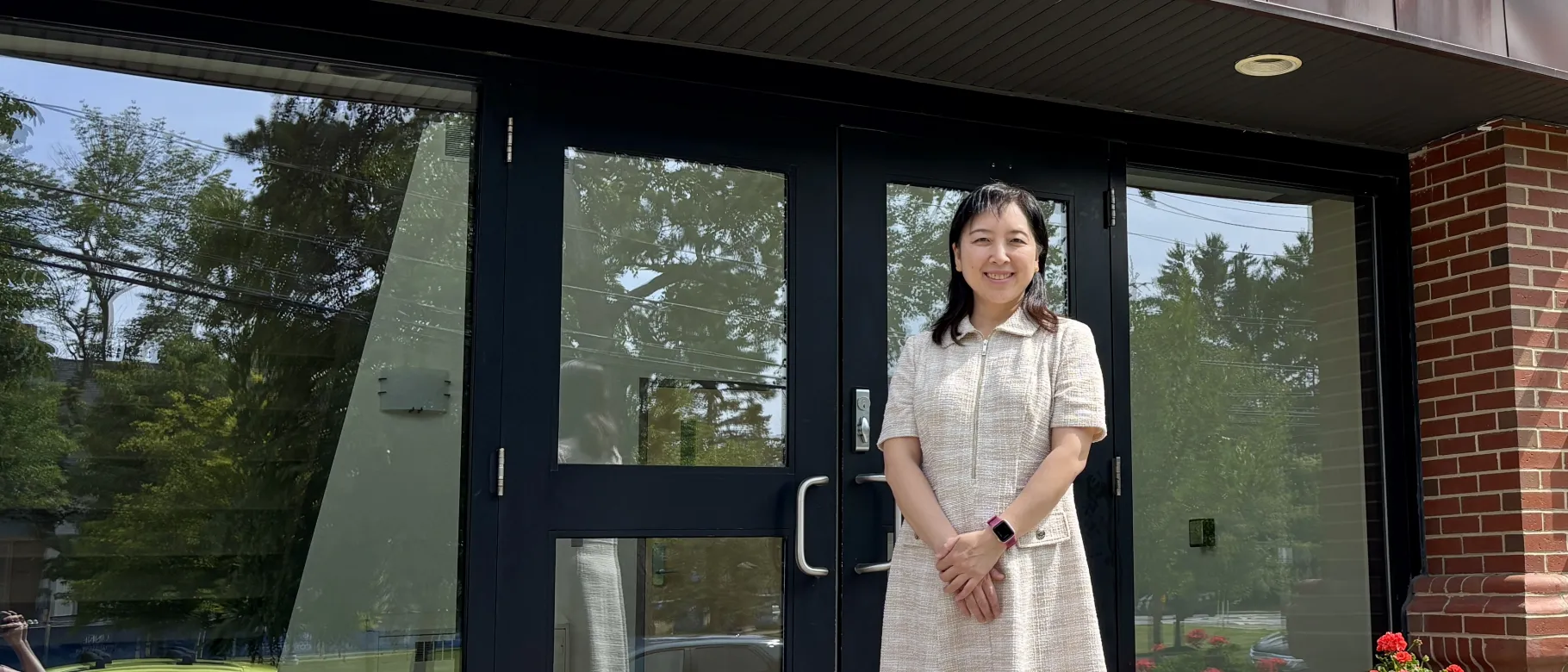
In what is believed to be the first study of its kind, new research conducted by University of New England Clinical Professor Yang Kang, B.Med., Ph.D., suggests the use of open educational resources (OER) in dental education can reduce cost barriers and increase learning among dental students.
Using a $5,000 mini-grant from the Davis Educational Foundation, Kang studied the impact and effectiveness of OER on student learning outcomes in her course on dental clinical research education, Foundations of Patient Care 2, and found strong evidence that OER can contribute to greater accessibility in the classroom. The mini-grant came from a three-year $80,000 Davis grant that UNE Library Services administered and the University’s OER steering committee coordinated.
Kang highlighted the study’s big takeaway: Students are more interested in pursuing research when education around it is made more accessible to them.
“This was a very good example of how to encourage student interest in research by reducing the cost of that. This can be applied more broadly to all healthcare professions, if they have open textbooks available to them,” said Kang, chair of the Department of Restorative and Clinical Sciences in the College of Dental Medicine.
“I truly want to support equity and be part of making a positive difference. Now with OER it feels like we can give the students with limited financial resources greater equity and, with that, more opportunities to learn,” she said, excited by the findings.
The cost of course materials has increased over the past decade, a trend that has exacerbated educational inequities. OER has offered a viable solution, but Kang said little research has been done looking at graduate-level programs using OER in dental education, leaving gaps in the understanding of how OER impacts student learning in dental schools.
In her study, Kang observed and surveyed two cohorts of first-year dental students — one that used OER resources in dental clinical research education in the 2025-2026 academic year and another cohort from the 2023-2024 academic year that used digital e-books issued to every UNE dental student through VitalSource and UNE Library Services.
Specifically, Kang looked at whether OER helped improve students’ literature-review skills.
She reported that the first-year dental students from this past academic year who used OER showed especially strong gains in some regards, including in searching medical databases.
Moreover, the survey in 2025-2026 academic year overwhelmingly supported the use of OER, with 64% of students agreeing that the OER resources were accessible, 67% saying they supported learning, and 78% reporting that the OER textbook prompted critical thinking.
As many as 87% of students surveyed said they would like to use OER in future courses.
Kang noted that several UNE colleagues assisted and encouraged her research around OER.
Beth Dyer, M.L.I.S., M.S.Ed., A.H.I.P, dean of UNE Library Services, helped Kang find online resources that could be applied to her teaching; Sonya M. Durney, Ph.D., M.L.I.S., UNE scholarly communication librarian and chair of the UNE Open Educational Resources Steering Committee, provided grant support; B. Oak McCoy, Ph.D., assistant professor of economics in the UNE College of Business, assisted with the data analysis; and College of Dental Medicine Dean Nicole Kimmes, D.D.S., supported Kang to help facilitate the study.
“Because adding required or optional resources can create an additional financial burden, it is important to consider affordability when selecting course materials,” Kimmes said. “When Dr. Kang expressed interest in using an open educational resource to support her course, I was very supportive because it would help avoid additional costs and reduce the risk of creating inequities for students.”
In 2023, UNE joined the Open Education Network, an alliance of colleges, universities, and other organizations working to promote the use of open educational resources, especially open textbooks, in higher education. Since then, UNE faculty’s adoption of OER has saved students at the University more than $685,700 in textbook costs, according to data from UNE Library Services.
That savings underscores a campuswide effort to expand access to affordable course materials and to connect faculty with collaborative learning communities and grants aimed at reducing financial barriers for students.
Kang was awarded two previous grants that helped her launch research around this area of inquiry. In 2023-2024, she was awarded a $1,500 UNE Equity-Minded mini grant to look at the challenges in teaching dental clinical research, a study that provided the baseline data for how well first-year medical students learned evidence-based dentistry through research without OER textbooks. In 2024, she was awarded a $300 grant to review OER textbooks for her course and another $500 grant to adopt OER textbooks.
Kang hopes to present her findings at the Academic Dental Education Association’s (ADEA) annual conference in March in Chicago.