
Image

This website uses cookies to understand how you use the website and to improve your experience. By continuing to use the website, you accept the University of New England’s use of cookies and similar technologies. To learn more about our use of cookies and how to manage your browser cookie settings, please review our Privacy Notice.
When Mina Regnery graduated from the University of New England with a degree in sustainability and business last May, she didn’t yet have set plans for a full-time job or graduate school. What Regnery had landed was a fellowship in the exact field she wanted to pursue — AI and sustainability — thanks to the competitive UNE Summer Sustainability Fellowship Program that’s offered to UNE students and recent graduates.
Regnery came to the Wells National Estuarine Research Reserve in June to assist the marketing and communications director in finding ways to use AI with the center’s social media and messaging for visitors, potential donors, volunteers, and the broader public.
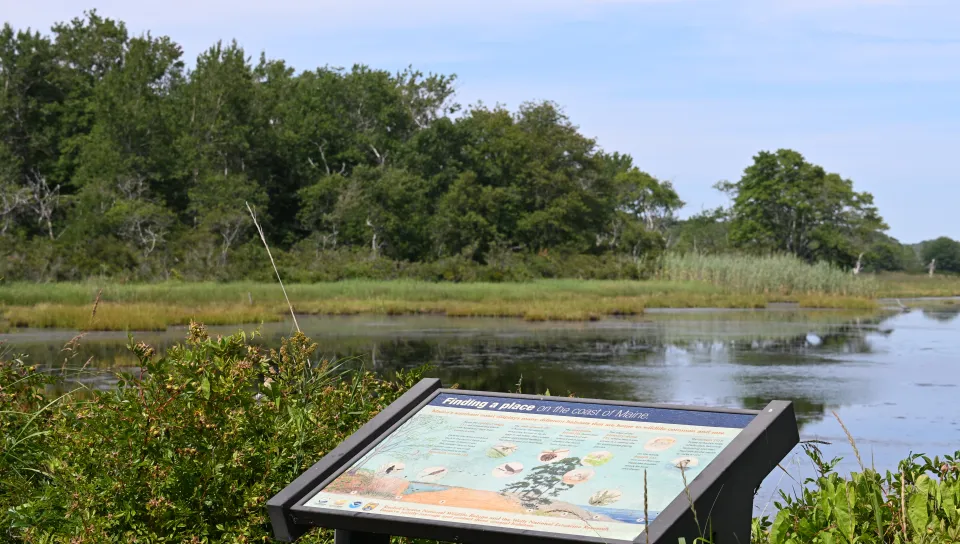
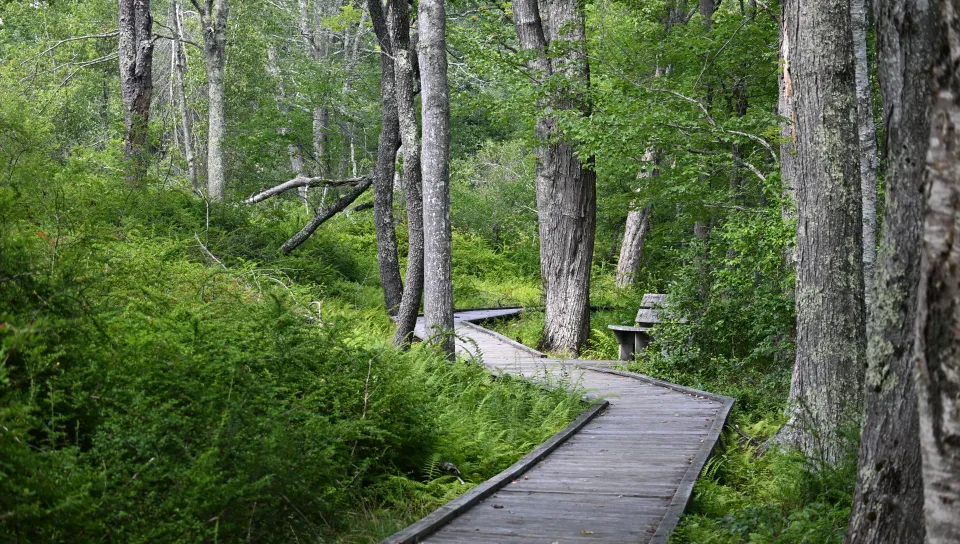
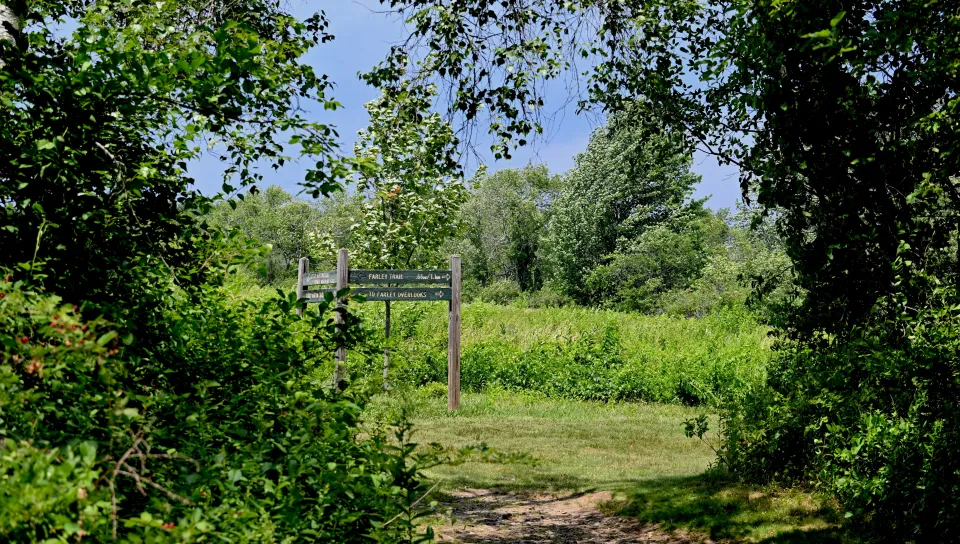
The Wells Reserve at Laudholm is a coastal research hub that is part of a national system operated in partnership with the National Oceanic and Atmospheric Administration. It also welcomes the public to explore the reserve’s seven miles of trails and enjoy educational programs centered on conservation and the scientific work taking place there.
As someone who wants to pursue work in marketing and sustainability as a social media or event director, the fellowship put Regnery in the exact position she hopes to one day hold. That 10-week experience helped Regnery expand her understanding of the sustainability work she could do in the business sector. It also grew her professional network tenfold.
Before Regnery even finished her fellowship, the president of Laudholm Trust, the nonprofit that supports the Wells Reserve, asked Regnery to present her work with AI to the nonprofit’s trustees.
Then Regnery impressed them all, said Nik Charov, the Laudholm Trust president.
“AI is moving so quickly, so it was both educational and exhilarating to have Mina working with us this summer at Laudholm Trust. She had the time and charge to explore a powerful technology with great potential to automate routine communication and marketing tasks,” Charov said. “The tools Mina built will save us days of work per month and open new opportunities. Our board of directors was very impressed when she presented her project. Students and Sustainability Fellows like Mina give us all hope for the future.”
The UNE Sustainability Fellowship Program has grown markedly since it was launched three years ago by the UNE Center for North American Studies with a cohort of six fellows. In 2026, Regnery was one of 23 UNE students or recent graduates who worked as fellows in the fields of sustainability and climate adaptation helping businesses, government agencies, and nonprofits.
The tools Mina built will save us days of work per month and open new opportunities. Our board of directors was very impressed when she presented her project. Students and Sustainability Fellows like Mina give us all hope for the future" — Nik Charov, Laudholm Trust president
Jeremy Pare, LPD, M.S., assistant teaching professor in the College of Business and the director of the UNE Sustainability and Business program, had Regnery in class, encouraged her to apply for the fellowship her senior year, and then supported Regnery as her Sustainability Fellowship mentor at UNE, guiding her toward direct practical experience in her exact area of interest.
“I saw the potential in her academic ability to suggest her specifically for the role (at the Wells Reserve),” Pare said. “Because I knew Mina was excited about AI, I was able, as a mentor and as someone who had her in class, to say, ‘Hey, we have this great opportunity with this fellowship. And it’s outside of business, but they can give you a skillset that you could bring back to business.’”
Working with Wells Reserve Communications and Marketing Director Rachel McDonald, who served as Regnery’s mentor at the reserve, Regnery expanded her understanding of how to effectively communicate with different stakeholders through real-time, on-the-ground interactions coupled with virtual meetings and online communications.
“Being able to work at the reserve showed me how important it is to be able to figure out how to communicate properly to a broader audience of all the scientific research that they do,” Regnery said. “You need to know the language you need to use and the audience that you're speaking to.”
After spending the first month of her fellowship at the Wells Reserve learning the work in the communications office, Regnery then developed five AI tools to improve the office’s productivity and volume of promotional and educational material it shares with the public.
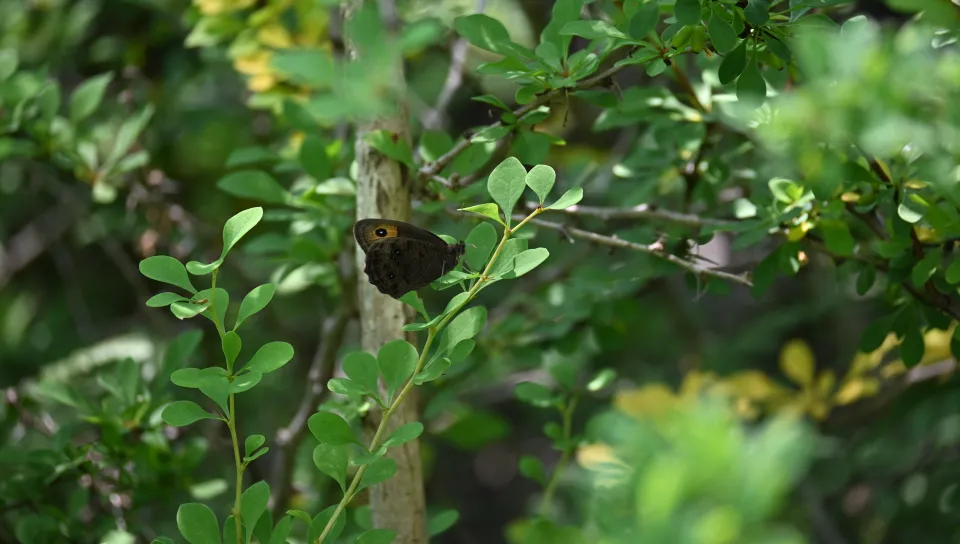
McDonald was quick to note: It was essential that Regnery recognize how important authenticity and placed-based images are for the Wells Reserve marketing office since it is a conservation organization that promotes time in nature. For that reason, the Wells Reserve won’t use AI-generated photography or AI-generated videos.
“We have around 30-ish educational, nature-based programs we offer to the public every month, and I am a marketing team of one,” McDonald said. “So being able to streamline that workflow has been really, really useful. But we also want to show people what the reserve actually looks like in all seasons to encourage them to visit and spend time here.”
For that reason, Regnery spent much of her fellowship on site, going in the field with biologists, and attending public talks by reserve scientists as well as sharing her AI work with the reserve’s staff — and the Trust’s trustees
Regnery spent the last two weeks of her fellowship meeting with many of these potential new connections.
“I would love to pursue a career in sustainability but also incorporate the marketing into that,” Regnery said. “The Wells Reserve is one of 30 national estuarine research reserves. So, I’m going to reach out to the other 29 to see if they need a marketing communications person and put my contact information out there.”