

Tricia Thibodeau, Ph.D., is part of a long lineage of explorers surveying how conditions in and around the globe’s southernmost continent are affecting climatic systems the world over
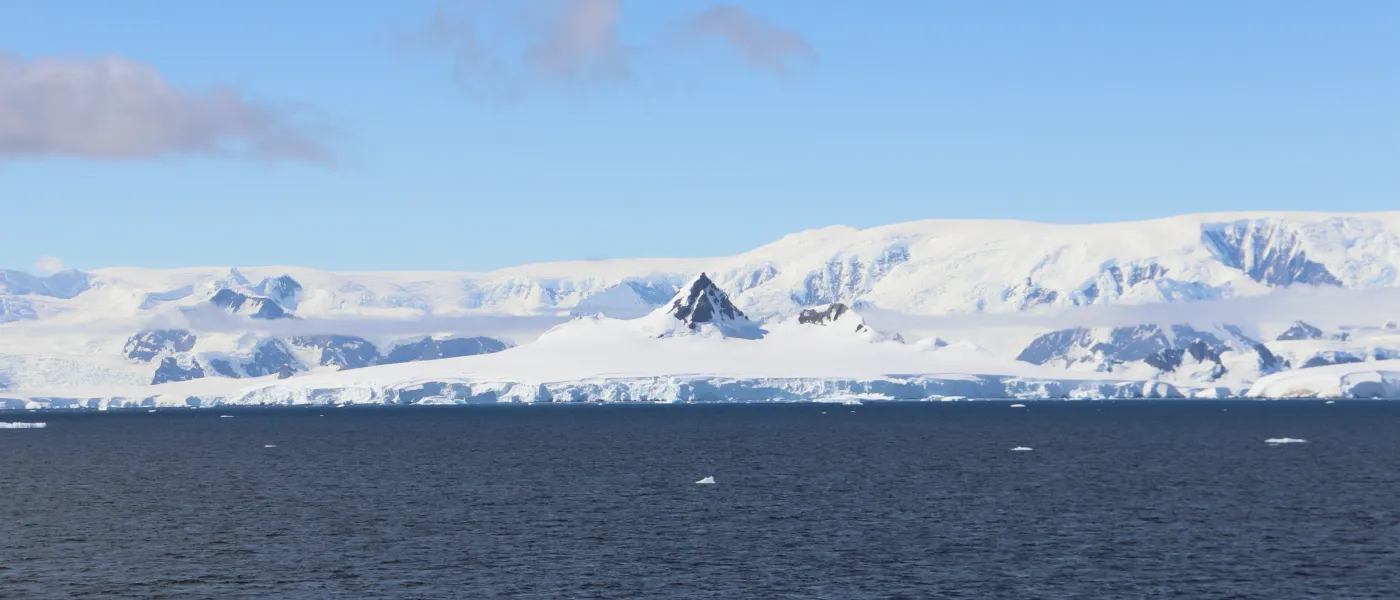
It has been more than two centuries since Russian explorers first set eyes on the Antarctic continent, viewing its frozen expanse from wooden naval sloops.
And, more than two centuries later, a University of New England scientist is studying just how much the seas around Earth’s southernmost landmass are changing, analyzing communities of tiny marine animals that may offer clues to how climate change is reshaping an ecosystem from its foundations.
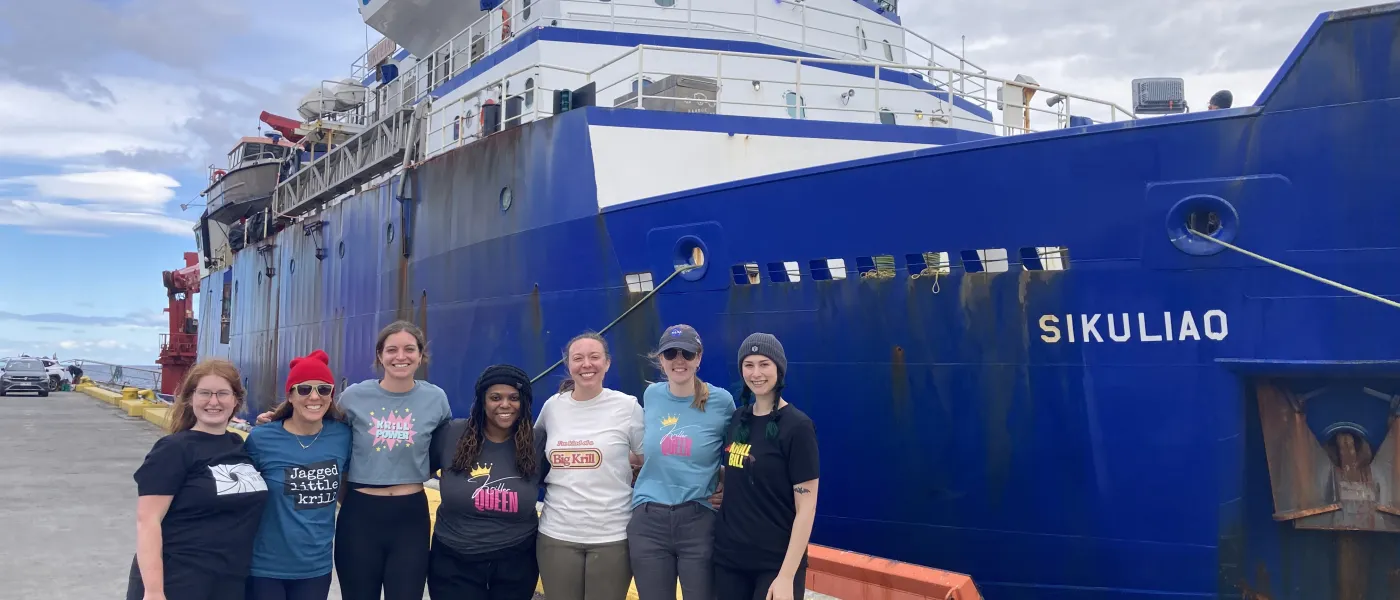
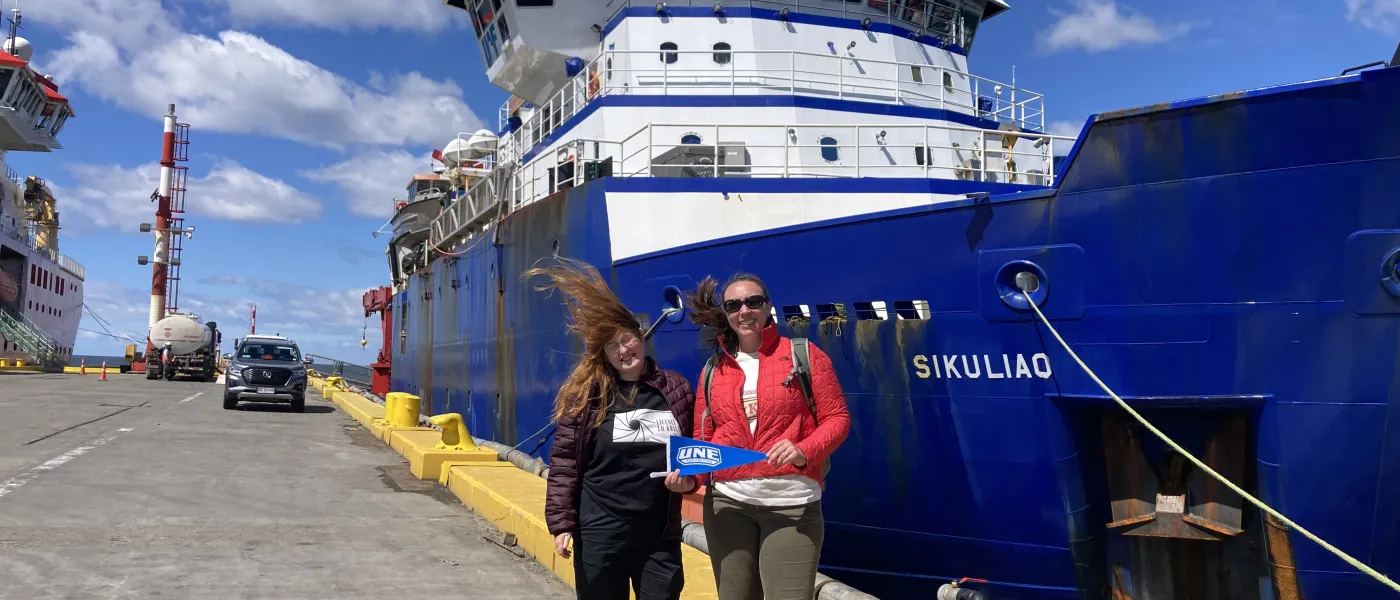
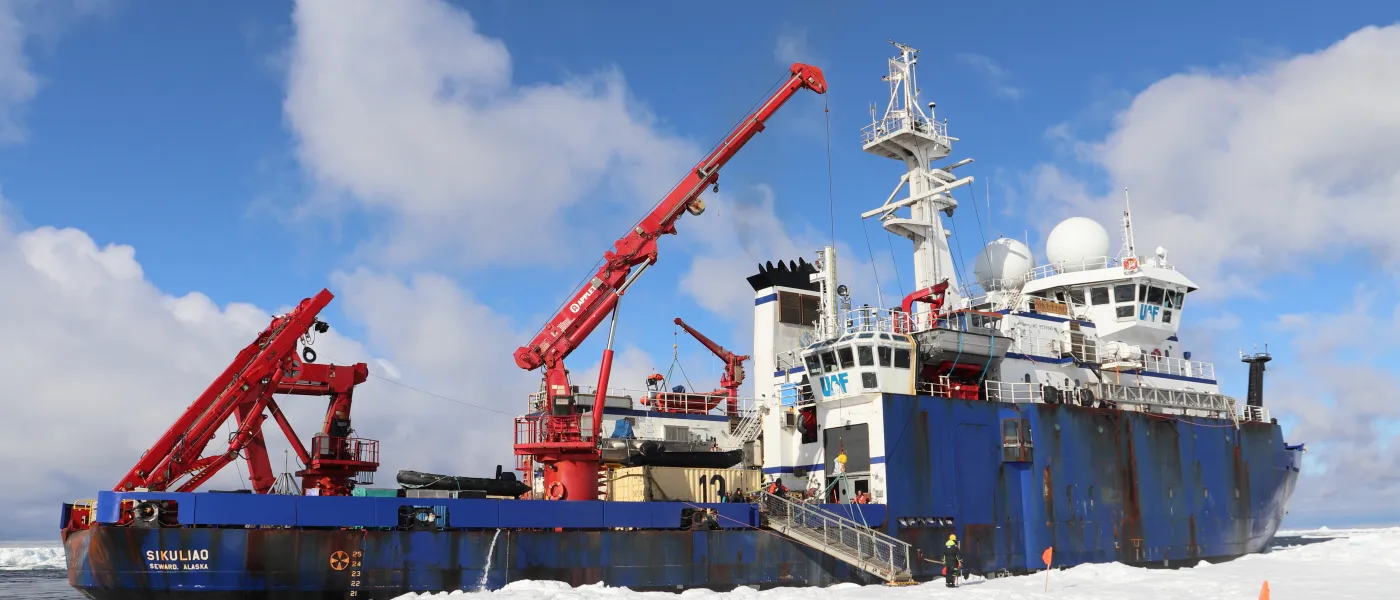
For Tricia Thibodeau, Ph.D., that meant spending five weeks aboard the R/V Sikuliaq in the Weddell Sea, lowering nets into Antarctic waters and studying what came back up.
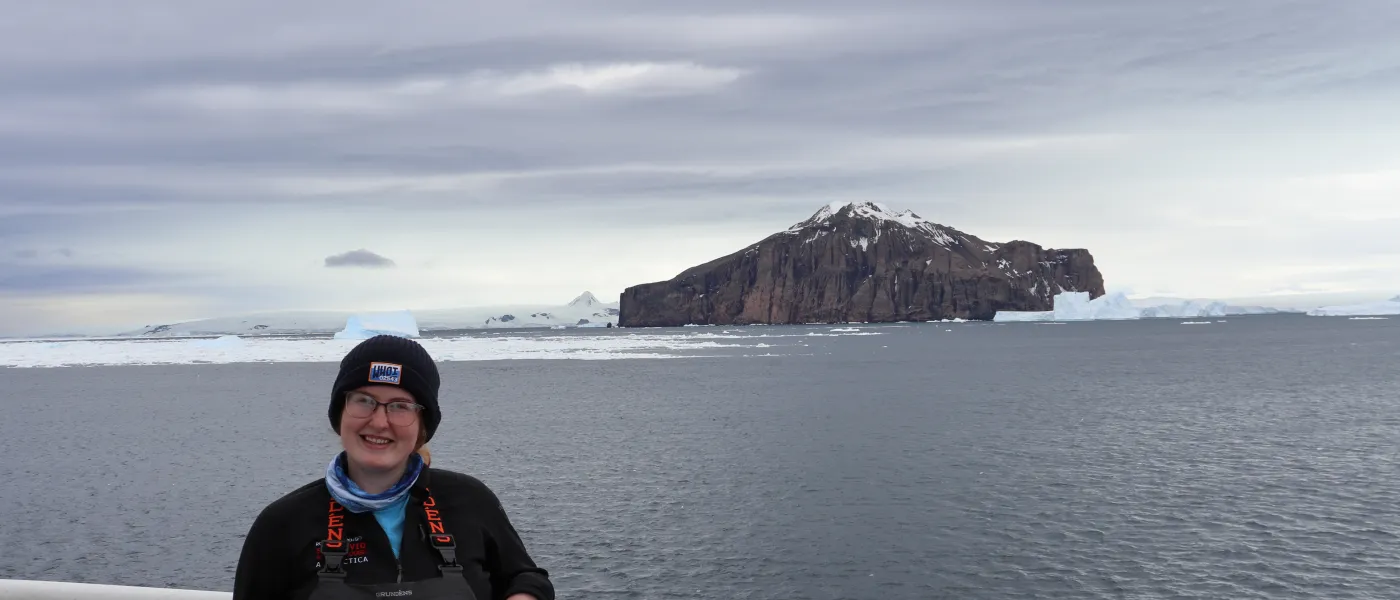
Thibodeau, an assistant professor in UNE’s School of Marine and Environmental Programs, joined the National Science Foundation-funded expedition as a principal investigator. It was her sixth trip to Antarctica, but her first to its eastern side and her first helping lead an Antarctic research cruise.
“This cruise took a lot of planning and replanning to make happen,” she said. “It was also my first cruise where I was one of the lead scientists, so I was definitely a little nervous going into it. But now that I’ve done it — and that I successfully didn’t lose anything in the ocean! — for me it was very gratifying.”
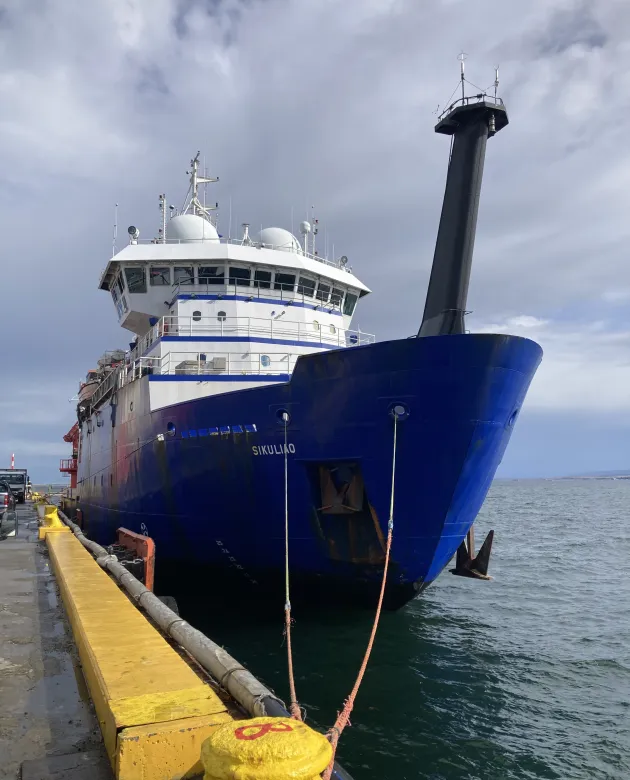
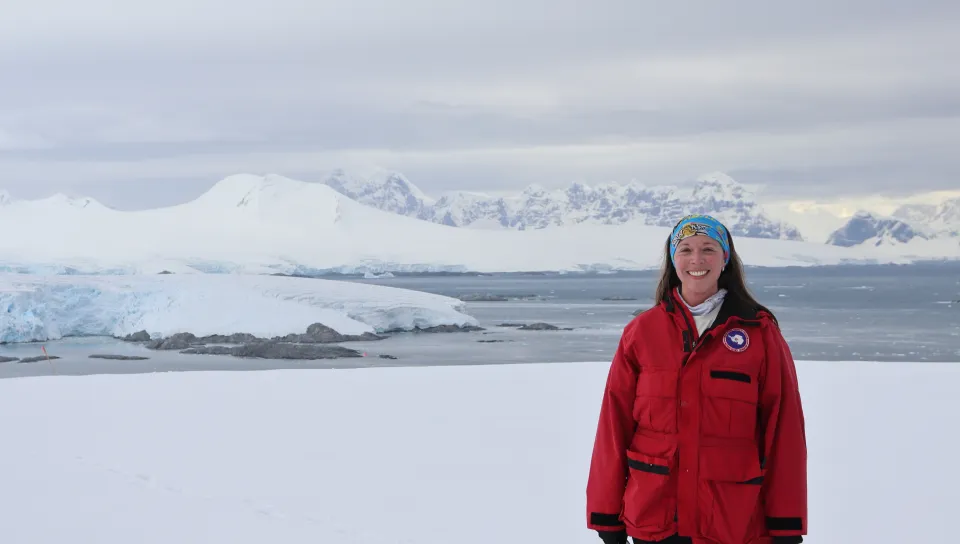
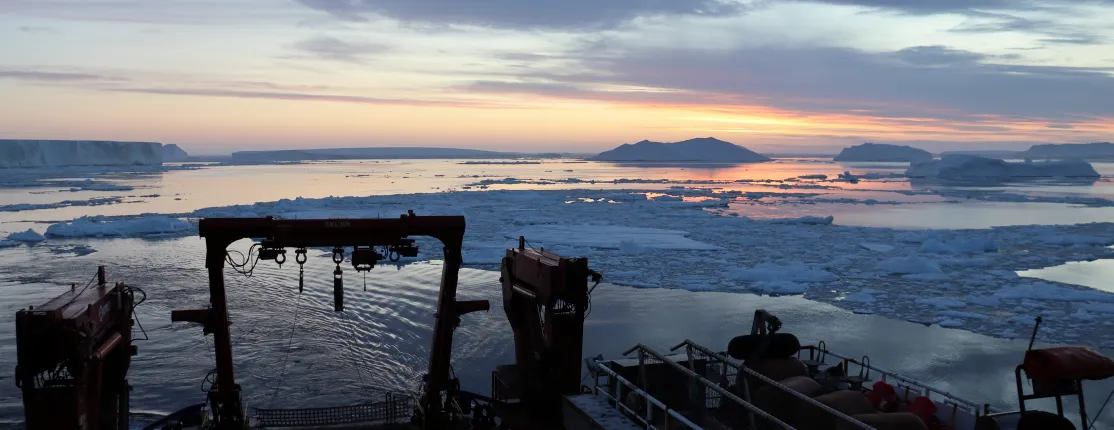
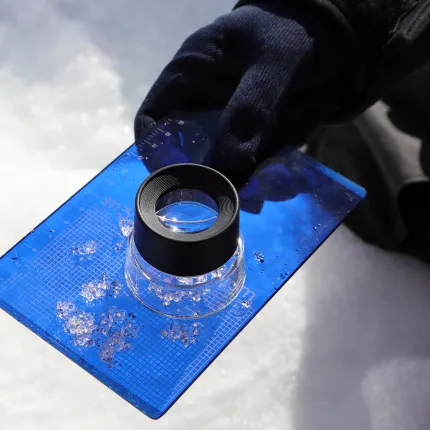
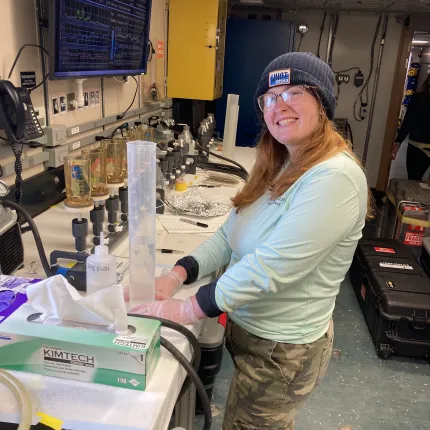
Clockwise, from top left: R/V Sikuliaq at port; Dr. Thibodeau with Mt. William visible in the background; graduate student Hailey Thomas analyzes lab samples; ice cores are analyzed for composition; sunset from the stern of the Sikuliaq.
The project, called LIMBOW, short for Linking Ice Melt to Biogeochemistry and Organisms in the Weddell, set out to understand how melting sea ice affects the waters below it, from the nutrients released into the ocean to the organisms that depend on them.
For Thibodeau and her accompanying UNE graduate student Hailey Thomas, that meant focusing on zooplankton, the small drifting animals that form a crucial link in the Antarctic food web. Krill, copepods, pteropods, and gelatinous salps feed larger animals including fish, penguins, seals, and whales. They also help determine how nutrients and carbon move through the ocean.
“The sea ice can be an important way to release nutrients that then feed the plankton,” Thibodeau said.
To trace those connections, the all-women team paired zooplankton net tows with measurements from the environment around them. Researchers collected ice cores and seawater, measured temperature and salinity, and conducted experiments comparing phytoplankton growing in seawater influenced by melting ice with phytoplankton in water without that influence.
The plan was carefully designed — but Antarctica had other ideas.
“Shackletoned”
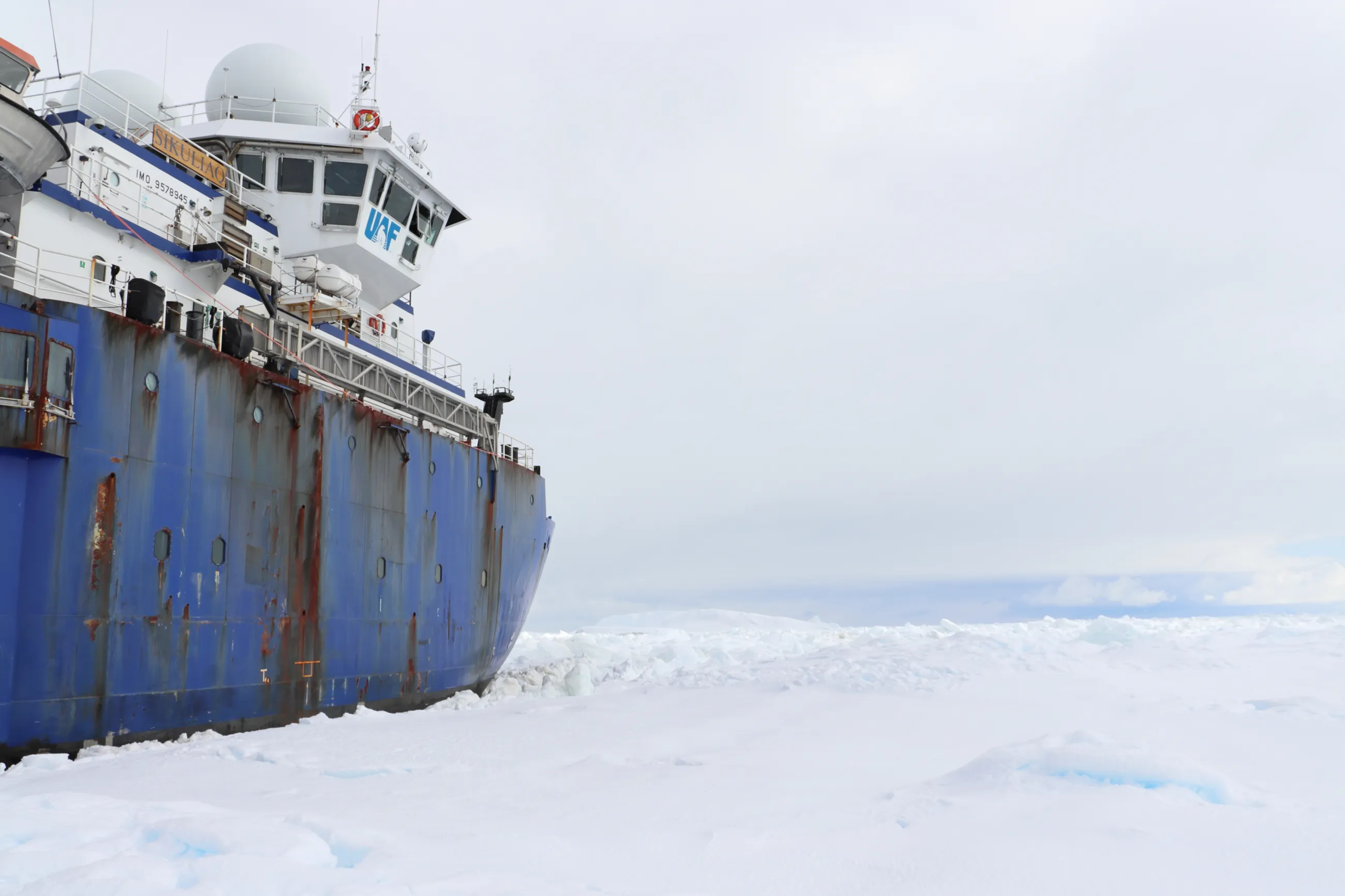
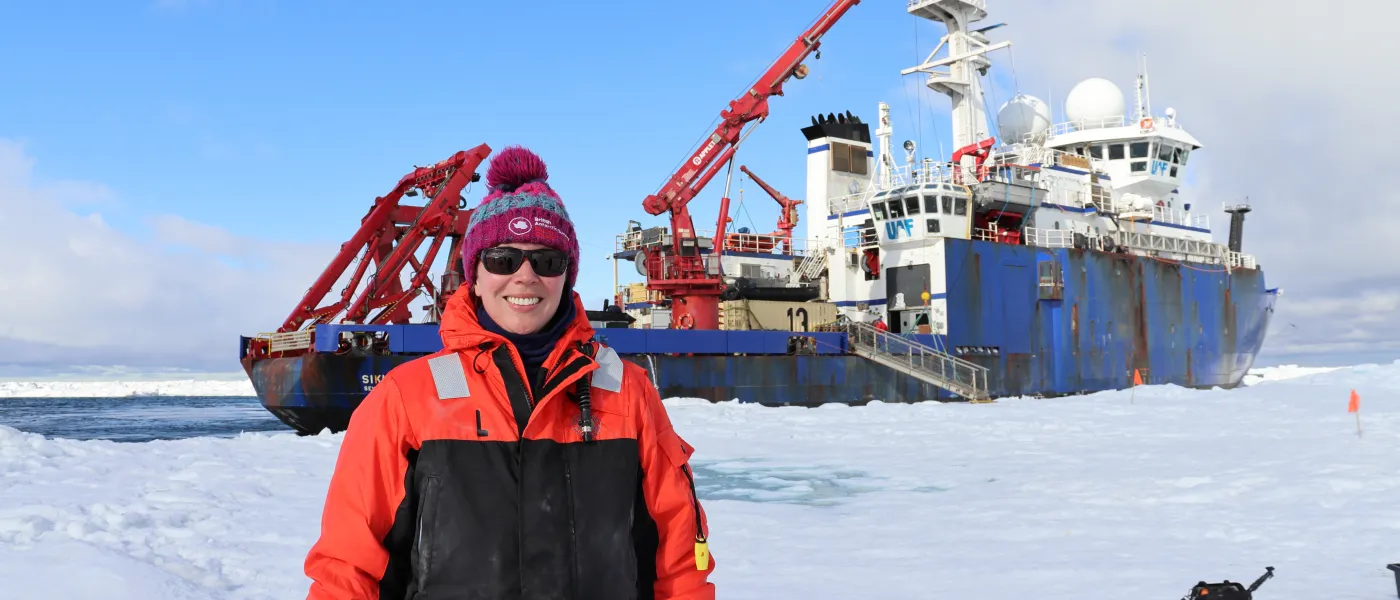
The Sikuliaq embedded in sea ice.
The Weddell Sea is known for extensive sea ice, though recent years have brought dramatic declines in ice cover as climate change alters the Southern Ocean. During Thibodeau’s expedition, however, the researchers encountered heavier ice than expected. Eventually, the Sikuliaq stopped moving altogether.
We were very much at the whims of the sea ice." — Tricia Thibodeau
The scientists jokingly called it being “Shackletoned,” after the fabled fate of Ernest Shackleton’s Endurance, which became trapped in the Weddell Sea more than a century earlier. For several days, wind and current had more control over the expedition than anyone aboard the ship.
“We were very much at the whims of the sea ice in terms of where it wanted to move,” Thibodeau said.
The interruption became an opportunity. With the ship surrounded by thick ice, researchers were able to walk directly onto a floe and collect ice cores. For Thibodeau, even after five previous trips to Antarctica, it was a first.
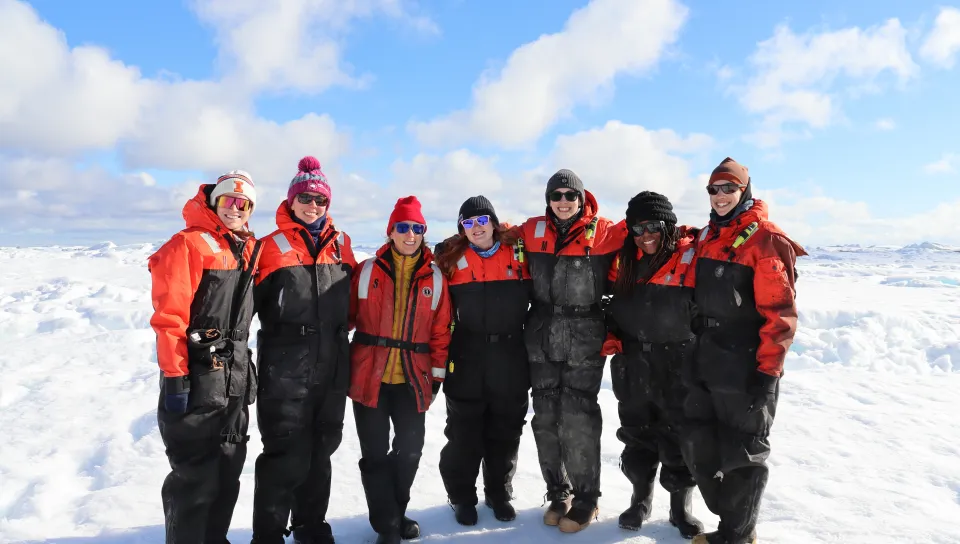
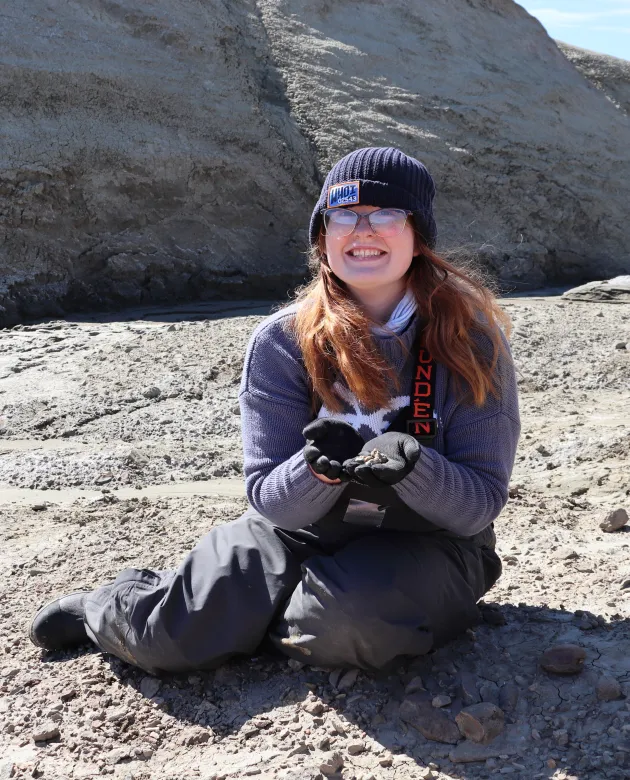
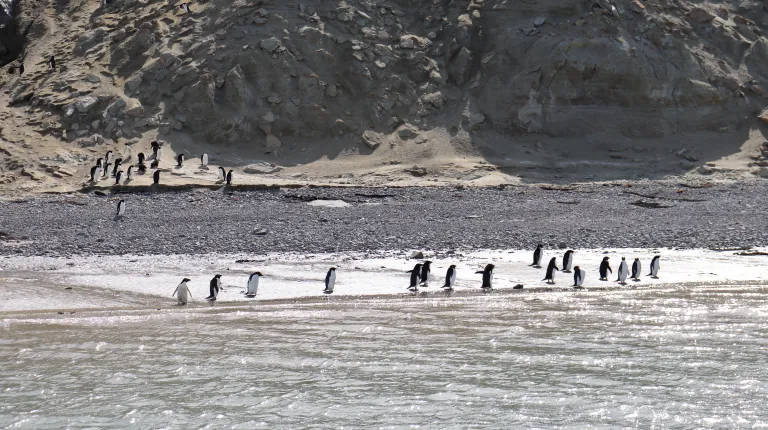
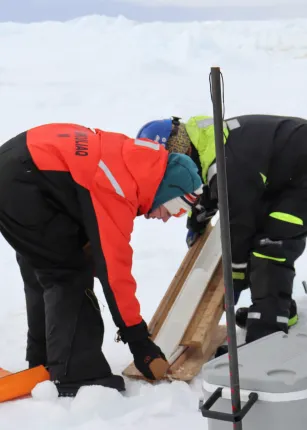
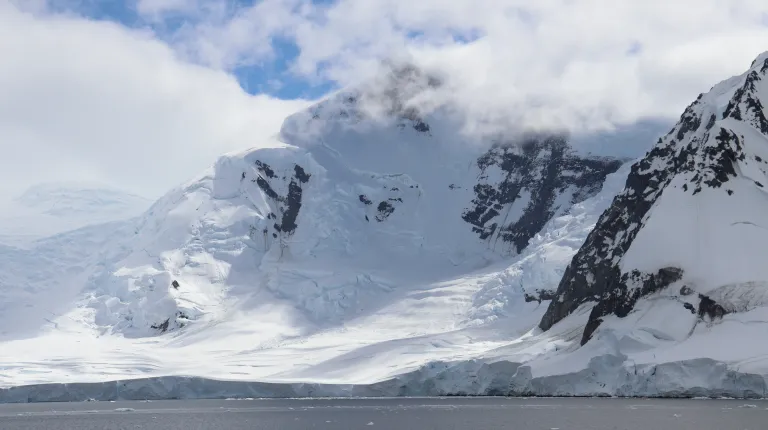
Clockwise, from top left: The research team poses on an ice floe; Hailey Thomas holds a fossil; a glacier viewed from the Neumayer Channel; researchers sample ice cores; penguins “sun” on a rocky beach.
Once the ship broke free, the team continued adapting. Plans around Seymour Island changed, and the LIMBOW researchers shifted much of their work to nighttime, conducting sampling stations after dinner and sometimes working until 2 a.m. The particulars of the schedule mattered less than getting the samples they had traveled thousands of miles to collect.
And what came up in the nets offered some of the expedition’s most intriguing observations.
At one location sampled early in the cruise and revisited roughly two weeks later, zooplankton biomass had approximately tripled. One tow yielded an estimated 30,000 copepods. There were so many that when Thibodeau emptied the sample, the water appeared pink.
“There were so many copepods, it was insane,” she laughed, in reference to the small, multicolored crustaceans that form a large part of the bottom of the food chain.
Thibodeau and her collaborators are still analyzing the samples and data, and she is careful not to draw a direct line between one expedition’s catches and long-term changes in sea ice.
But figuring out what those catches mean is important because zooplankton occupy such a consequential place in the ocean.
Changes in which species are abundant can affect what food is available to larger animals and how carbon moves from surface waters into the deep sea, Thibodeau said. In the Southern Ocean, those shifts unfold within waters that play an important role in global ocean circulation and climate regulation.
An Investigation at Every System
The research is, in that sense, an exercise in following connections. Melting ice changes seawater, seawater shapes plankton communities, and plankton feed animals much larger than themselves and help move carbon through the ocean. A change that begins at the surface can travel through an entire ecosystem.
Even though the process was a little different than we originally planned, in the end I think it was a success" – Tricia Thibodeau
That interconnected view is also central to planetary health, a field of growing research and scholarship at UNE that examines the relationships among environmental systems and the health of life on Earth. In the Weddell Sea, those relationships are not abstract; they can be hauled aboard in a net.
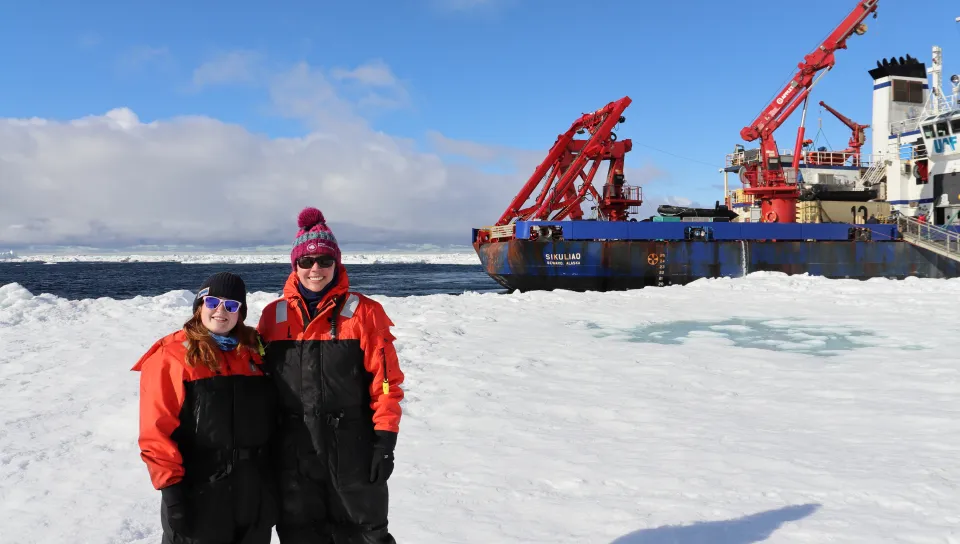
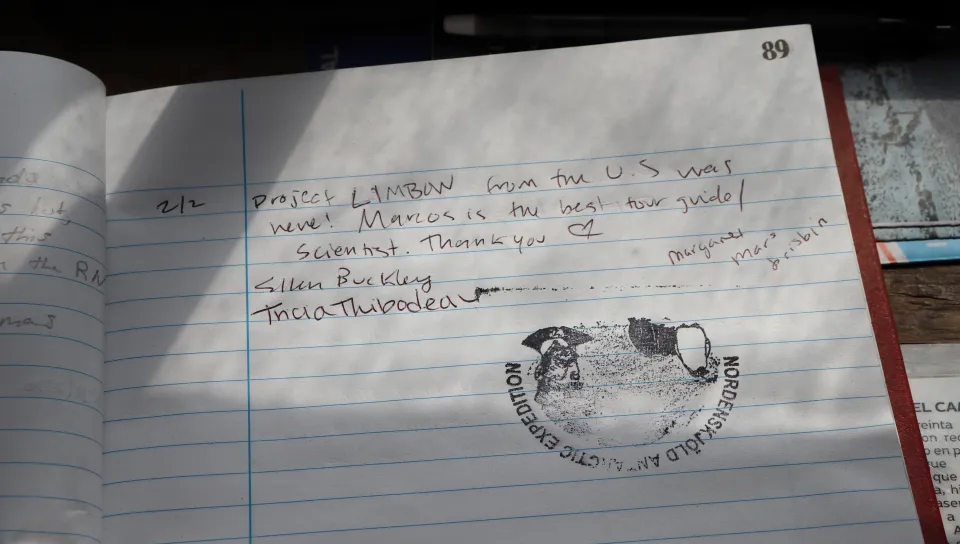
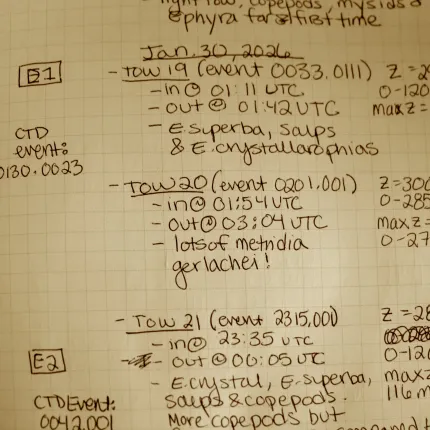
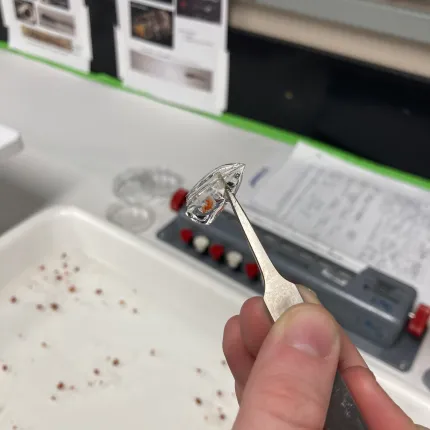
Clockwise, from top left: Thibodeau and Thomas pose standing on an ice floe; the LIMBOW team's signature in the guestbook at Otto Nordenskjöld’s Hut, a shelter on Snow Hill Island; a marine copepod preserved in sea ice; a sample of Thibodeau’s field notes.
For Thibodeau, the expedition was also a milestone in a career spent studying the ocean. While she had been to Antarctica before, this time she was responsible for leading research there, working alongside Thomas and a team that had to make decisions as conditions changed around them.
“I feel very proud of myself and of my student, Hailey, and our team for accomplishing what we did,” she said. “Even though the process was a little different than we originally planned, in the end I think it was a success.”
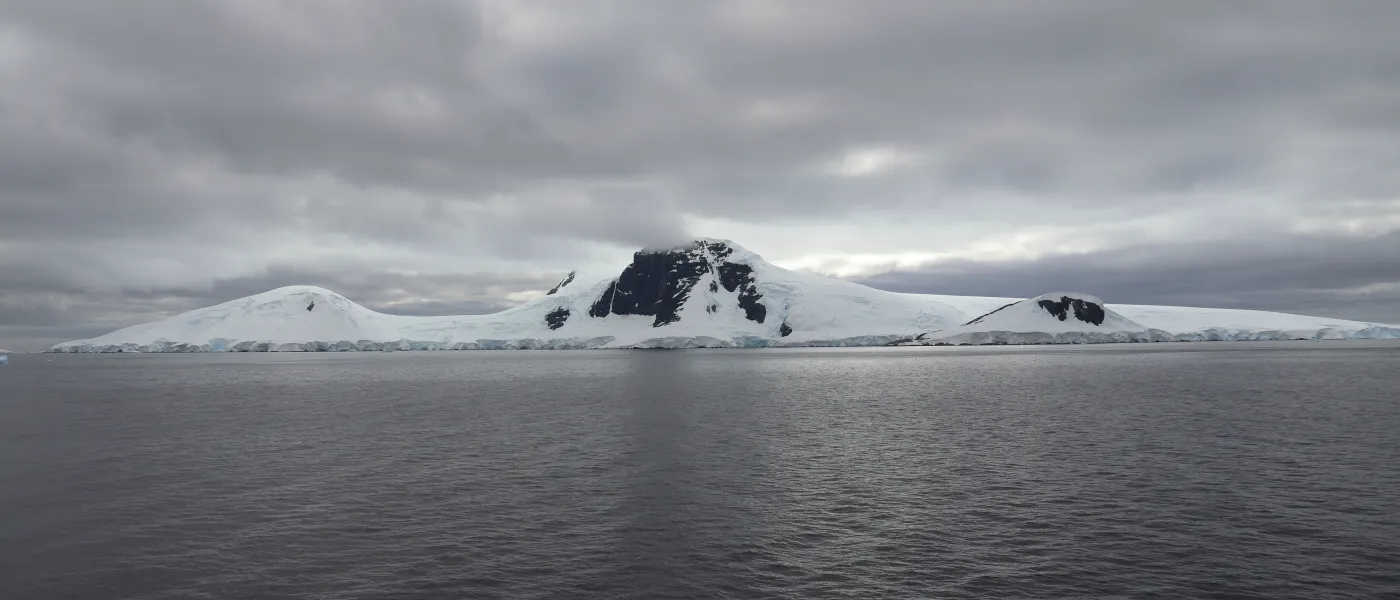
Near the end of the voyage, the Sikuliaq visited Palmer Station on the western Antarctic Peninsula, where Thibodeau had last been seven years earlier. She remembered the glacier behind the station. This time, the walk to reach it crossed noticeably more exposed gravel and mud.
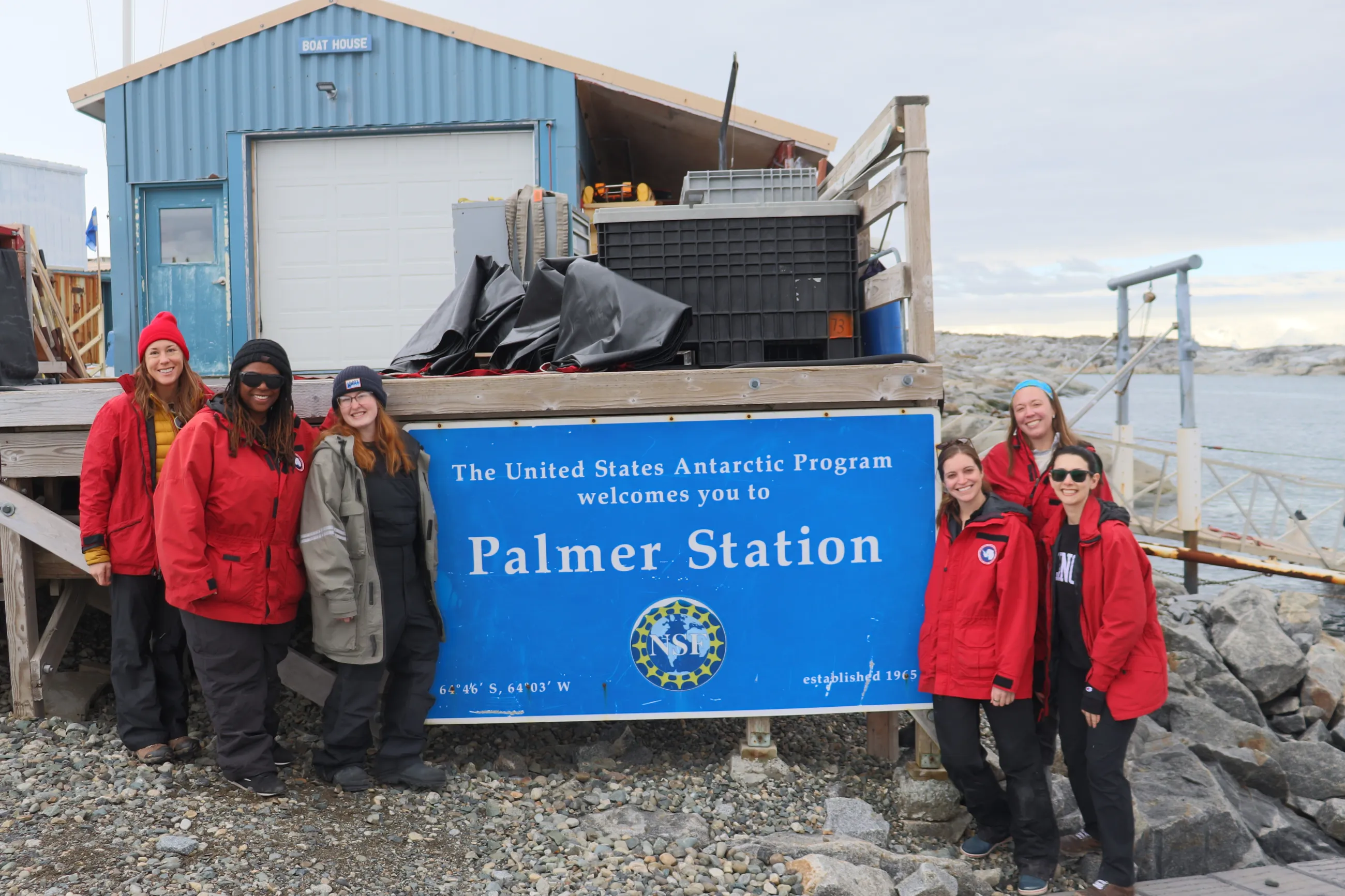
The all-women team of researchers at Palmer Station on Anvers Island, operated by the United States Antarctic Program of the National Science Foundation.
“You could definitely tell the glacier had receded,” she said. “That area has been experiencing pretty rapid warming. I can’t say I’m surprised, but it was sad.”
The retreating glacier was one visible measure of change. Others are harder to see, such as nutrients released from melting ice, shifts in plankton communities, carbon moving through the water column. Understanding those changes requires looking closely at a system that stretches from microscopic organisms to the global ocean.
And sometimes, it begins with something as simple as pulling up a net and asking why the water inside has turned pink.
“I’m truly thankful for the opportunity to conduct research in Antarctica given the Herculean effort it took for us to get there,” Thibodeau said. “I’ve already started incorporating experiences and data from the cruise into my courses, and I’m looking forward to continuing to show UNE students how tiny organisms in Antarctica connect to what we’re learning about in the Gulf of Maine and oceans around the world.”
Explore More of Antarctica with Dr. Thibodeau
All photos in this article courtesy of Tricia Thibodeau