
Image

This website uses cookies to understand how you use the website and to improve your experience. By continuing to use the website, you accept the University of New England’s use of cookies and similar technologies. To learn more about our use of cookies and how to manage your browser cookie settings, please review our Privacy Notice.
UNE’s first Food Allergy Awareness Event held in the Danielle N. Ripich Commons on Friday, Oct. 2, drew together and informed dozens of students, faculty, professional staff, and community members about how to keep friends, classmates, and even strangers safe when they encounter another having a food-allergy reaction.
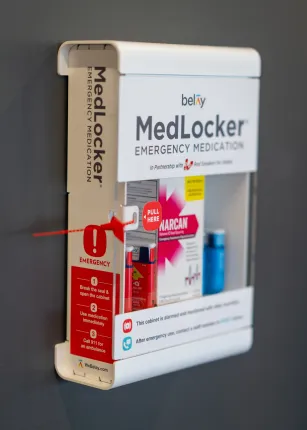
The event also served as a public debut for the University's four new epinephrine lockers — and a call to action to help raise awareness of the need for more epinephrine lockers on college campuses today.
The Food-Allergy Awareness Club at UNE — led by senior Emme Perry (Biological Sciences and Business Administration, ’27), who has six food allergies — this summer purchased four lockers that provide undesignated epinephrine supplies on UNE’s Biddeford and Portland campuses in order to help keep students with food allergies safe. The purchase makes UNE one of only three universities in the country — and the only one in New England — with public-access epinephrine cabinets that students can readily access.
Undesignated epinephrine supplies do not require a prescription, and anyone at the University or on campus can use the supplies when needed. Yet, according to a 2023 study by the Division of Allergy and Clinical Immunology at Brigham and Women's Hospital, only 7% of American colleges keep undesignated epinephrine auto-injectors (EAI) on hand for emergencies, despite the fact that one in 10 college students has a food allergy.
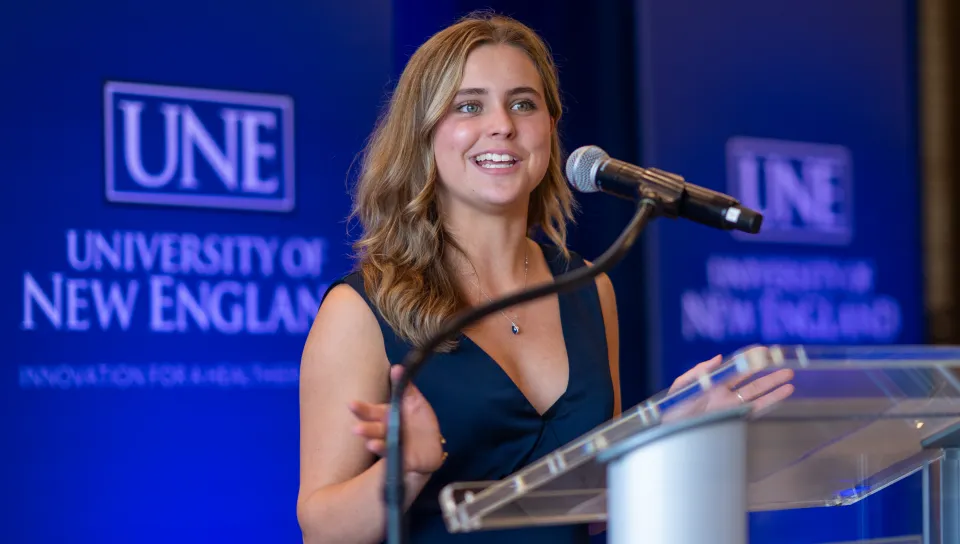
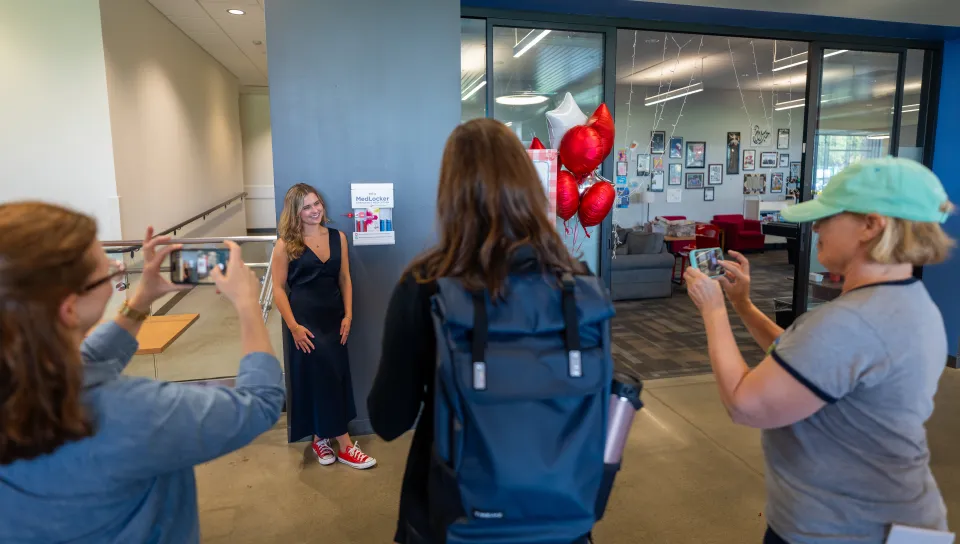
Perry, who worked as an intern at Northwestern University’s Center for Food Allergy and Asthma Research, a leading food-allergy research center, said the lockers were essential to address life threatening allergic reactions that could happen to a UNE student with a food allergies.
Three years ago, Perry worked with UNE’s food services provider, Parkhurst Dining, to increase UNE’s profile as one of the nation’s leading allergen-safe Universities.
“This is such a huge milestone for UNE,” Perry said. “From first building our partnership with (the Food Allergy Research and Education nonprofit) in 2024, to presenting our allergen protocols at national conferences in D.C., to now becoming the very first college in New England to install a MedLocker, this project highlights UNE's deep commitment to campus safety, student wellness, and the food allergy community.”
UNE President James Herbert praised Perry’s dedication and commitment to raising UNE’s standing as a food-allergen-safe campus, calling the senior an inspiring example of service, follow-through, and a bold willingness to help lead others into unchartered territory.
“One thing I'll say about getting a project like this off the ground: It requires leadership, leadership, leadership. And, man, you've never met a leader like Emme,” Herbert told those gathered. “She exemplifies leadership. She gets things done. I'm just incredibly impressed with her.”
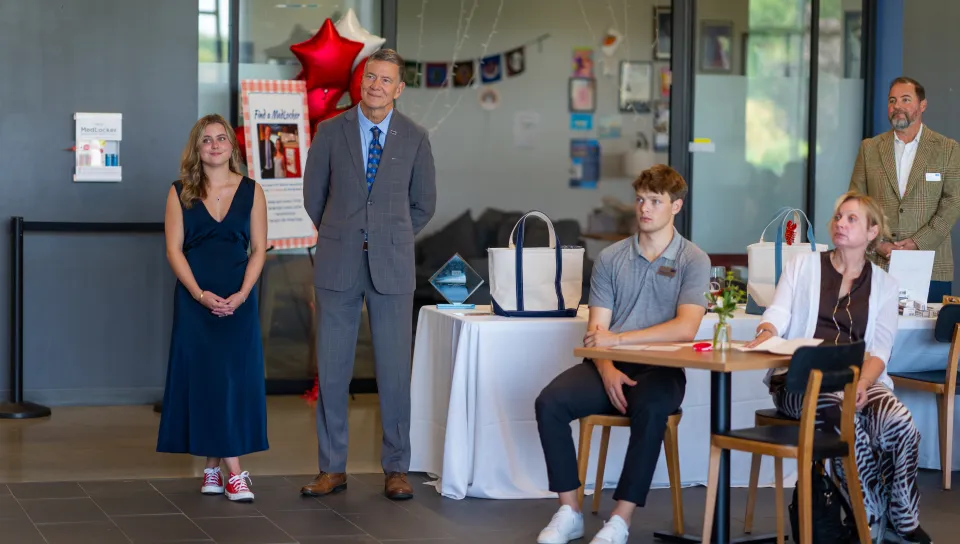
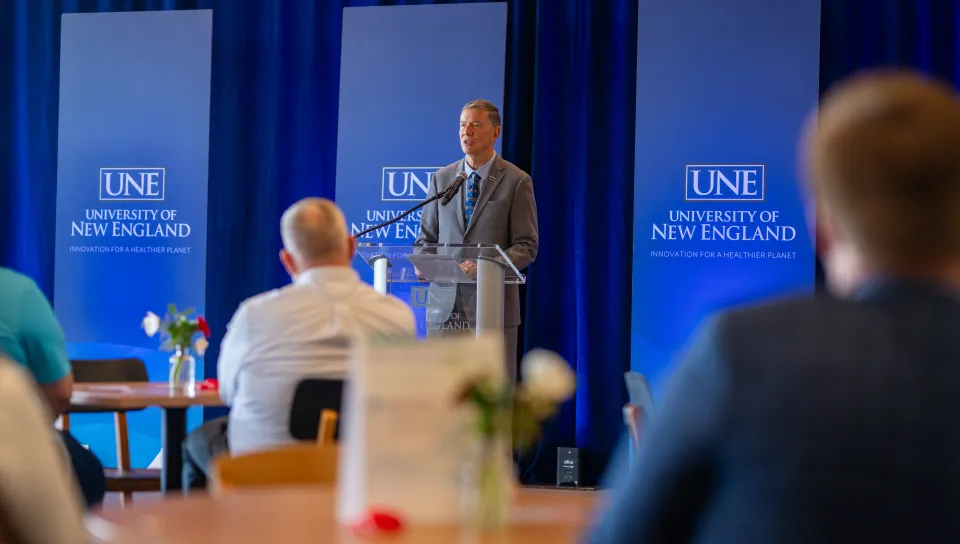
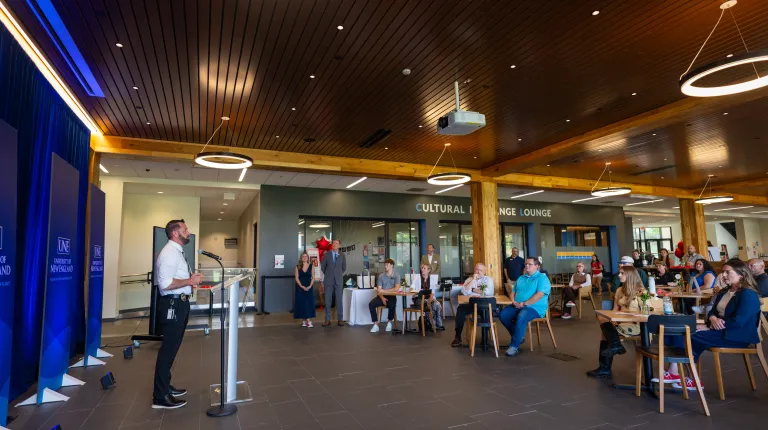
Herbert added that UNE is all-in on supporting the public-access epinephrine initiative and growing the number of MedLockers on campus to make the University an even safter food-allergen community for students.
“We all have a responsibility to do whatever we can to make our environments safer, including with things like food safety,” Herbert said.
The Food Allergen Awarness Club installed UNE’s first four MedLockers with help from UNE Facilities Services, Safety and Security, Student Health Services, as well as other departments. Perry said support from those units is key in empowering students to make impactful changes that will improve the health of people across the University and the community at large.
This shows that student voice has a lot of power at UNE, and that, if you bring something to the UNE community, everyone will work with you to make it possible." — UNE senior Emme Perry (Biological Sciences and Business Administration, ’27)
“This shows that student voice has a lot of power at UNE, and that, if you bring something to the UNE community, everyone will work with you to make it possible,” Perry said. “I think that that is the primary differentiator as to why more colleges don't have stocked epinephrine. But, because UNE is such a tight-knit community and works so closely with students, we were able to put ideas into action.”
UNE’s Director of Student Health Services Michele Delenick, M.D., explained to those gathered at Friday’s event how to spot the signs of anaphylaxis, how to administer epinephrine, and how to navigate UNE’s four MedLockers.
The Ripich Commons has two of those epinephrine lockers, with one on the first floor and a second on the third by the dining hall, while the third one on the Biddeford Campus is in the Harold Alfond Forum. The fourth MedLocker is on UNE’s Portland Campus for the Health Sciences in the Nor’easter Cafe.
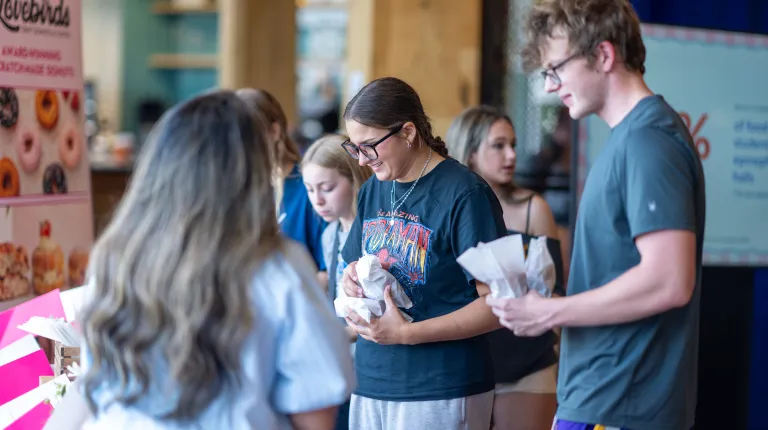
The Food Allergen Awareness Event also served as a fundraiser to help raise money for more epinephrine lockers at UNE, and, ideally, at other Maine schools. While allergen-safe food vendors from around New England such as Lovebirds Donuts, D’s Bakeshop, and Abe’s offered allergen-safe snacks for free, a raffle was held to raise funds for the MedLockers, which Perry said cost at least $500 each.
Members of the Biddeford community also attended, notably City of Biddeford officials, including Mayor Liam LaFountain, whom Perry wanted to invite in order to help spread greater awareness of the dangers of food allergies in public schools.