
UNE occupational therapist helps actors with disabilities take center stage
Faculty member Jessica Walton brings occupational therapy expertise to an inclusive theater production, helping performers of all abilities find their place in the spotlight
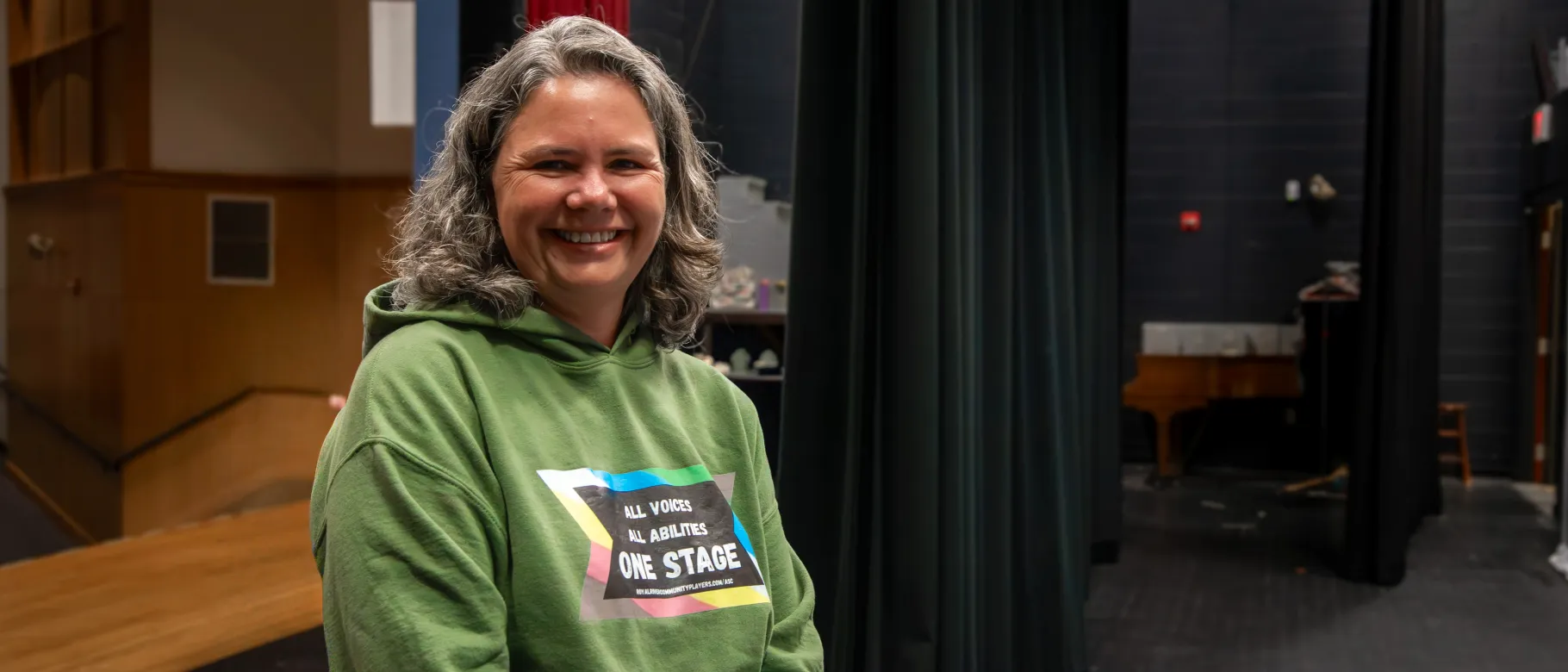
As the stage lights rose upon the darkened theater at Gorham Middle School, University of New England occupational therapist Jessica Walton, M.S., OTR/L, was working behind the scenes, helping actors navigate the complexities of costumes, choreography, and the general bustle of backstage preparations.
For Walton, UNE’s academic fieldwork coordinator and assistant program director of UNE’s Master of Science in Occupational Therapy (M.S.O.T.) program, the evening represented an often-unrealized application of her professional expertise: ensuring that performers with and without disabilities could share the stage — and comfortably.
Walton served as accessibility director for the Accessible Stages Collaborative, an initiative led by Royal River Community Players that helps Maine theater organizations develop inclusive productions for performers of all abilities. The collaborative is funded, in part, by a grant from the Onion Foundation, a Maine-based philanthropic organization whose mission is to provide Maine people with meaningful connections to the arts and the natural environment.
The collaborative’s latest undertaking, a cabaret-style showcase presented Nov. 6-7 at Gorham Middle School, brought together 29 performers and 11 apprentices for musical numbers, dance, and theatrical scenes. Performances included Broadway hits, including “Beautiful City” from “Godspell,” among others.
Walton’s role was to help ensure each performer could participate comfortably, safely, and confidently, regardless of physical, sensory, or developmental differences.
“When people think about occupational therapy, working within a theater setting may not be the first area of practice that comes to mind,” Walton said. “What made my role unique was that I used my OT knowledge and skills to support the accessibility and participation of the performers themselves.”
That meant adapting scripts and instructional approaches, preparing performers for bright lighting and loud sounds, and considering how costumes, movement, and backstage environments might affect individual participants. Walton also helped establish quiet sensory spaces where performers could take breaks when needed.
“One of the most important aspects of the role was finding a balance between providing individualized support and promoting each performer’s autonomy and full participation in the production,” she said.
Broader accessibility in theater is not a new concept, but accessibility practices are expanding within the discipline, particularly in Maine.
Portland Stage, one of Maine’s largest nonprofit professional theaters headquartered in the state’s biggest city, recently introduced open captioning for its 53rd season; the Ogunquit Playhouse — one of the nation’s premier professional summer theater destinations — started offering open captioning and personal listening devices for its performances in 2023.
The Accessible Stages Collaborative is extending that conversation beyond the audience to the performers themselves, demonstrating how thoughtful adaptations can make participation in the performing arts possible for more people.
For 32-year-old Lexi Cote, the opportunity was particularly significant.
Born with hip dysplasia, Cote has experienced challenges with balance and mobility. She spent approximately two years working with physical and occupational therapist learning techniques to improve her stability, including walking backward, stepping sideways, and balancing on one foot.
Those skills have helped her pursue a longtime passion for dance and theater.
“I just always kind of knew I was in love with the performing arts,” Cote said, explaining that a community program first introduced her to dance before she discovered the Accessible Stages Collaborative.
The cabaret offered Cote several opportunities to perform, including choreography, speaking lines, and her first solo in “This is Me” from the 2017 film “The Greatest Showman.”
“I’m excited,” she said before the performance. “I love it so much.”
David Sheehy, director of the Accessible Stages Collaborative, said the production served two purposes. First, he said, it provided meaningful performance opportunities, plus training for theater practitioners to implement accessible practices in their own communities.
Sheehy recruited Walton after recognizing how her clinical expertise could complement the theatrical experience of the collaborative’s leadership, including choreographer Michaela Knox.
“She brought a unique perspective, a medical perspective that I never would have considered,” Sheehy said.
The collaboration has also created opportunities for UNE students. Walton introduced an occupational therapy student to the initiative who is expected to serve on its advisory board, helping shape future programming.
“We’re totally open to learning from new people and experts in their fields,” Sheehy said. “And I know UNE has plenty of them.”
For Walton, who has been involved with the collaborative for more than a year, the experience illustrates the breadth of occupational therapy and the many ways UNE faculty can apply their expertise in service to the community.
“I hope this experience encourages students to think more broadly about where their OT skills can have an impact, whether through their careers, community involvement, or volunteer experiences,” she said.
What began as an opportunity to contribute professional knowledge has also become a newfound passion, one she said embodies the collaborative’s motto, “All voices, all abilities, one stage.”
“Watching performers grow, learn, build confidence, and take part in something they are passionate about has been incredibly meaningful,” Walton said.
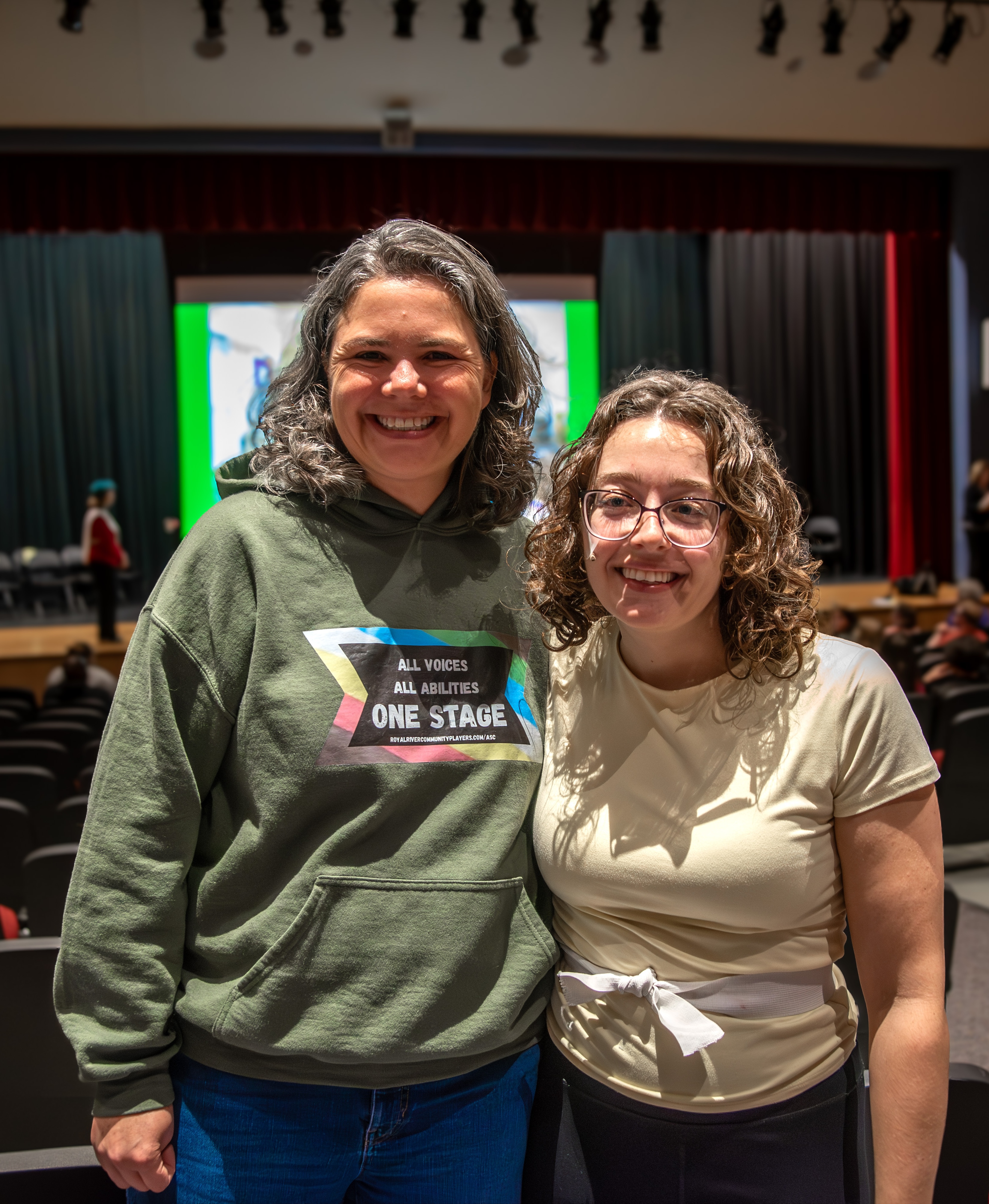
Walton with performer Lexi Cote