
UNE partners with Maine DHHS on $12 million effort to strengthen rural health across Maine
Through UNE’s David Evans Shaw Institute for Public and Planetary Health, the partnership will expand the community health worker workforce and advance evidence-based initiatives in rural Maine communities
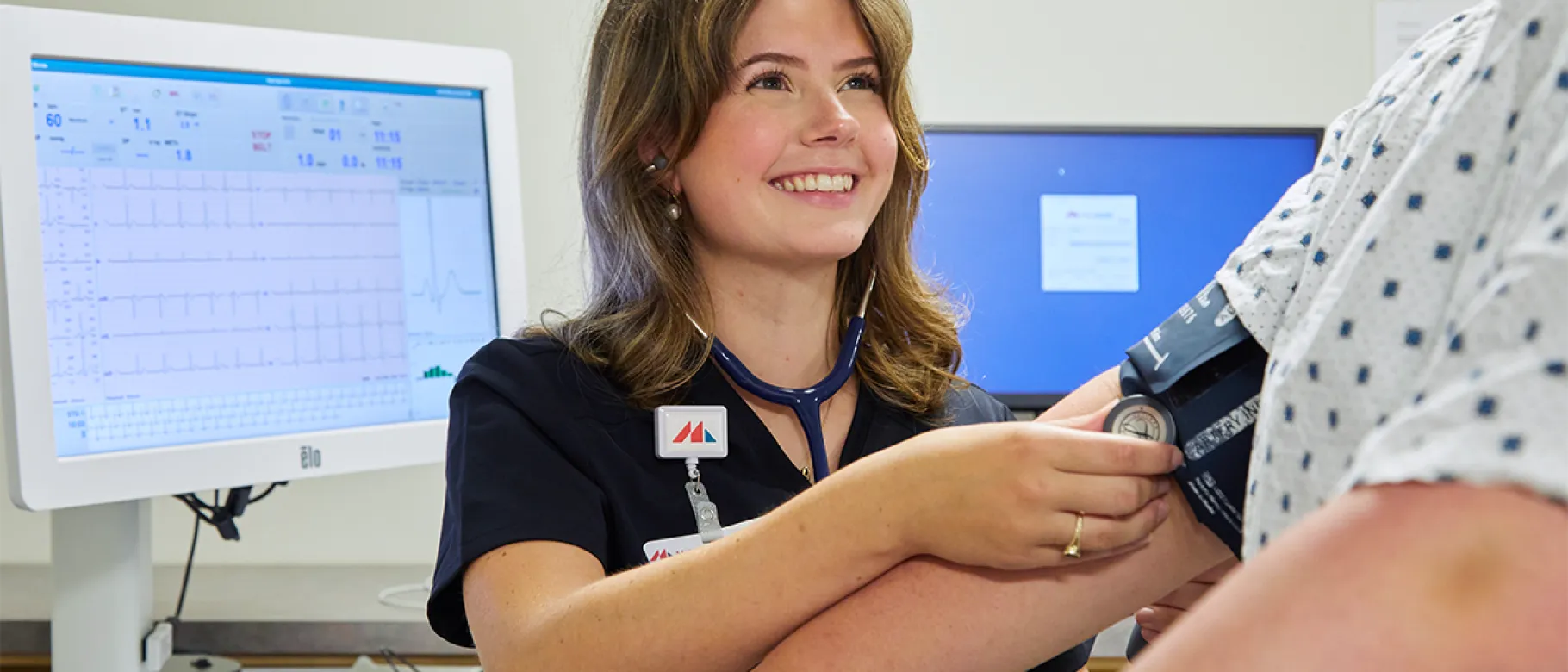
The University of New England will collaborate with the Maine Department of Health and Human Services on a $12 million award to strengthen the community health workforce, expand access to services, and advance evidence-based approaches to improving health in rural Maine.
The funding is part of the first year of Maine’s Rural Health Transformation Program, a five-year federal initiative designed to improve health outcomes, expand access to care, strengthen the health care workforce, advance innovation, and support sustainable rural health systems. Maine DHHS is investing $190 million across the program in its first year, including $12 million allocated to UNE to support the program’s population health initiative.
The initiative, under UNE’s David Evans Shaw Institute for Public and Planetary Health, will be led by Karin Lapping, Ph.D., M.P.H., director of the Institute’s Center for Public Health Practice. Two priority focal areas of the project are to sustainably expand the number and reach of trained community health workers across Maine and to integrate evidence-based practices into programs serving rural communities.
“This is an extraordinary opportunity to strengthen the foundation of rural health in Maine by investing in the people and community-based systems that make better health possible,” Lapping remarked. “Community health workers are trusted links between individuals, health care providers and community resources, and expanding their reach can help address the barriers that too often prevent people from getting the care and support they need. At the same time, bringing evidence-based practices into rural communities gives us an opportunity to turn what we know works into meaningful, locally driven action.”
Community health workers are trusted frontline public health professionals who help people navigate health care and social services, connect with resources, and address barriers that can affect health. Through the partnership, UNE will support the sustainable expansion of community health workers across Maine’s nine Public Health Districts, including the five Tribal Health Centers, so they can better meet the needs of rural patients and communities.
UNE will establish subrecipient agreements with organizations in each Public Health District and with each Tribal Health Center. The agreements will support the integration of community health workers into collaborative teams in clinics, schools, social service agencies, and other settings; provide ongoing training; deploy workers within their respective service areas in coordination with Maine Center for Disease Control and Prevention programs; and promote policies and system changes that can sustain those positions beyond the grant period.
The work will complement a partnership between Medical Care Development Global Health and the Maine Community Health Worker Initiative that is advancing community health worker training and certification for the state.
UNE will also work with Maine DHHS and organizations across the state to expand evidence-based activities that have demonstrated the potential to improve health in rural communities. During the program’s first year, UNE will support implementation of selected practices, including efforts such as Hospital to Home, which helps older adults transition safely from hospital care and reduce the risk of rehospitalization, while also soliciting input from partners and other interested parties and inviting proposals for future work.
Details and a timeline for an online solicitation will be announced at a later date.
The project advances UNE’s mission of strengthening the health of people, communities, and the planet by bringing together expertise across health sciences, public health, medicine, policy, business, and the environmental sciences. This interdisciplinary model, embodied and carried out by UNE’s David Evans Shaw Institute, prepares students and professionals to understand complex health challenges at the systems level and translate knowledge into practical solutions.
It also builds on UNE’s longstanding commitment to rural health workforce development. As Maine’s top provider of health professionals, UNE educates future and current practitioners across a comprehensive range of health disciplines and works with health systems and community organizations statewide to expand training, strengthen recruitment and retention, and improve access to care.
Recent UNE-led initiatives include a four-year, $1.6 million grant from the Health Resources and Services Administration to expand interprofessional training in treatment and recovery for opioid use disorder in rural Maine. UNE also administers the Maine Area Health Education Center Network, which connects students and professionals with training and service opportunities in rural and underserved communities.
“Through this new partnership with Maine DHHS, UNE can help build lasting capacity across Maine — working alongside communities, health systems, and public health partners to create solutions that are responsive to local needs and sustainable for the future,” Lapping said.
This program is supported by the Centers for Medicare & Medicaid Services (CMS) of the U.S. Department of Health and Human Services (HHS) as part of a financial assistance award totaling $190,008,051.09 with 100 percent funded by CMS/HHS. The contents are those of the author(s) and do not necessarily represent the official views of, nor an endorsement, by CMS/HHS, or the U.S. Government.