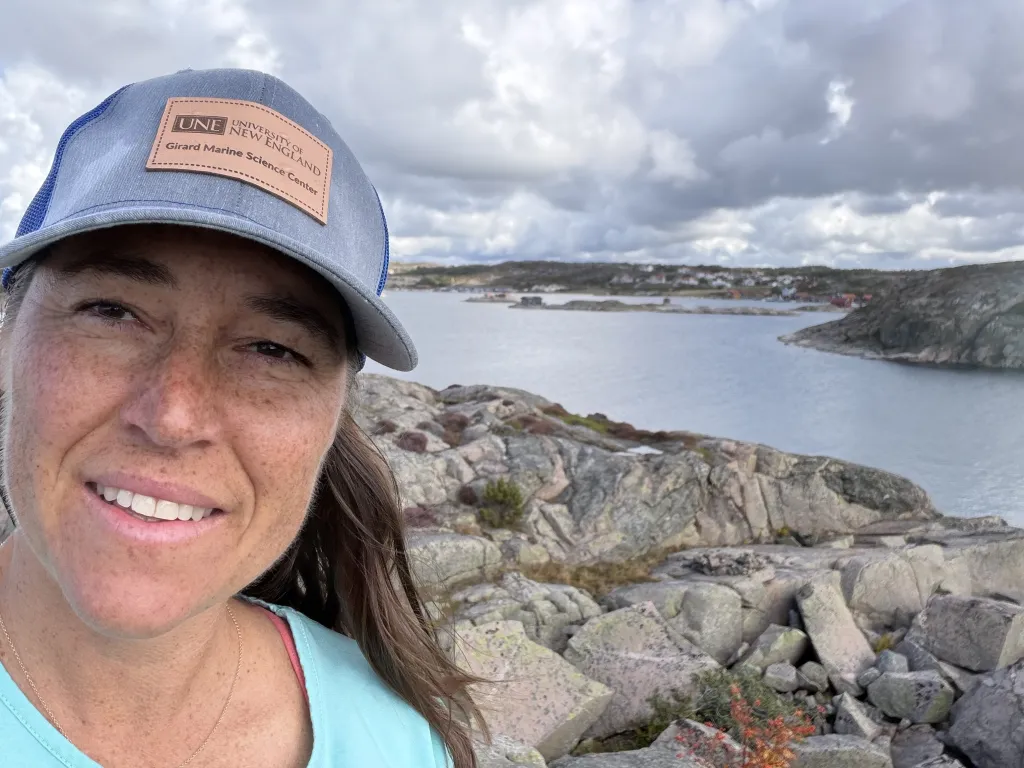
UNE’s Carrie Byron delivers keynote at international mussel symposium in Sweden
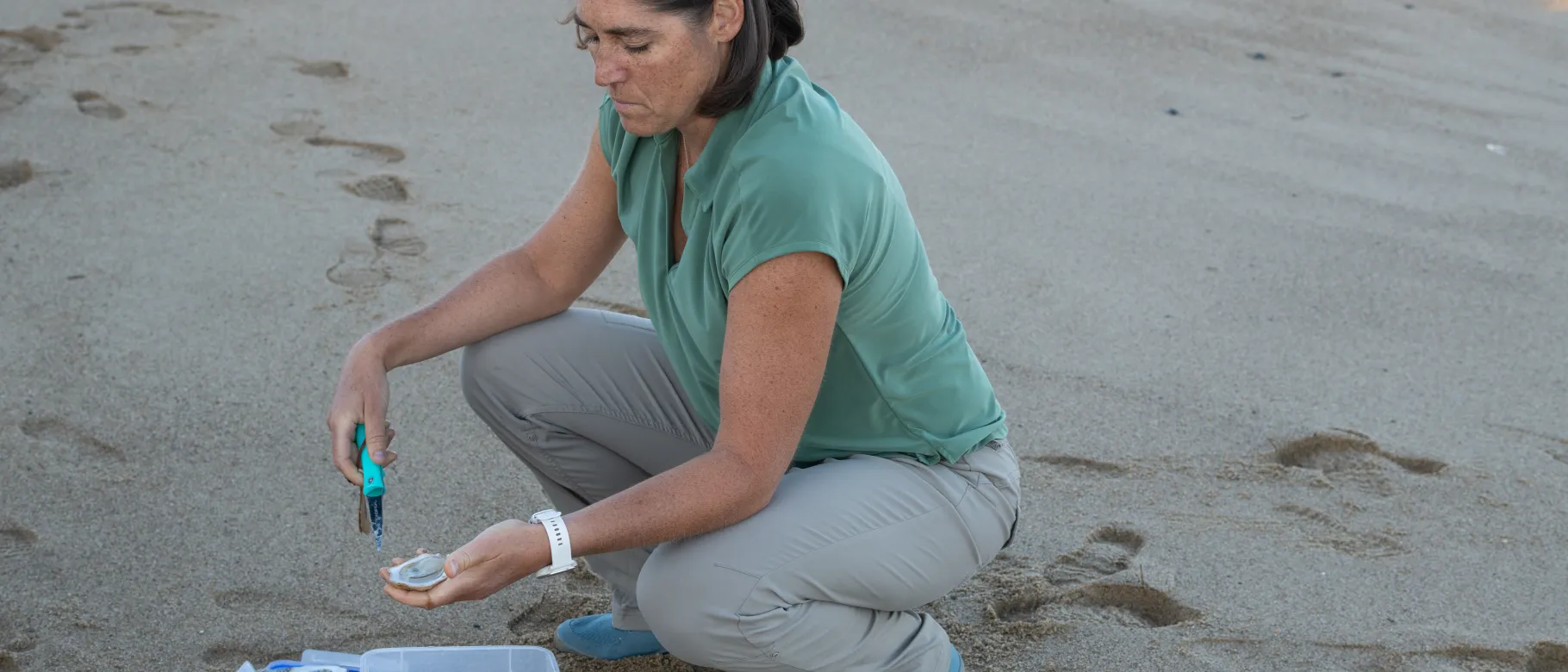
When some 60 mussel researchers from around the globe gathered in Sweden this fall for the biennial International Symposium on Advances in Marine Mussel Research, one of the keynote speakers represented the University of New England.
Carrie Byron, Ph.D., professor in the UNE School of Marine and Environmental Programs, was the only keynote speaker from the U.S. at the symposium that drew scientists from 17 countries. She joined fellow keynotes from the United Kingdom, Italy, and Austria at the three-day event hosted by the Tjärnö Marine Laboratory in Tjärnö, Sweden.
“It is both humbling and rewarding to represent UNE on the international stage as a content expert and keynote speaker,” Byron said.
The gathering celebrates the latest in marine mussel research, from the subcellular and molecular level up to how whole systems function. Its five themes ranged from aquaculture ecology and ecosystem services to climate change and mussel physiology. A central topic was the decline of mussel populations across North America, Europe, Australia, and New Zealand in the advent of warming ocean water.
Byron’s keynote, “Designing Resilient Mussel Systems,” called for a shift in perspective. Rather than treating mussel farms as isolated production systems, Byron studies them as parts of larger coastal ecosystems, connected through species interactions, energy transfer, nutrient cycling, and ecological feedbacks that reach beyond farm boundaries.
“We need to stop thinking about mussel farms as production systems and begin thinking about them as ecological systems that happen to produce food,” Byron recommended in the abstract for her talk.
Her presentation synthesized research that spans nutrition, lipid biochemistry, pathology, food-web ecology, carrying capacity, and ecosystem services — and also how these findings fit within the broader context of global mussel research.
Byron’s research is driven by the challenges faced by mussel farmers in Maine, but the questions it addresses apply to wild mussel populations and changing coastal ecosystems elsewhere, she noted.
Mussels filter water, cycle nutrients, form habitat, support biodiversity and produce food, making the bivalves key players as the world looks past 2030, the deadline for the United Nations’ Sustainable Development Goals, Byron explained in her talk.
With many ocean-related goals still unmet, Byron argued for a new “Theory of Change” that integrates ecology, aquaculture, conservation, and social systems at every scale, from cells and organisms to farms, ecosystems, regions and society.
For Byron, the gathering was a chance to build connections to help forge change.
“The conference was a wonderful opportunity to deepen my understanding of marine mussel population dynamics around the world, reconnect with dear colleagues, and build new collaborative relationships for future work,” Byron said.
“It was an exceptionally productive meeting in a beautiful setting that, in many ways, reminded me of Maine: a temperate, island-dotted coastline shaped by abundant coastal resources and a rich maritime heritage,” she added.