UNE Center for Global Humanities presents “Who Killed the American Dream?”
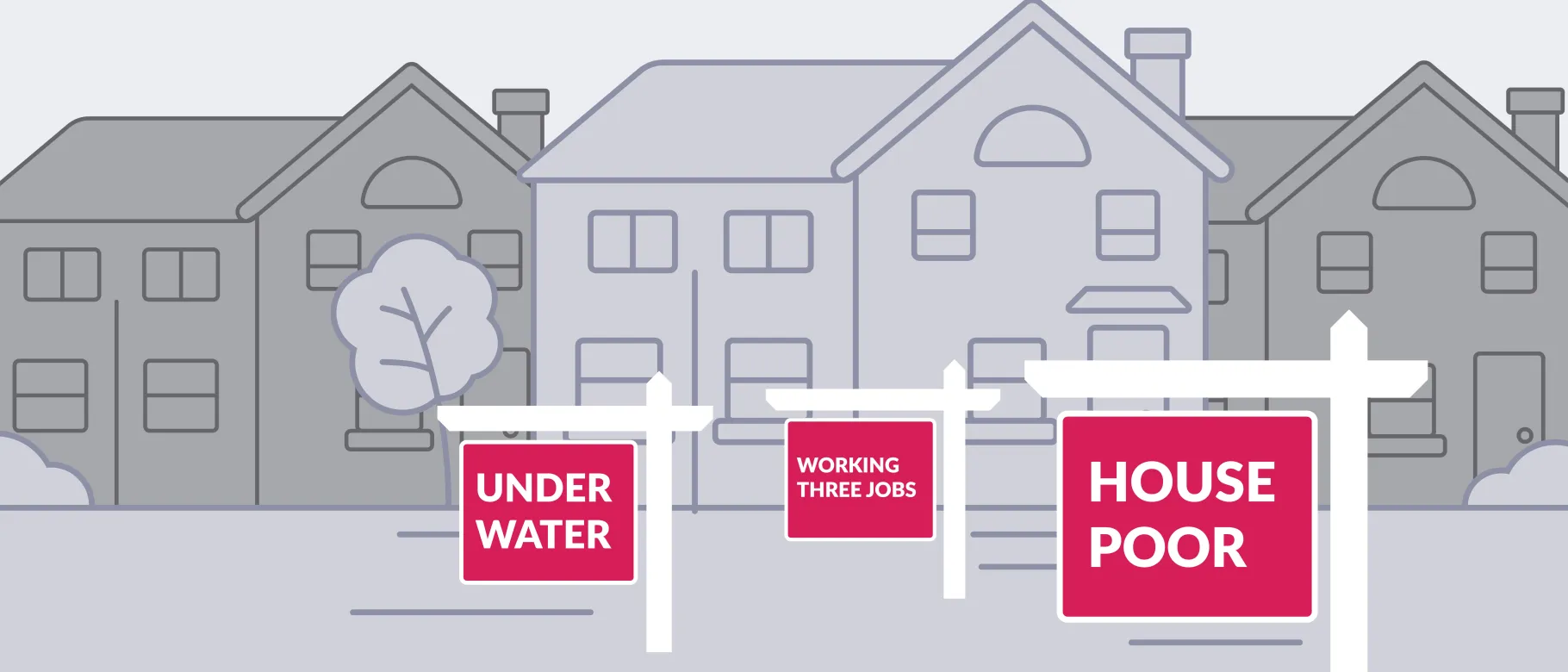
Most of us take it for granted that good neighborhoods with good schools and good housing are only accessible to the wealthy. But in America, this wasn’t always the case. For generations, our nation promoted a revolutionary idea: if you didn’t like your lot in life, you could find a better location and reinvent yourself there.
Colloquially, this geographic and social mobility came to be known as “the American Dream.”
Historian and journalist Yoni Appelbaum will argue, however, that this idea has been under a sustained attack when he visits the Center for Global Humanities to present a lecture titled “Who Killed the American Dream?” on Tuesday, April 28 at 6 p.m. at Girard Innovation Hall on the UNE Portland Campus for the Health Sciences.
As Appelbaum will explain, legal segregation, enforced through the implementation of aggressive zoning laws has raised housing prices, deepened political divides, emboldened bigots, and trapped generations of Americans in poverty. The result is that today people can’t move as readily as they once did. And they can’t climb the social latter to prosperity. Appelbaum will argue it doesn’t have to be this way. After telling the story of the people and ideas that caused our economic and social sclerosis, he will introduce common-sense ways to get Americans moving again.
The lecture will draw from Appelbaum’s acclaimed 2025 book Stuck: How the Privileged and the Propertied Broke the Engine of American Opportunity.
“We have certainly felt the lack of affordable housing here in our Greater Portland community,” noted CGH Director Josh Pahigian, M.F.A. “I am grateful that we can bring a luminary like Yoni Appelbaum to campus to help us understand the problem more deeply and point us toward some practical solutions.”
Appelbaum is deputy executive editor of The Atlantic and a social and cultural historian of the United States. Before joining The Atlantic, he was a lecturer on history and literature at Harvard University. He previously taught at Babson College and at Brandeis University, where he received his Ph.D. in American history.
This will be the twelfth and final event of the 2025-2026 season at the Center for Global Humanities, where lectures are always free, open to the public, and streamed live online. For more information, please visit: