
UNE leads study to measure impacts of coastal engineering on Maine’s shoreline
Wave gauges deployed off the Saco shoreline join a growing network of sensors spearheaded by UNE researchers to inform coastal resilience planning for weather-beaten communities
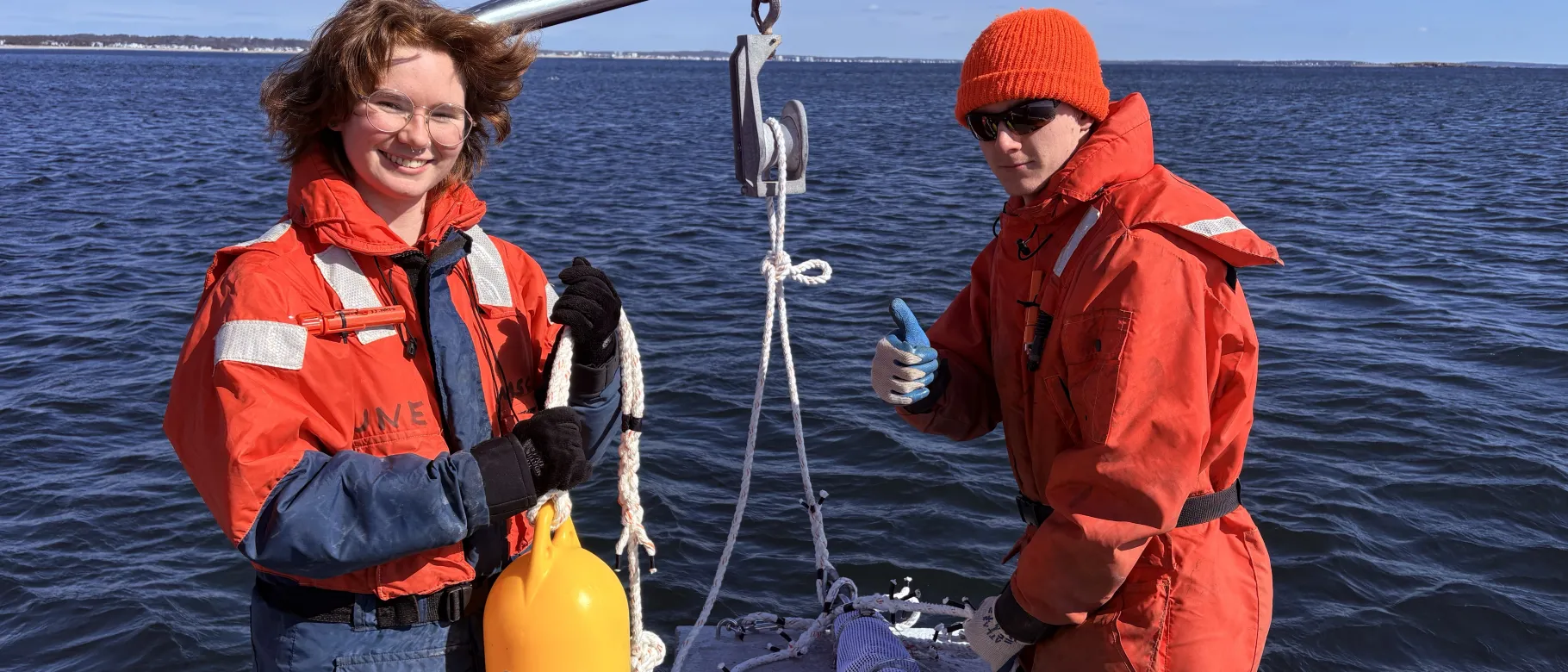
Researchers from the University of New England have installed specialized wave-monitoring equipment off the coast of Saco to better understand how a planned coastal engineering project may reshape shoreline conditions near Camp Ellis.
A crew of UNE faculty and students deployed two wave gauges just north of the Saco jetty, a long-standing structure at the mouth of the Saco River that has historically altered sand movement and wave patterns along the shoreline. The effort, led by Will Kochtitzky, Ph.D., assistant professor in UNE’s School of Marine and Environmental Programs, is designed to establish a baseline of wave activity ahead of upcoming construction by the U.S. Army Corps of Engineers.
The Corps is expected to begin work this spring on a spur jetty extending from the existing structure on its northern side. The addition is intended to help reduce coastal erosion in the Camp Ellis area by moderating wave energy and sediment transport. Construction is anticipated to continue through summer 2027.
The UNE-led monitoring effort will provide detailed, real-time data on wave conditions before, during, and after the project. Each gauge is anchored to the seafloor and equipped with sensors that measure water pressure dozens of times per second, allowing researchers to calculate wave height and energy with high precision. The instruments, deployed Sunday, March 29, are attached to surface buoys for retrieval and data collection.
By capturing conditions prior to construction, researchers aim to create a clear point of comparison for evaluating how the spur jetty influences wave dynamics over time.
Kochtitzky said the data will also help inform local and regional conversations about shoreline management and coastal resilience, while also providing valuable workforce-ready opportunities for students.
“It’s quite rewarding to get to work across the University, the City of Saco, and our coastal partners to generate data that can directly inform decisions about shoreline management and resilient infrastructure,” Kochtitzky said. “And it’s especially rewarding to involve students in this work, giving them practical, hands-on experience that prepares them for careers in marine and environmental research while contributing to a better understanding of the rapidly shifting conditions impacting our home communities.”
The project reflects a broader collaboration among researchers, municipal partners, and coastal stakeholders seeking science-based solutions to long-standing erosion challenges along southern Maine’s shoreline, Kochtitzky said. Findings from the study are expected to contribute to future decision-making around coastal infrastructure and environmental stewardship.
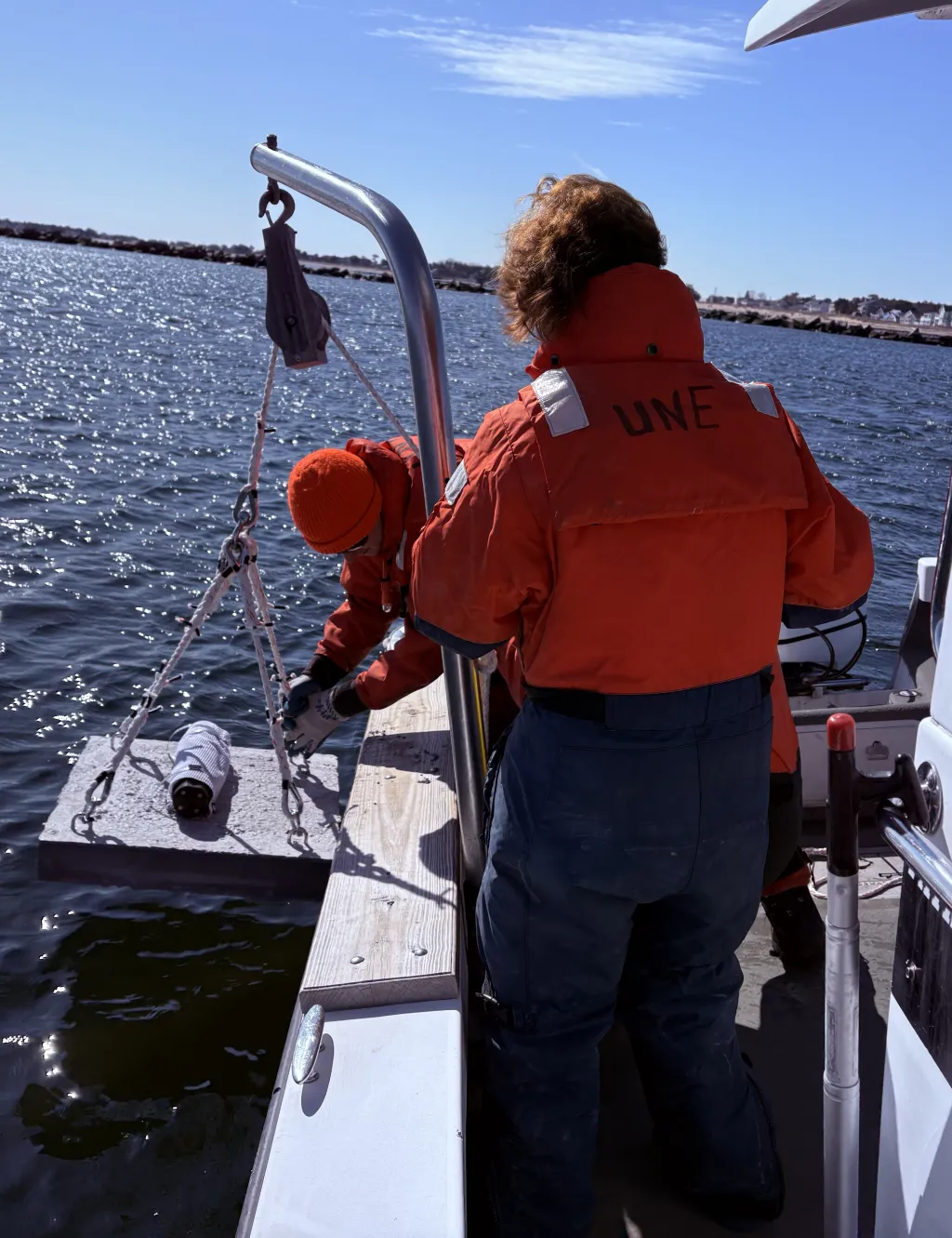
The devices were deployed the Saco coastline