UNE offers high schoolers insights, encouragement into STEM fields
UNE medical students teach anatomy lessons to high schoolers across the state of Maine, sharing pathway to health professions
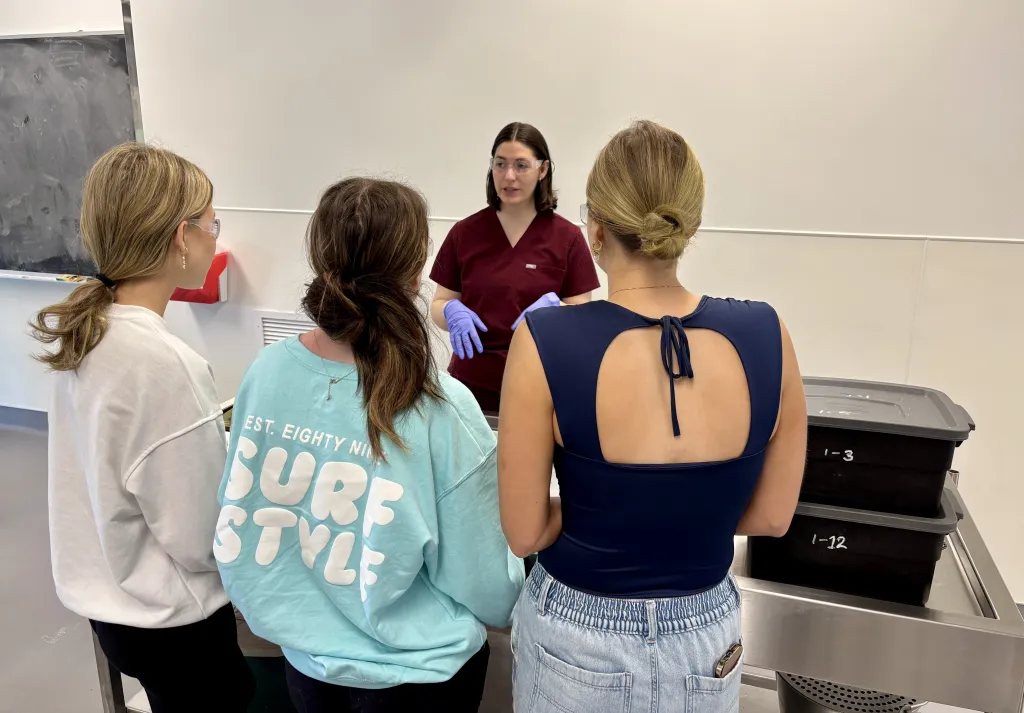
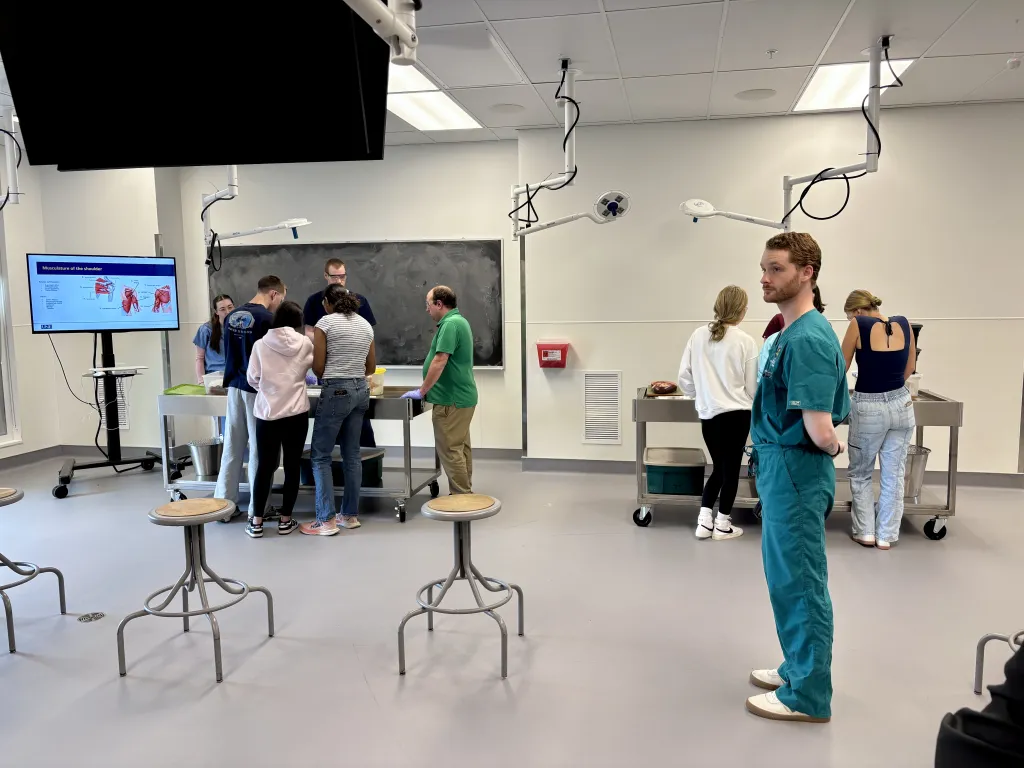
Chris Brennick looked around at the floor-to-ceiling windows in the University of New England medical education facility on the Portland Campus for the Health Sciences, the video equipment above him, and the laboratory holding donor anatomy samples — the only such lab in Maine — where 14 high school students from Rumford were learning from UNE medical students in a program replicated in few places across the country.
What most impressed Brennick, Mountain Valley High School's extended learning opportunities coordinator, wasn't how the medical students were teaching biology through hands-on lessons using donated organs and muscle groups, but how they were serving as examples of what's possible.
"A part of the reason we take these trips is so that the kids can expand the universe of possibilities for themselves in the future," Brennick said. "Kids might not have thought about medical school or what that looks like. This gives them something to chew on."
In partnership with teachers in Maine schools, UNE is developing STEM lessons to encourage students to envision themselves pursuing careers in STEM fields. The Anatomy Outreach for Research and Teaching Advancement (AORTA) Program at UNE was created in 2024 by Tyler Redway, Ph.D., an assistant professor of anatomy in UNE's College of Osteopathic Medicine, modeled after a similar program Redway coordinated at The Ohio State University College of Medicine.
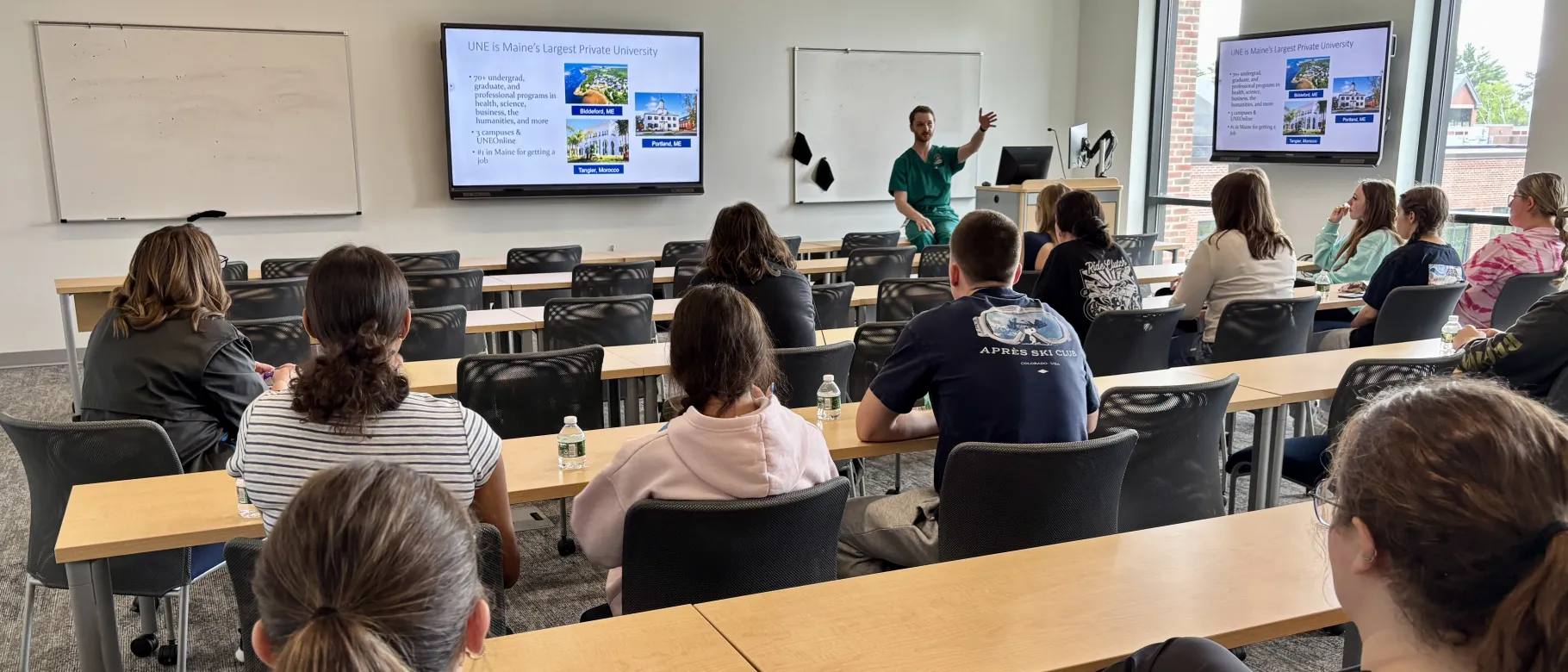
Each session begins with Redway introducing UNE’s medical school, explaining what a donor lab is, and describing how organs are provided through the generosity of those who donate them after their death.
Then the medical students take over, leading lessons at four stations using isolated donor organs to demonstrate components of various body systems, such as the liver, heart, and uterus, as small groups of high school students rotate between stations.
In the spring of 2024, the UNE AORTA program hosted 11 high school groups. By the academic year 2024-25, Redway doubled that to 20 schools, reaching nearly 500 students. Then, following the medical school's move from Biddeford to the Harold and Bibby Alfond Center for Health Sciences in Portland last year, 23 sessions drew 486 high school participants during the 2025-2026 academic year.
Many schools come from Greater Portland, but others travel from rural areas. The group from Mountain Valley High School, which is located 75 miles north of Portland in the foothills of the White Mountains, traveled three hours roundtrip. A group from Nokomis Regional High School in Newport also traveled more than three hours roundtrip for Redway’s program.
Although Redway’s quick to point out, it’s not really his class.
Redway leaves the teaching to the first-and-second-year medical school students whom he trains. This year, Redway had 88 medical students volunteer at AORTA programs – and a waiting list of others who want to help.
First-year medical student Zach Harmon (D.O., ’29), who helped at four sessions this year, said he volunteers because he didn't understand what medicine was about when he was young — and now he wants to be a brain surgeon.
"I'm not the traditional applicant. I took four years off before going to medical school," Harmon said. "I think a lot of people think if they don't make it right after undergrad they might think, 'Well, this is not for me.' But it's important to keep trying and to follow that dream."
Kristen Garbarini, a science teacher from Mountain Valley who has attended two AORTA sessions, said the program has a lasting impact on her students.
"This experience gave my students a deeper appreciation for the complexity of the human body and the generosity of body donors," Garbarini said. “It was a respectful, engaging, and meaningful program.”