
Image

This website uses cookies to understand how you use the website and to improve your experience. By continuing to use the website, you accept the University of New England’s use of cookies and similar technologies. To learn more about our use of cookies and how to manage your browser cookie settings, please review our Privacy Notice.
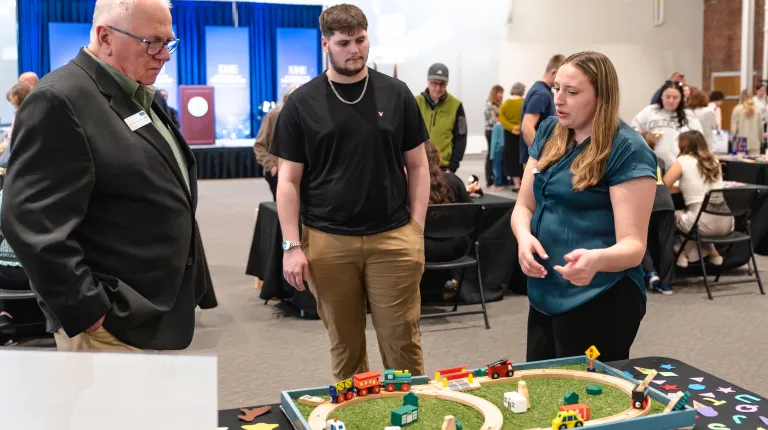
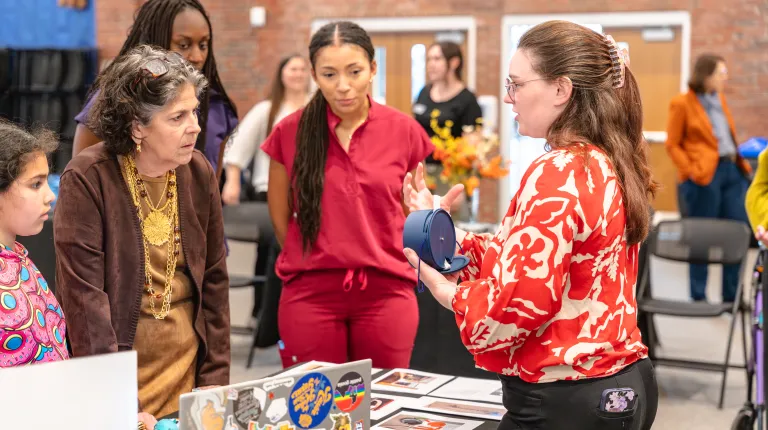
A climbing tent with a hammock tucked inside. A water table designed so a child in a wheelchair can roll right up to it. These were among more than 20 student-designed adaptive projects on display on April 14 at the University of New England's annual Adaptive Projects Expo, where first-year occupational therapy graduate students presented hands-on creations built to support children of all abilities.
The event at Arthur P. Girard Innovation Hall on UNE's Portland Campus for the Health Sciences is a signature event of UNE's Department of Occupational Therapy.
Projects were built to match real community needs, with students working alongside clinicians from six organizations including the StoreySmith Pediatric Clinic, Play Warriors in Bridgton and Windham, Maine, and the Bath Area YMCA.
Some projects were specific to a particular child, while others were requested by clinicians for a particular general need. Still, other projects were the creations of UNE students based on their own creativity and desire to help assist children in need.
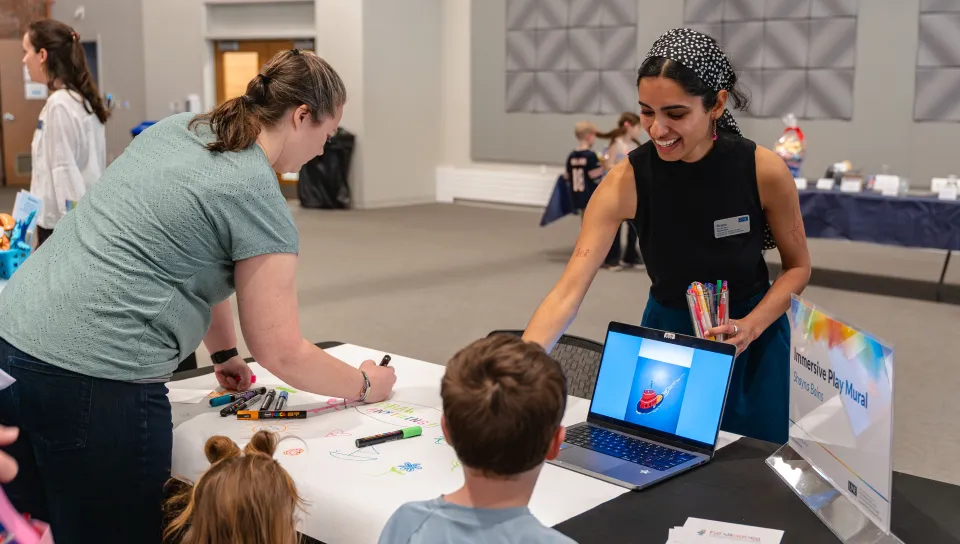
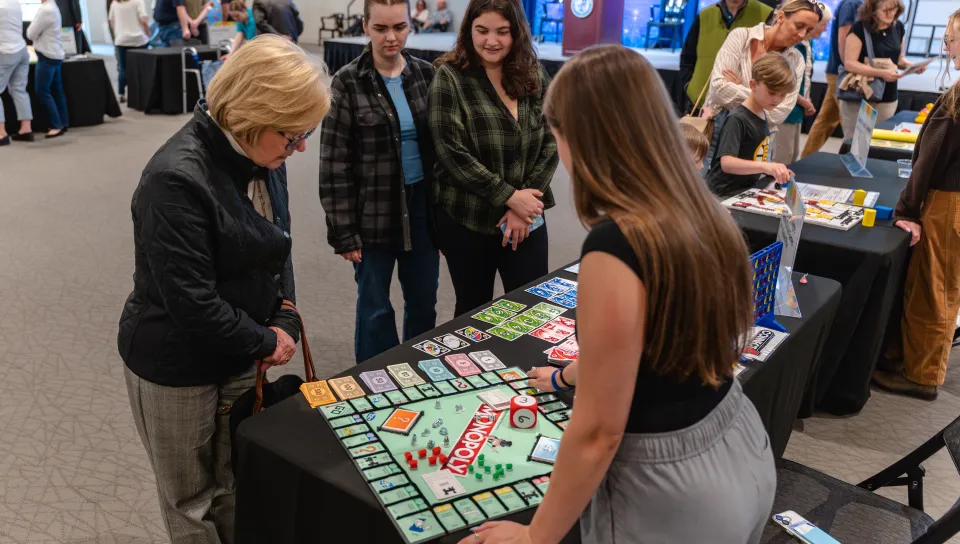
The expo drew local families, community partners, and organizations to explore the innovative games and projects built by the Class of 2027 in the Westbrook College of Health Professions (WCHP). Following the event, the projects were donated to local families and partner organizations for continued use.
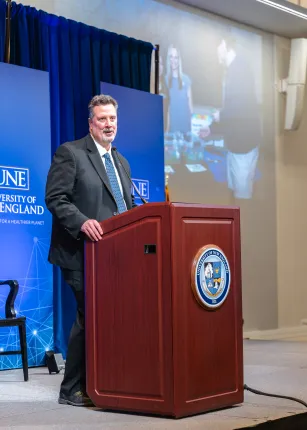
While WCHP Dean John Vitale, Ph.D., told those gathered in his welcome remarks that the expo was one of his favorite annual UNE events, Expo co-director Jamie Harmon lauded the event as a simulation of troubleshooting and design work that is as close to being a professional occupational therapist as possible.
“The students can take what they learn in the classroom and apply it to a real-life experience: getting to meet with clinicians that have a specific need for a specific child, and being able to create that, make that come to life, and then be able to give that back and give that to the child and see them enjoy it,” Harmon said. “It's nice to have those full-circle moments to see that what they're learning makes a difference.”
Nathan Tolosky saw his wooden, rock-climbing-wall tent make a difference, an experience that validated his choice to pursue a career in occupational therapy.
Rock climbing is what drew Tolosky to occupational therapy in the first place, so when the assignment came around, he built a camping-themed climbing tent — and then kept going. Inside the structure, he added a hammock for vestibular stimulation, programmable lights to help children adjust to visual stimuli, and a speaker for calming music.
“Engaged therapy is better therapy. You get better results from it,” Tolosky said, as several children climbed on and into his wooden tent as their parents looked on.
Engaged therapy is better therapy. You get better results from it." — Nathan Tolosky (M.S.O.T., ’27)
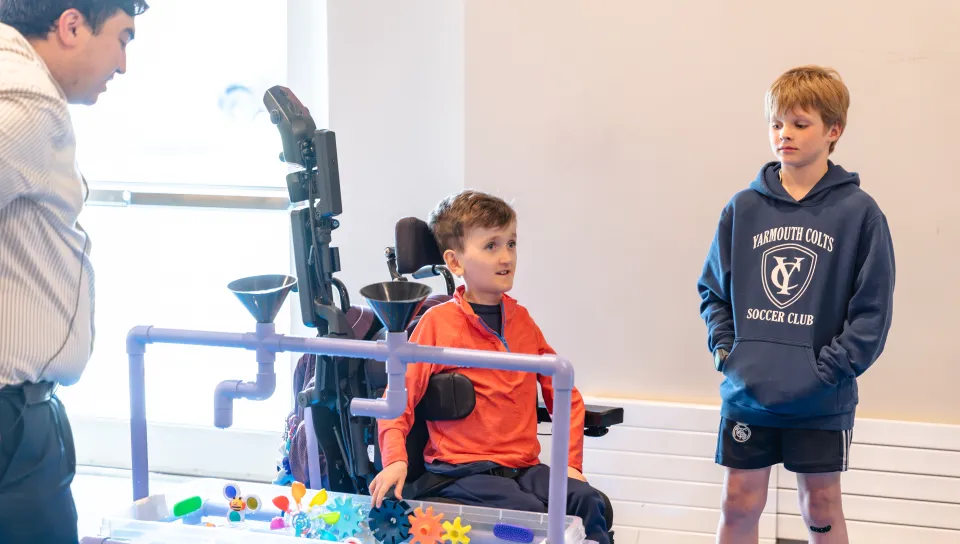
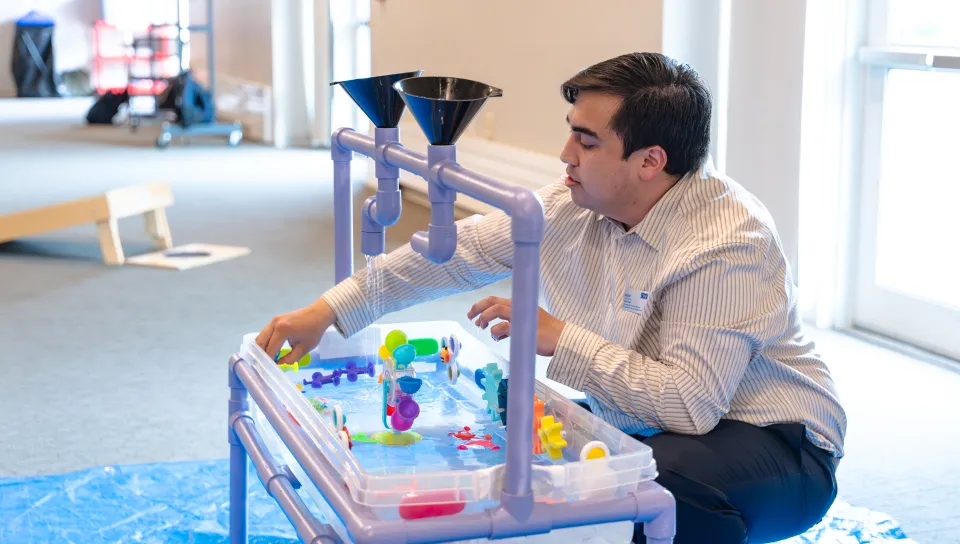
Meanwhile, Aaron Segal built a water play table because of conversations inspired by his older sister, a speech-language pathologist. The table featured water pathways, a water wheel, and a small spout — all designed to deliver sensory input and self-regulation through touch, sight, and the natural calming effect of flowing water.
"Self-regulating — that means calming our inner self, our emotions," Segal said, translating the clinical term.
Segal intentionally built the table 20 inches from the ground to make it accessible to children of varying heights as well as to wheelchair users. That design choice paid off at the Expo, when a child who used a wheelchair rolled up independently to explore it.
"Play should be accessible to everybody, regardless of ability," Segal said. "Seeing (the child) able to easily roll up to the table and not have that barrier — that made me very happy."
View media coverage by WMGE CBS 13 (April 15, 2026), WMTW 8 (April 16, 2026), MSN (April 16, 2026).