

Why UNE for Your B.S. in Sustainability and Business
Our commitment to the environment and our dedication to out-of-the-box thinking makes UNE the ideal place to earn your Bachelor of Science degree in Sustainability and Business. We celebrate a University-wide commitment to green business practices — making The Princeton Review’s list of most environmentally responsible colleges eight times. You’ll experience courses like environmental studies and ecological economics first-hand with an innovative education that includes:
- Green Learning Community for first-year students
- Marine Science Center with aquaponics, aquaculture, and fisheries lab
- Kelp farming research
- Makerspace for innovative ideation and prototyping
What Will You Study? Sustainability and Business Degree Curriculum Overview
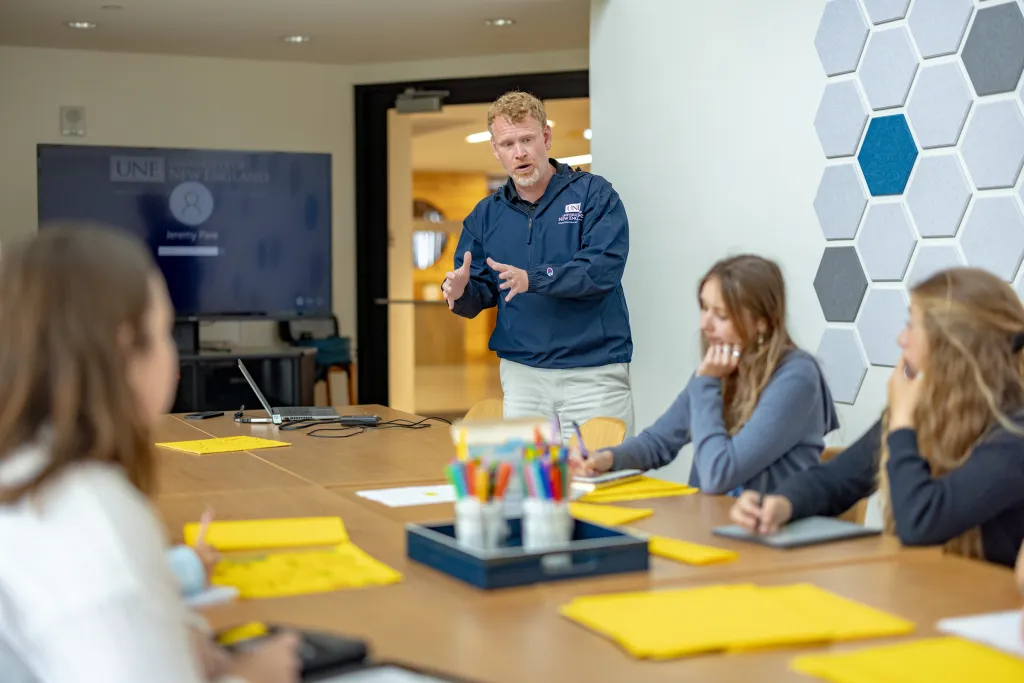
There are many ways you can navigate this major. The following are some examples of the exciting courses that the Bachelor of Science degree in Sustainability and Business offers:
- Sustainability for a Healthier Planet
- Climate Change: Causes, Consequences, and Solutions
- Environmental Movements and Social Change
- Environmental Economics
- Creating Social Enterprises Through Change Leadership
- Social Innovation and Entrepreneurship
To view the full curriculum, see the academic catalog.
Green Learning Community
First-year Business, Communications, Sport Leadership and Management, and Marine Entrepreneurship majors can participate on a competitive basis in the Green Learning Community (GLC). The GLC is an intentional community of professors and first-year students dedicated to studying human relations to the environment through many ways of knowing. You will study environmental issues through the integrated lenses of biology, literature, environmental studies, and economics.
Career Paths for Sustainability and Business Degree Grads
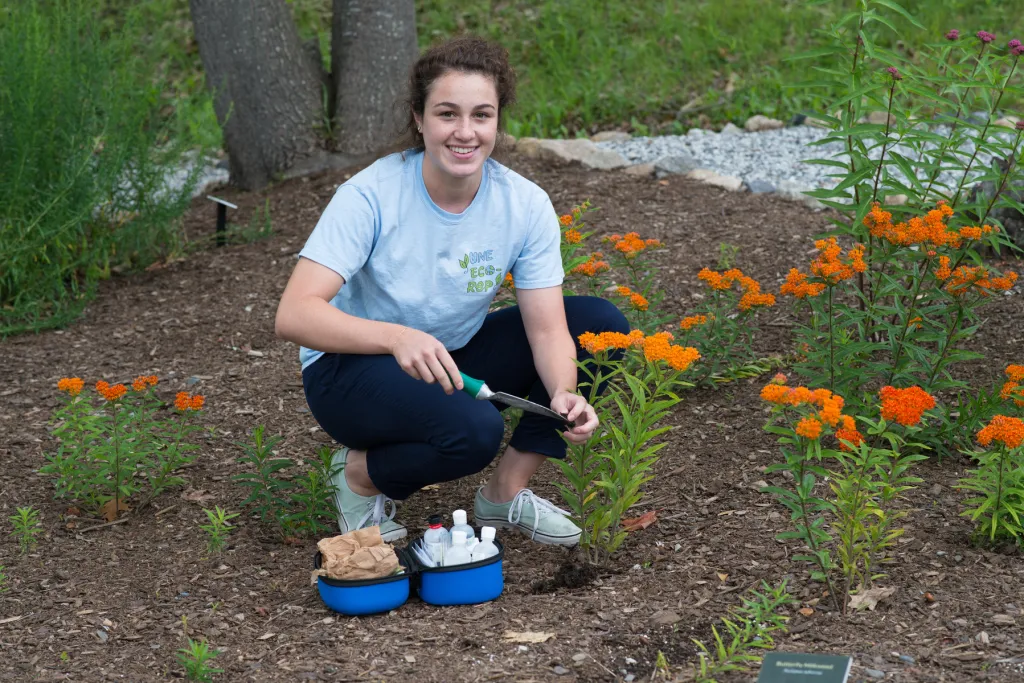
Perhaps you’re an aspiring green entrepreneur, or maybe you’re interested in the management of corporate sustainability practices. Wherever your aspirations take you, you’ll graduate with the knowledge, internship experiences, analytical skills, and ethical grounding you need to have a successful career combining business and sustainability. Relevant professions include:
- Chief Sustainability Officer
- Green Business and Corporate Manager
- LEED Certified Construction Manager
- Green or Sustainable Entrepreneur
- Sustainability Program Developer
- Environmental Public Affairs Officer
- Community Economic Development Manager
Career Advising for Sustainability and Business Majors
Whether you have a specific career goal in mind or a general idea of the field that interests you, Career Advising is here to help you plan your next step.
Innovative Makerspace Facilities for Sustainability and Business Degree Seekers
The P.D. Merrill Makerspace is a fully equipped laboratory for creating and building, turning ideas into reality, and developing sustainable solutions to real-world problems. Whether you come to the Makerspace as part of an environmental studies or ecological economics class, as a student researcher or innovator, or just for fun, the Makerspace has something to offer every student — regardless of program or major.
Watch: UNE Students in the Makerspace
Experiential Learning in Sustainability and Business
The Sustainability and Business degree at UNE provides hands-on learning, both in and out of the classroom, to give you real-world experiences and the confidence to make a difference.
- Use the latest technologies in the Makerspace, such as 3D printers and CNC routers
- Apply learning to actual environmental problems as part of the first-year Green Learning Community
- Conduct research on sustainable products, such as aquaponically grown vegetables and farmed shiitake mushrooms
An Internship Story
2022 Student Innovation Showcase
Beyond the Classroom
- Participate in UNE’s Student Innovation Challenge, a University-wide idea-stage competition
- Intern on campus at UNE’s Office of Sustainability or off campus at various aquaculture farms and fisheries or other institutions, including:
- National Oceanic and Atmospheric Administration (NOAA)
- Gulf of Maine Research Institute
- Manomet U360: Economic System
- New England Aquarium
- Bigelow Laboratory for Ocean Sciences
- Wells National Estuarine Reserve
Apply Today
Ready to begin your future in UNE’s Bachelor of Science degree in Sustainability and Business?
B.S. in Sustainability and Business FAQ
What is a business sustainability degree?
A business sustainability degree program considers and applies environmental, social, and financial concerns to create a more sustainable world. By studying business sustainability, students gain the knowledge, experience, and ethical grounding to play a leadership role within a public or private company, nonprofit organization, or an entrepreneur.
UNE in Maine offers a Bachelor of Science (B.S.) in Sustainability and Business, a collaboration between the School of Marine and Environmental Programs and the College of Business. Our B.S. in Sustainability and Business program is interdisciplinary, encouraging collaboration and hands-on learning in real-world settings. The first year includes a Green Learning Community where you’ll examine environmental issues by considering biology, literature, environmental studies, and economics.
Learn more about UNE’s Bachelor of Science (B.S.) degree in Sustainability and Business
What can you do with a business sustainability degree?
A business sustainability degree readies you for ethical and socially responsible roles in the fields of sustainability and business. It hones your problem-solving skills with a focus on human connections with nature. This degree sets you on a path to meet your personal and career objectives and to pursue entry-level positions in both public and private sectors, or further studies at the graduate level.
Whether you're aiming to be a green entrepreneur or want to oversee corporate sustainability, UNE’s business sustainability degree program in Maine equips you with the knowledge, practical experience, analytical abilities, and ethical foundation needed for a successful career in the intersection of business and sustainability.
UNE students that have graduated with a B.S. in Sustainability and Business have gone on to hold roles as chief sustainability officer, green business manager, LEED certified construction manager, sustainable entrepreneur, sustainability program developer, environmental public affairs officer, and community economic development manager. Students can benefit from the Academic and Career Advising Center, whether they have specific career goals or general field interests.
What skills do sustainable business majors learn while in school?
Sustainable business courses blend traditional business topics like accounting, marketing, economics, and strategic management with a curriculum focused on systems thinking, ecology, natural resource management, and environmental science and policy.
At UNE, students learn the basics of business and ecology and use them in sustainability projects for various organizations. They integrate environmental, social, and economic factors to solve real-world problems. They also discover how to assess the risks and rewards (including economic, social, and environmental) of sustainable ventures, comparing short-term gains with long-term benefits.
Examples of exciting courses that the Sustainability and Business degree at UNE in Maine offers include:
- Sustainability and Ecological Restoration
- Climate Change Adaptation: Planning and Policy
- Environmental Movements and Social Change
- Ecological Economics
- Management of Nonprofits
- Social Innovation and Entrepreneurship
In addition to classes, first-year Sustainability and Business students, along with other environmental students, engage in a year-long learning community centered on core environmental study topics. This interdisciplinary method helps students grasp the intricacies of environmental issues and enhances their critical thinking, writing, speaking, research, and computer skills.
Learn more about UNE’s B.S. in Sustainability and Business curriculum
Is a degree in business sustainability worth it?
Many students find a business sustainability degree valuable because of the high demand for sustainability jobs. As sustainability becomes more important, various industries will rely on sustainability managers to tackle complex challenges. According to Zippia, as of September 2023, the average sustainability major makes about $55,980 a year, and if you are in the top 10 percent of earners in this field, you will make over $108,000.
Choosing to major in sustainability and business at UNE in Maine showcases your dedication to devising innovative solutions that support business growth while prioritizing sustainability. This enhances your attractiveness in today’s job market. Employment opportunities include Corporate or Municipal Sustainability Officer, Green Business Manager, Community Economic Development Manager, Environmental Affairs Officer, Green Entrepreneur, and Sustainability Program Developer.
What is the best sustainability and business degree for me?
Interested in studying sustainability and business? This list can help you decide which is the best sustainability and business program for you:
Faculty
Decide if faculty expertise aligns with your specific interests and career goals. Also consider reviewing faculty research and professional backgrounds to determine the best fit for your educational journey.
The faculty at UNE's College of Business in Maine are experienced, skilled, and supportive. They provide pertinent coursework that equips students to excel and confront the evolving challenges of our dynamic world. Through highly collaborative and interdisciplinary study, UNE faculty will teach you how to bring together environmental, social, and financial concepts to help create a more sustainable world.
Meet faculty and professional staff in UNE’s College of Business
Meet faculty and professional staff in UNE’s School of Marine and Environmental Programs
Curriculum
Take a look at an undergraduate business school’s curriculum and see if it includes rigorous courses in sustainability along with a core business curriculum.
UNE’s Business and Sustainability Curriculum is interdisciplinary and designed to offer students numerous opportunities for collaboration and experiential learning, and for applying their skills in real-world settings. Examples of courses you can take include:
- Sustainability and Ecological Restoration
- Climate Change Adaptation: Planning and Policy
- Environmental Movements and Social Change
- Ecological Economics
- Management of Nonprofits
- Social Innovation and Entrepreneurship
First-year students majoring in Sustainability and Business at UNE in Maine can join the competitive Green Learning Community (GLC). This community, composed of professors and first-year students, focuses on exploring the relationship between humans and the environment from various perspectives. You'll examine environmental issues by considering biology, literature, environmental studies, and economics.
Learn more about UNE’s B.S. in Sustainability and Business curriculum
Career goals
Choose a sustainability and business program that aligns with your career aspirations and goals, including internships. Explore the available resources to help you plan your path forward.
As a sustainability and business student at UNE in Maine, you’ll be well prepared for entry-level positions in either the private or public sector and/or coursework at the graduate level.
Our program provides hands-on learning, both in and out of the classroom, to give real real-world experiences and the confidence to make a difference including:
- Using the latest technologies in the Makerspace, such as 3D printers and CNC routers.
- Applying learning to actual environmental problems as part of the first-year Green Learning Community.
- Conducting research on sustainable products, such as aquaponically grown vegetables and farmed shiitake mushrooms.
- Participating in UNE’s Student Innovation Challenge, a University-wide idea-stage competition.
- Interning on campus at UNE’s Office of Sustainability or off campus at various aquaculture farms and fisheries or other institutions.
UNE Students can benefit from the support of the Academic and Career Advising Center, whether they have a clear career goal or a general interest in a particular field.
Learn more about Career Advising at UNE
Learning environment
Consider the location and environment that best supports your undergraduate journey as a sustainability and business major.
Discover and educate yourself on our distinctive coastal Maine campus, encompassing 540 acres of coastline, riverbanks, woodlands, wetlands, dunes, and vernal pools. This backdrop provides the perfect place to study sustainability and business.
Learn more about UNE’s campuses and how you can visit us
Our dedication to the environment and innovative thinking make UNE the perfect place for your Sustainability and Business degree. With electric car charging stations, sustainable landscaping, a green living wall, Edible Campus Initiative, and a Green Revolving Fund, we emphasize a university-wide commitment to eco-friendly practices.
Learn more about sustainability at UNE
We also encourage sustainability and business students to study abroad and learn about environmental concerns and — possible solutions — in other geographic areas. UNE's Global Education program offers semester-long study abroad options in Spain, France, Iceland, or our Morocco campus. You can also select shorter travel courses to places such as Ireland, Mexico, Kenya, Italy, Cuba, and more.
Learn more about study abroad opportunities at UNE
Financial aid
Consider whether the school you're interested in provides financial aid or scholarships to support your education.
A UNE undergraduate education is affordable. Our tuition is 16% below the average tuition for private universities in New England. Plus, all incoming full-time undergraduate students at UNE will receive Merit Scholarships in amounts from $5,000 to $22,000 per year.
Learn more about grants and scholarships available to students at UNE
For more information contact Program Director Jeremy Pare at jpare@une.edu.