
Why UNE for Community Education
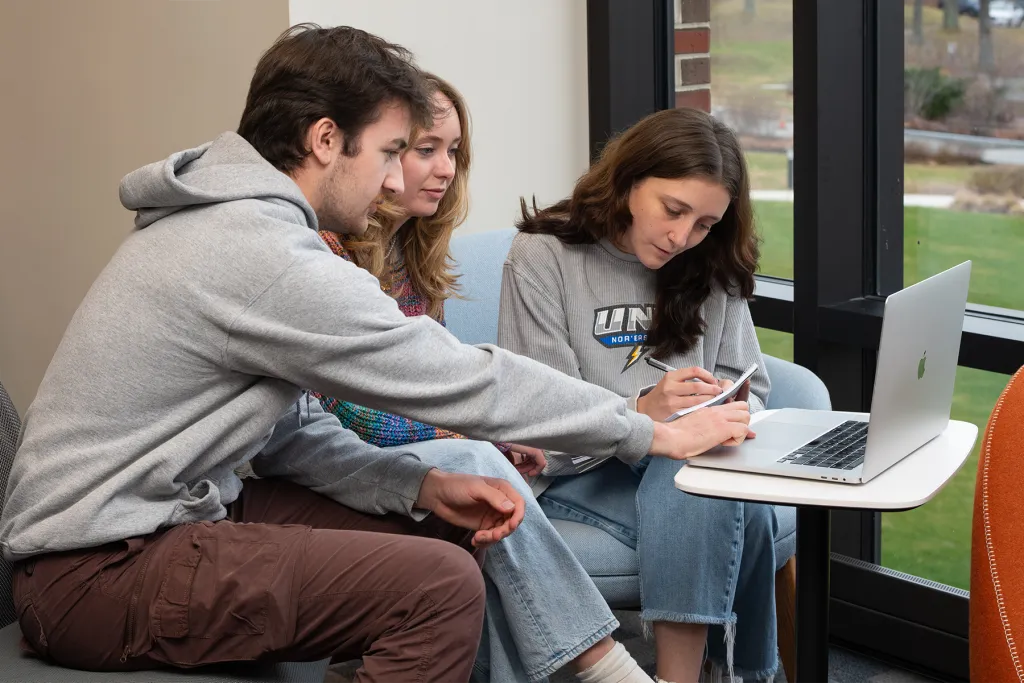
UNE’s Community Education curriculum is structured with optimal flexibility to accommodate many different career paths with educational contexts. Our expert faculty get to know each student, helping them create a personalized experience with tailored courses and internship opportunities. With this unique program structure, you’ll have the opportunity to customize your degree based on your own personal and professional goals.
- Gain skills to educate people without teaching certification in virtually any setting, from private schools to nonprofits.
- Customize your degree to your interests with our flexible program structure, where no two students’ paths are the same.
- Bring education to life with hands-on learning, engaging fieldwork, and personalized internships.
- Pursue double majors, minors, concentrations, and study abroad opportunities while staying on track with your degree plan.
- Enjoy small class sizes and close working relationships with UNE’s School of Education faculty.
- Build your professional network collaborating with local schools and partners starting your very first semester.
- Enjoy our southern Maine location, home to vibrant communities and exceptional industry partners.
- Join Maine’s #1 college for getting a job after graduation (Zippia).
Community Education Program Details
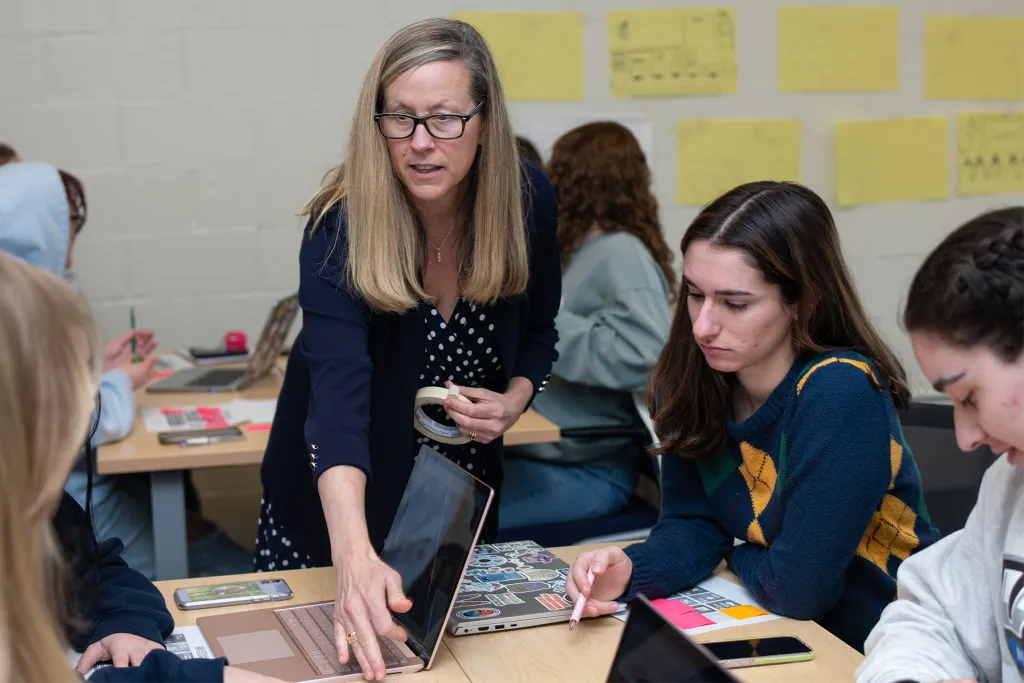
UNE’s B.S. in Community Education is designed to be flexible, allowing you to double-major or minor with a variety of other degree programs, including Occupational Studies, Coaching, Art Therapy, and more. There are just three required courses, allowing you to select additional education courses and other electives that match your interests. Another key feature of our Community Education program are the internships you’ll pursue in settings outside of school systems to prepare for your future career. Our faculty will partner with you to create a personalized curriculum and hands-on learning experience based on your unique goals.
B.S. in Community Education Courses
You will be required to complete three Education program core courses that will provide a foundation for your broad interest in community education:
- Educating for Community and Belonging
- Curriculum, Instruction, and Assessment
- Introduction to Special Education
Other exciting courses you can take as a Community Education major include:
- Trauma Responsive Education
- Controversial Topics in Education
- Supporting 21st-Century Learning Through Technology
- Social Psychology
- Assistive Technology in Schools
- Politics of Public Health
- Disability Studies and Inclusive Communities
The strength of the Community Education major falls in its flexibility, allowing you to choose from over 40 possible cross-disciplinary elective courses. This allows students to double-major with programs such as:
Through your electives, you may also choose to pursue minors like:
To see the full curriculum, view the academic catalog.
We also offer a minor in Education.
For more information, contact Lane W. Clarke, Ed.D., at (207) 602-2682 or lclarke1@une.edu.
Career Paths for Community Education Majors
UNE’s Community Education program prepares students for diverse education-related careers outside of traditional K–12 classroom settings. You’ll graduate with academic training and hands-on experience that will set you apart and have many fascinating professions to explore, including:
- Community outreach director
- Private school teacher
- Academic advisor
- Instructional designer
- Health educator
- Coach
- Educational publisher
- Early childhood educator
- Daycare owner
- Camp director
- Museum educator
You may also use the Community Education B.S. as a stepping stone to further your education in graduate programs in social work, speech-language pathology, school counseling, and more.
Career Advising for B.S. in Community Education Students
Whether you have a specific career goal in mind or a general idea of the field that interests you, Career Advising is here to help you plan your next step.
Thinking About a Career in Healthcare?
UNE’s Pre-Health Advising program helps you explore careers, build experience, and prepare for professional school.
- Individualized advising and application strategy
- Guidance on experiences, prerequisites, and exams
- 4-year readiness plan with gap growth year options
- Mentoring and pre-health community connections
Education Minor
The Education minor builds foundational teaching and communication skills you can apply across a wide range of careers. Whether you’re exploring education as a profession or preparing to teach and support others outside traditional K–12 settings, this minor complements many majors and supports work in areas such as healthcare, museums, nonprofits, environmental programs, human services, training and development, and international or community-based education.
Learn more about Education minor requirements in the academic catalog
Experiential Learning in the Community Education Program
UNE’s Community Education major emphasizes hands-on, real-world learning, providing experiences that will set you apart in many professional fields.
Your experiential, hands-on learning culminates with 12 credits of career-focused internships that provide real-world experience before graduation. These learning opportunities should parallel your area(s) of interest and help you gain experience, skills, and knowledge in your desired community education field. Your internship experiences will also help you network with professionals and boost your resume.
Internships for Community Education Majors
As a Community Education major, you might intern at a charter or alternative school, holistic learning classroom, education company, science center, state or national park education program, youth camp, museum, early childhood center, tutoring center, or government office. Our students have benefitted from a wide array of enriching internships at sites that include:
- Learning Works
- Boys and Girls Club of Maine
- Girl Scouts of the USA
- Engine Art Program
- Zero Gravity Sports
- UNE Student Life and Admissions offices
- Local museums
- Pre-schools
- Public schools
For more information, contact Lane W. Clarke, Ed.D., at (207) 602-2682 or lclarke1@une.edu.

Global Opportunities for Community Education Majors
In addition to opportunities for semesters abroad at our Morocco Campus and partner institutions, you may choose to enroll in short-term travel courses, including our education-related travel course:
Finland
EDU 242/242L: Comparative Education in a Global Context
Spring 2027
- Open to: Undergraduate Students
- Faculty: Lane Whitney Clarke, Ed.D.
- Application Deadline:
Travel to Helsinki, Finland, over spring break to discover the innovative teaching methods that have made Finland a global leader in education. Through school visits, seminars, and discussions, you will investigate comparative education theories and learning philosophy. In addition to visiting multiple schools, you will explore Finnish food, culture, and sauna. This course fulfills Human Experience (HE) and Social Global Awareness (SGA) requirements.
This course runs every other year.
To enroll in our travel courses or learn more, visit the Global Education Program website.
Apply Today
Ready to begin your future in UNE’s Community Education degree program? Get started today, or contact Lane Clarke, School of Education director, for more information.

Bachelor of Science in Community Education FAQ
What is community education?
Community education is the practice of creating and delivering educational experiences outside traditional K–12 classrooms to meet the needs of individuals and communities.
At UNE, the Community Education major prepares students for careers in diverse educational settings, including early childhood programs, museums, nonprofits, camps, health education, instructional design, and community outreach.
Through hands-on learning and 12 credits of career-focused internships, you’ll gain real-world experience and develop the skills you need to enter the workforce or pursue graduate study. UNE’s Community Education major does not lead to teacher certification.
What can I do with a Community Education degree?
UNE’s Community Education degree prepares students for a variety of education-related careers outside traditional K-12 classroom settings. Graduates can pursue careers in community outreach, health education, early childhood education, instructional design, museums, camps, nonprofits, higher education, and other organizations that provide educational programs and services.
At UNE, you’ll gain academic training and hands-on experience that can help you stand out to employers and prepare you for a variety of career paths. The Community Education B.S. can also serve as a strong foundation for graduate study in fields such as social work, speech-language pathology, school counseling, higher education administration, and more.
Students also have the ability to work with our Academic and Career Advising Center. It doesn’t matter if you have a clear career goal or just a general interest in a field.
Does UNE’s Community Education program lead to teaching certification?
UNE’s Community Education degree does not lead to teacher certification. Instead, the program prepares you for education-related careers outside traditional K-12 classroom teaching, with opportunities to gain hands-on experience through internships and explore a variety of educational settings and career paths.
If you are interested in an education degree that leads to teacher certification, you can explore UNE degree programs in Elementary Education, Middle and Secondary Education, Art Education, and Special Education. We also offer accelerated pathways in which you can earn your education degree, Maine teaching certification, and Master of Science in Education in just five years.
Is a degree in Community Education a B.S. or a B.A.?
UNE’s Community Education program is a Bachelor of Science (B.S.) degree that does not lead to teacher certification. The Community Education B.S. combines academic coursework with hands-on learning and career-focused internships to prepare you for a variety of education-related careers outside traditional K-12 classrooms.
How long does it take to get a Community Education degree?
A Community Education bachelor’s degree typically takes four years of full-time study to complete. At UNE, the Community Education B.S. combines coursework with hands-on learning and 12 credits of career-focused internships, giving you opportunities to gain real-world experience before graduation.
You can also customize your education by adding a second major or minor in an area that complements your interests and career goals. At just 33 credits, the Community Education major gives you the flexibility to explore another area of study alongside your major, helping you build a well-rounded education tailored to your interests and future career.
How do I find the best education program for me?
There are many factors to consider when choosing the best education program for your goals.
Faculty
Think about the type of educational work you hope to do and seek out programs with faculty who can support your interests. Whether you're interested in nonprofit leadership, youth development, health education, museums, higher education, community outreach, or another field, your professors should help you connect your coursework with meaningful real-world experiences.
At UNE, Community Education students work closely with School of Education faculty who provide individualized advising and mentorship. Because the program is highly customizable, faculty help students build a personalized academic and experiential learning plan that aligns with their interests and career goals.
Learn more about UNE School of Education faculty and professional staff
Curriculum
Explore the flexibility of each program’s curriculum and consider whether it allows you to pursue your unique interests.
UNE's Community Education program is designed for students who want to develop teaching and communication skills without pursuing traditional classroom certification. You’ll build a foundation in educational theory, curriculum design, and inclusive learning practices while choosing from more than 40 cross-disciplinary electives.
The flexibility of the program makes it easy to pair Community Education with a second major, minor, concentration, study abroad experience, or other opportunities that support your personal and professional goals.
Learn more about Community Education curriculum requirements at UNE
Career Goals
Consider whether a program prepares you for the type of work you want to do after graduation.
UNE's Community Education program prepares students for education-related careers beyond traditional K–12 classrooms. Through coursework, internships, and hands-on experiences, you'll develop skills that can be applied in a wide variety of settings, including:
- Nonprofit organizations
- Private and independent schools
- Museums and science centers
- Youth and community programs
- Healthcare and public health organizations
- Corporate training and professional development
- Higher education
Students complete 12 credits of internships tailored to their interests, gaining valuable professional experience and building connections in their chosen field.
UNE also offers Career Advising to help you explore career options, identify opportunities, and prepare for life after graduation. In fact, 95% of UNE undergraduates are employed or pursuing further education within one year of graduating.
Location and Environment
Think about the type of campus community and learning environment that will help you thrive.
Community Education students study on UNE's coastal Biddeford Campus, where small class sizes and strong faculty relationships create a supportive learning environment. Students benefit from connections with local schools, nonprofits, community organizations, and healthcare partners throughout southern Maine.
UNE also offers opportunities for global learning through study abroad programs, travel courses, and semester-long international experiences. Community Education students can participate in educational travel courses, including UNE's Comparative Education in a Global Context course in Ireland.
Learn more about study abroad opportunities at UNE
Financial Aid
As you compare programs, consider the scholarships, grants, and financial aid opportunities available to help make your education more affordable.
UNE offers merit-based scholarships regardless of your major and is committed to helping students access a high-quality education.
- 98% of undergraduates receive merit-based scholarships up to $28,000
- The average total award package is $37,000
- $45 million awarded annually in institutional scholarships
Learn more about grants and scholarships available for students at UNE