Image

This website uses cookies to understand how you use the website and to improve your experience. By continuing to use the website, you accept the University of New England’s use of cookies and similar technologies. To learn more about our use of cookies and how to manage your browser cookie settings, please review our Privacy Notice.
On Earth Day, as the University of New England announced the launch of the David Evans Shaw Institute for Public and Planetary Health, students across disciplines gathered to demonstrate what that work looks like in action.
Held April 22 in Decary Hall and the Arthur P. Girard Marine Science Center in Biddeford, UNE’s annual Innovation Showcase highlighted a year of student-driven projects designed to address real-world challenges, from health care accessibility to sustainable aquaculture, and everything in between.
The event, hosted by UNE’s Center for Innovation and Entrepreneurship (CIE), featured student innovators and Shaw Innovation Fellows presenting solutions grounded in hands-on learning, interdisciplinary collaboration, and community engagement.
“We live in a moment when science, research, and evidence-based problem solving have never been more urgent, or more contested,” said Lisa Herschbach, Ph.D., director of the Center for Innovation and Entrepreneurship. “The challenges facing our communities, our coastlines, and our democracy are real. They are not waiting for us to catch up.
“What gives me hope is watching our students decide not to wait either,” she said.
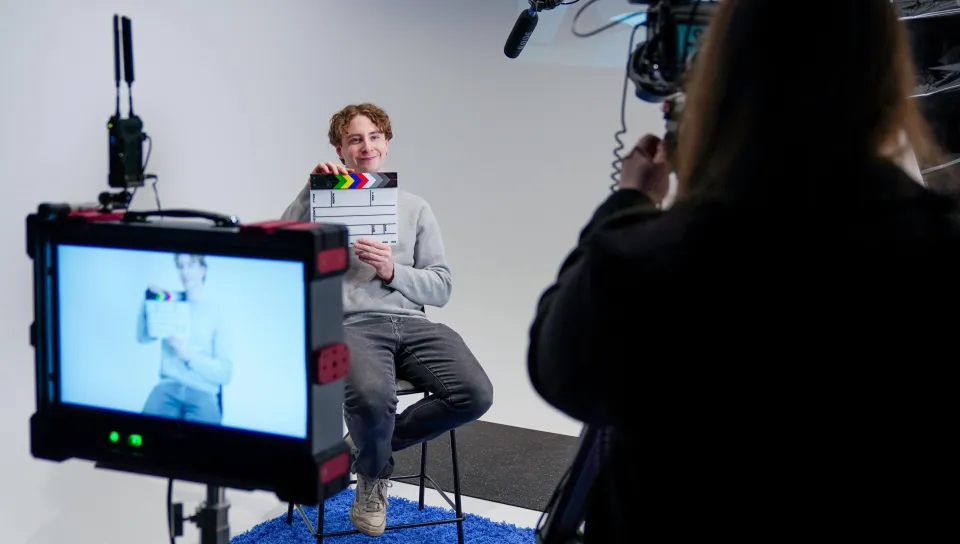
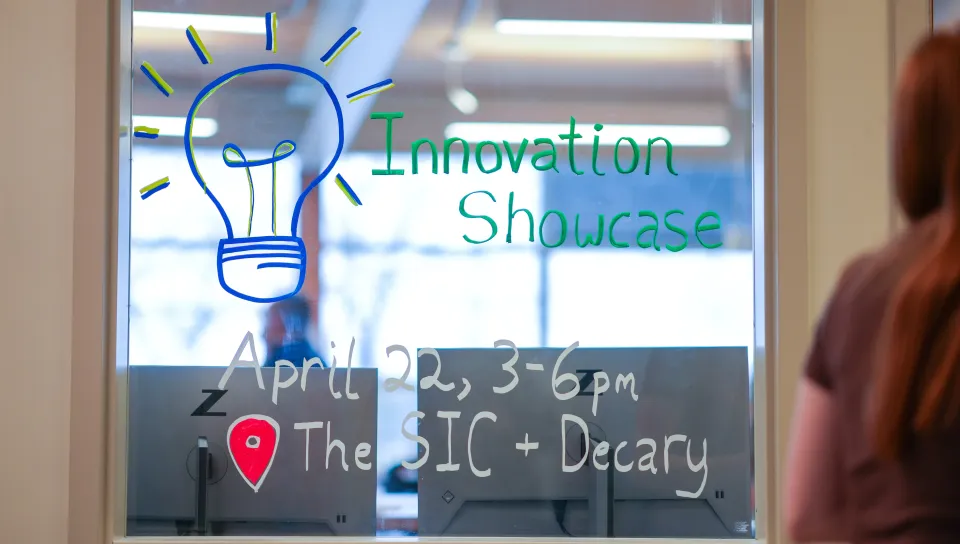
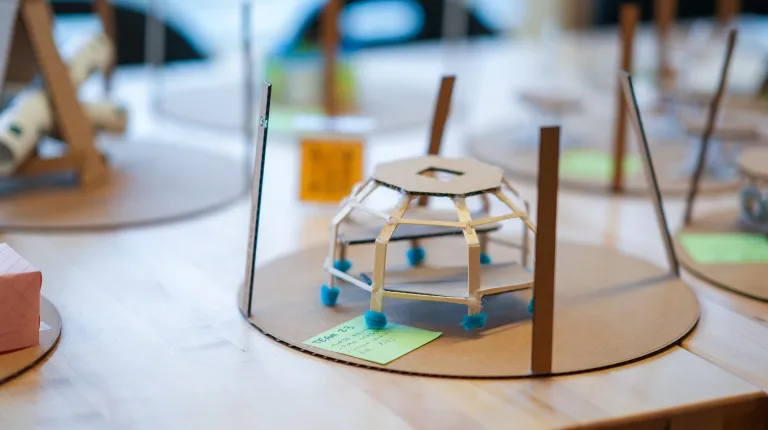
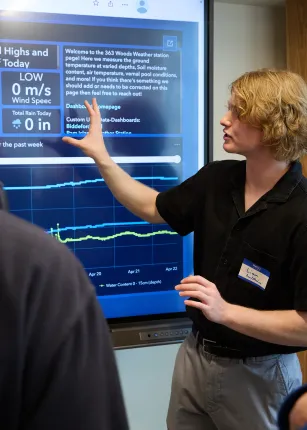
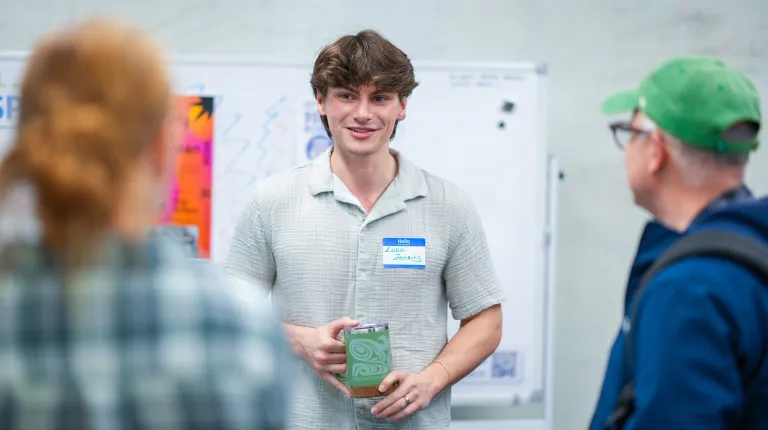
For many students, the Showcase marked the culmination of months and, in some cases, years of iteration, problem-solving, and collaboration with partners beyond campus.
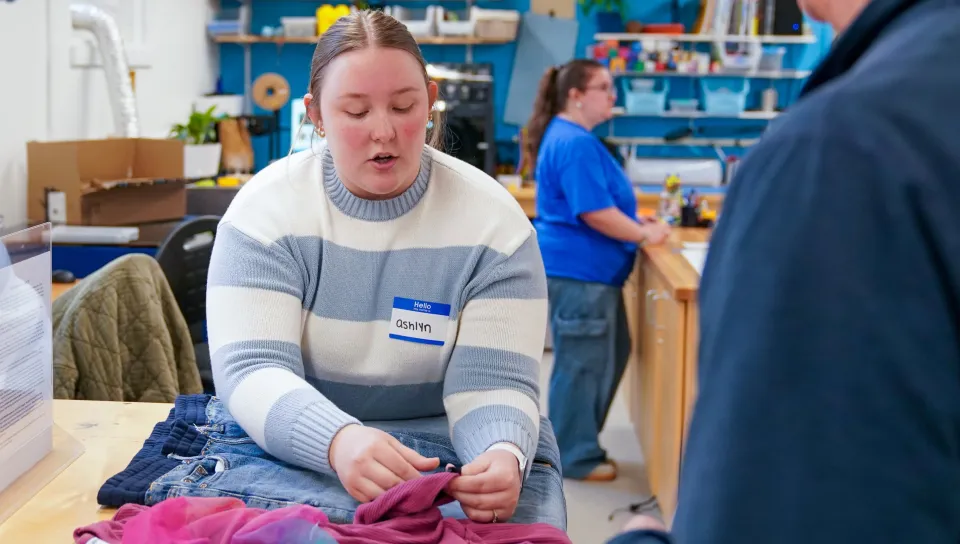
Ashlyn Clougherty (Occupational Studies, ’27) presented adaptive clothing designs aimed at improving dignity and comfort for individuals with medical needs. Her team developed a dress with a discreet zipper to allow access to a child’s G-tube and modified jeans for a wheelchair user that incorporated softer materials and easier catheter access.
“The biggest support we had was from our professor, Caryn Hussman, and (P.D. Merrill Makerspace Coordinator) Sophia Crockett-Current,” Clougherty said. “They both created a safe space for ideas to flow without judgment. The Maker Space was filled with all the materials needed to bring our ideas to life.”
Clougherty said presenting the work to a live audience reinforced the broader purpose behind the project.
“My biggest takeaway from the experience was the educational aspect,” she said. “People will never know what others need if they do not have the education around it. I hope people went out and had conversations regarding these issues, and it will continue to spread from there.”
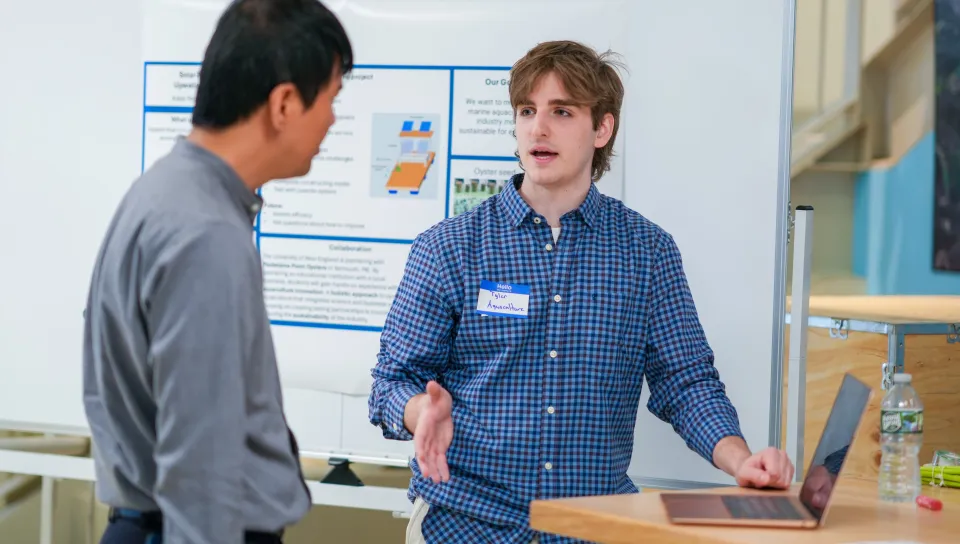
Across campus, students were tackling challenges tied to Maine’s environment and economy. Tyler Janik (’26), an aquaculture, aquarium science, and aquaponics major graduating in just over a week, partnered with a local oyster farm to design a solar-powered system that circulates nutrient-rich water through juvenile oysters, supporting growth while reducing reliance on traditional energy sources.
“My hope is that this project and those to come will strengthen the relationship between UNE and Maine’s aquaculture industry,” said Janik, a 2024 UNE Shaw Innovation Fellow. “This will open opportunities for more collaboration and ensure students leave UNE with as many practical skills and knowledge as possible, making them more fit to be innovative leaders in a rapidly expanding industry.”
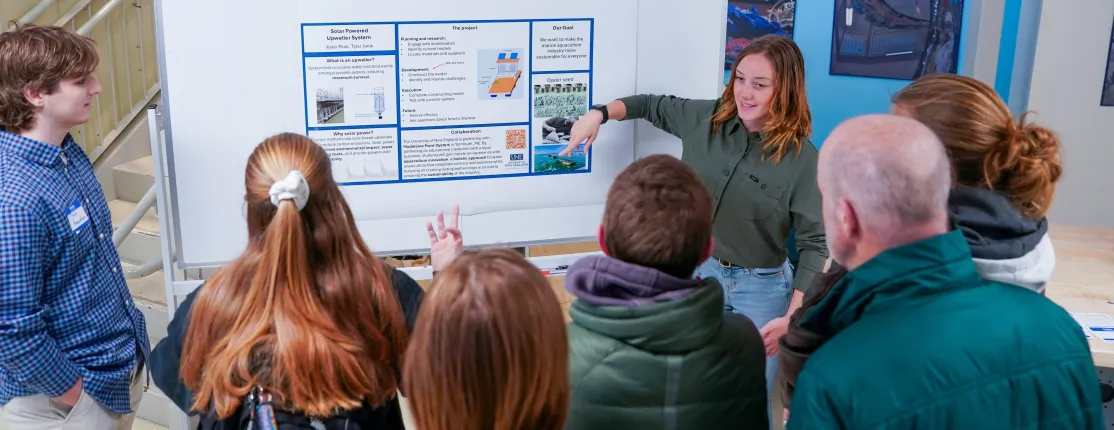
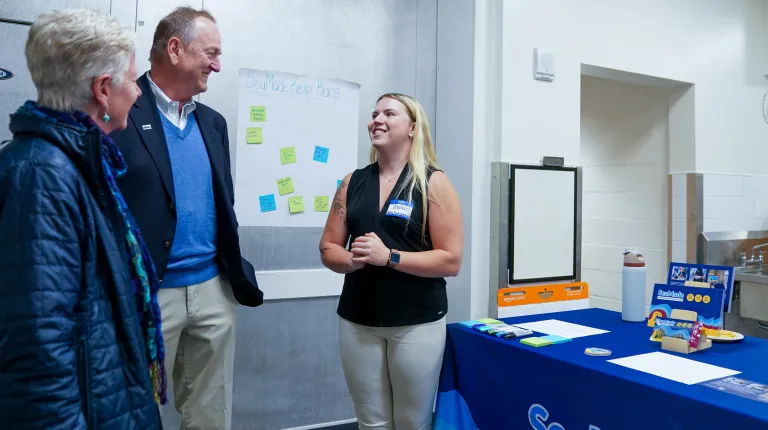
Projects like those displayed reflect the broader goals of the Shaw Innovation Fellowship, established in 2021 to support students pursuing creative, interdisciplinary solutions to complex challenges. Many of the initiatives on display — including work in climate resilience, health care design, and sustainable food systems — align with the mission of the newly named Shaw Institute for Public and Planetary Health, which brings together expertise across disciplines to address the interconnected health of people and the planet.
Participation in the Showcase also helped students connect their academic work to future careers.
“Participating in the Shaw Innovation program and showcase pushed me to think more critically about long-term sustainability in aquaculture and the importance of community-based solutions,” Janik said. “It reinforced my interest in pursuing work that combines sustainability and innovation and helped me realize the possibilities that innovation creates.”
With additional projects focused on 3D printing to improve treatments for joint disease, approaches for improving equity in maternal health, sustaining the impact of community news, and more, the afternoon underscored a defining characteristic of a UNE education: Students are not waiting until graduation to make an impact.
Instead, they are already doing the work, Herschbach said, by designing, testing, and refining solutions that respond to real needs in Maine and beyond.
“This is what innovation at UNE looks like,” she said. “It is interdisciplinary by nature, hands-on by design, and mission-driven at its core.”