

How a stipend helps UNE health professions students access hands-on rural healthcare education.
“You can’t get there from here.”
It’s an old Maine saying, half joke and half warning to visitors trying to find a place that’s as close as next door but that can feel a world away as you traverse the region’s back roads. Increasingly, the same line applies to healthcare: In much of rural Maine, the nearest healthcare provider can feel just as hard to reach.
In fact, rural areas across the country are grappling with the same forces: federal funding gaps that shutter regional hospitals and a pipeline of new healthcare providers that isn’t keeping pace with the rate of retirement.
Maine is no exception.
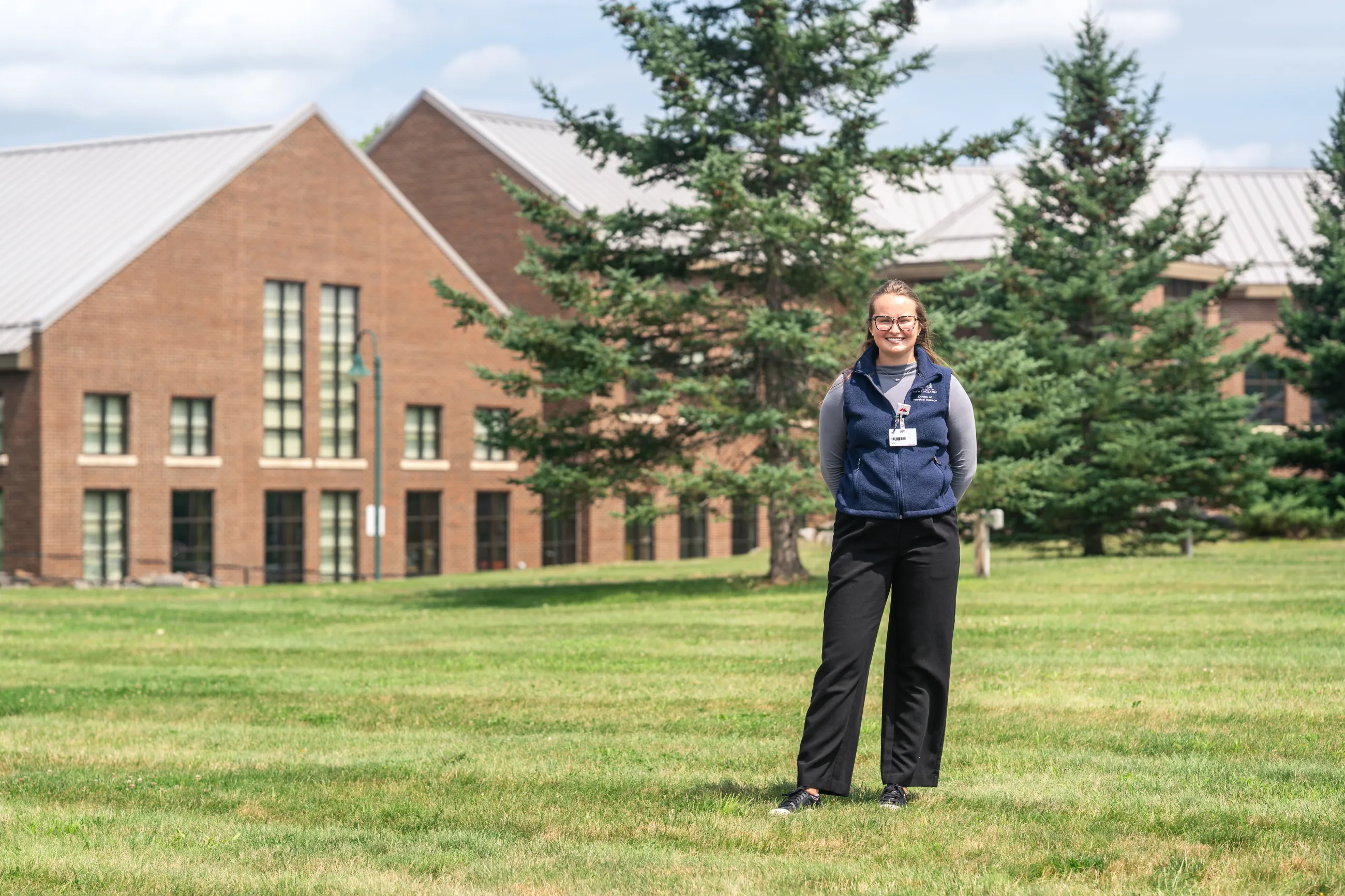
Mia Hatfield (D.P.T., ’27)
“A critical part of addressing shortages in rural healthcare is getting students in the health professions to experience what it’s like to work and live in those areas,” said Zoe Hull, M.P.H., director of the Maine Area Health Education Center (AHEC) Network, housed within the University of New England Center for Public Health Practice.
The barrier, Hull said, is usually financial. Covering a second housing arrangement on top of travel costs can put a rural rotation out of reach for many students who are already stretched thin.
To help remove that barrier, UNE has partnered with M&T Bank, which committed $125,000 to award stipends to UNE students pursuing clinical rotations in rural areas of Maine in fields such as medicine, dentistry, physical therapy, occupational therapy, physician assistant, pharmacy, and nursing through the Maine AHEC Network.
“M&T Bank is proud to support UNE’s rural clinical rotation stipends,” said Phil Cohen, M&T Bank’s regional president in Maine. “By helping to ease the financial burden on our future medical professionals, this funding allows them to focus on their training and service at a time when healthcare providers are needed more than ever. It also helps bring critical care to our neighbors who might otherwise face barriers to accessing healthcare.”
With M&T’s support, 20 UNE health professions students since 2024 have received housing and transportation support during their rural clinical experiences, and the partnership will help an additional 20 students over the next two years. For many, the rotation is where their identity as a rural healthcare provider first takes shape.
For Ethan Gagnon ’26, a recent Doctor of Pharmacy graduate from Bath, Maine, growing up in a rural area informed his career as well as his commitment to practicing in one.
“We often had to travel long distances for basic services, and wait times for appointments were high. These experiences sparked my interest in pharmacy as a frontline, accessible form of care,” he said.
With the stipend, Gagnon was able to spend a rotation in Bar Harbor and experienced rural healthcare as a provider.
“These moments have built a foundation of respect and compassion for underserved populations,” Gagnon said. “Whether it’s helping someone manage a chronic condition or providing education about a new prescription, even a quick conversation at the counter can lead to better outcomes. I want to continue supporting rural communities and help close the healthcare gaps that persist across our state.”
Mia Hatfield (’27), who is pursuing her Doctor of Physical Therapy degree at UNE, grew up in an urban part of Massachusetts and is currently on rotation in Farmington, Maine. The M&T stipend allowed her to be fully invested in the community she is serving while bringing her experiences back to the classroom.
“Renting in Portland and then going somewhere else on your clinical rotation means paying double rent, which is very challenging,” she said, adding that she would not have had this experience without the financial support. “The stipend allowed me to focus more on the actual clinical experience rather than the financial barriers that are associated with moving myself up to Farmington.”
Hatfield said this experience has broadened her perspective as a care provider in unexpected ways and has helped convince her that she could thrive as a rural healthcare provider.
Many of Hatfield’s patients are farmers, self-described as stubborn. Early in the clinical rotation, she found it frustrating when a patient didn’t stick to a home exercise program or kept re-aggravating their injury. Over time, she came to understand their chores can’t wait for a shoulder to heal.
“I have learned to listen and be mindful of what they’re going through and being able to work around the ebbs and flows that come with a rural community,” she said.
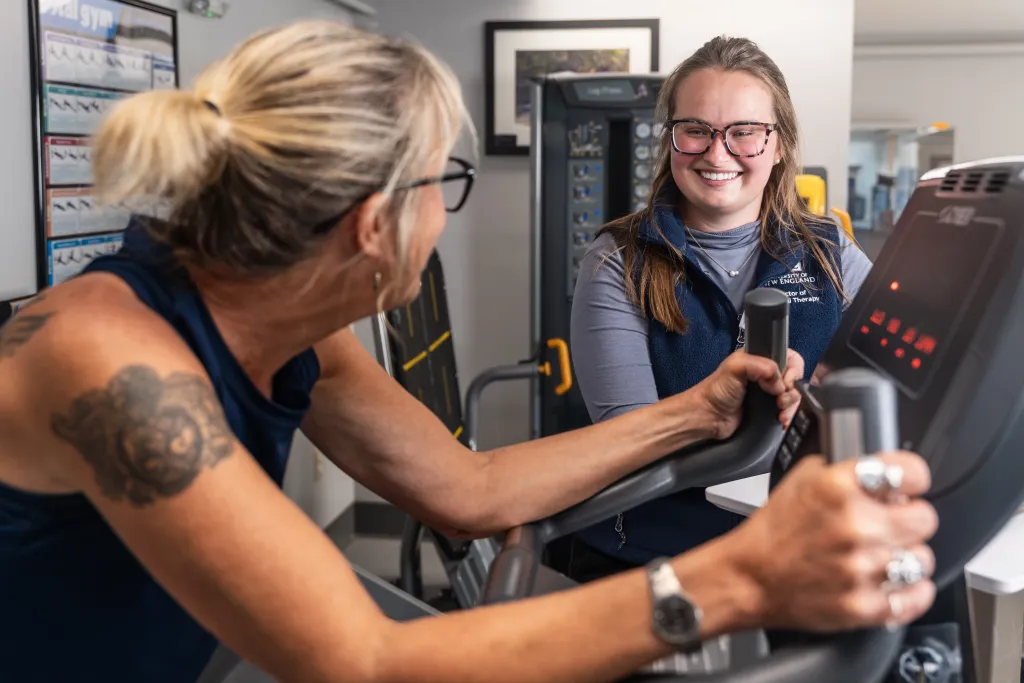
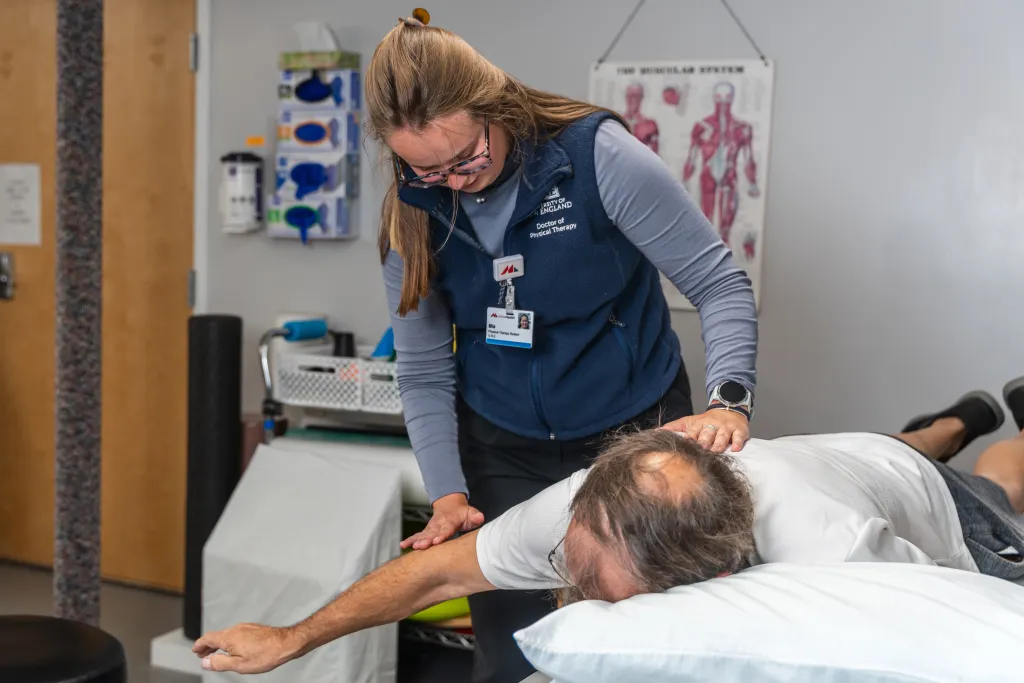
Hatfield has shifted her approach toward functional outcomes over clinical benchmarks, prioritizing what a patient can do in daily life over the specifics of a prescribed exercise, whether that’s getting down on the ground to play with their grandkids or climbing into a tractor.
“I want that to be my focus with PT,” she said. “This rotation has been such a wonderful experience. It’s only strengthened my desire to work up here and with this community.”