

How one all-UNE dental team is continuing the tradition of helping Maine’s most vulnerable populations get the care they need.
Natalie Nguyen, B.S. ’23, can still recall how she calmed a nervous child, who only spoke English as a second language, before she showed them the tools used and guided them through what to expect during a dental cleaning visit.
What started off as an ordinary afternoon in the University of New England’s Dental Hygiene Clinic was proof to Nguyen that she was learning to provide the kind of compassionate care she herself needed as a child but never had.
At UNE, in the hygiene center, we see patients from kids to seniors. I think they prepare us really well.” — Natalie Nguyen, B.S. ’23
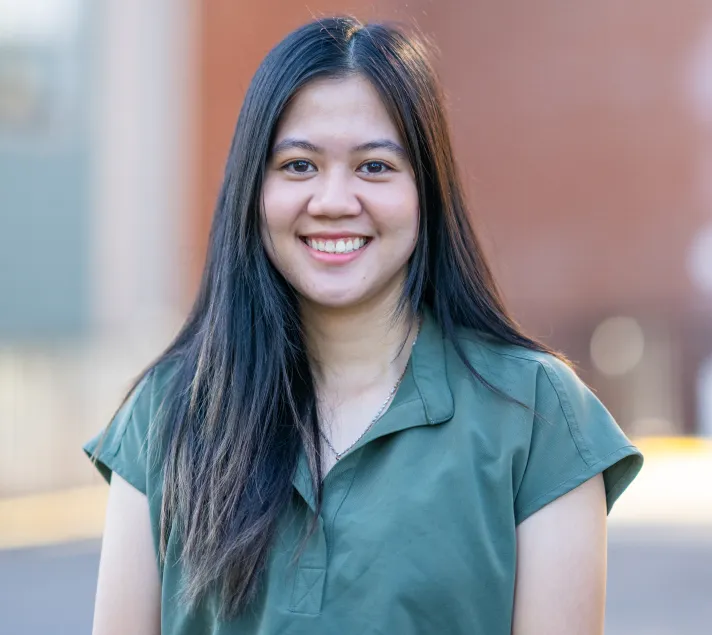
Before she emigrated from Vietnam to Maine with her family at age 13, Nguyen lacked routine dental care. Now a dental hygienist at Nasson Health Care in Springvale, Maine, she gives that care to others every day, and she credits UNE for teaching her how to do so from her very first week in the clinic.
“At UNE, in the hygiene center, we see patients from kids to seniors,” Nguyen said. “I think they prepare us really well. You see one patient every three hours. The professor checks in probably five or six times.”
Nguyen estimates she cleaned the teeth of nearly 60 members of the public while training in the clinic on UNE’s Portland Campus for the Health Sciences, where patients without dental insurance can receive cleanings at highly discounted rates. That volume of hands-on practice, repeated across a student’s time at UNE, is what the University’s dental programs are built on: not a single capstone experience but a habit formed early and nurtured throughout their time at the University.

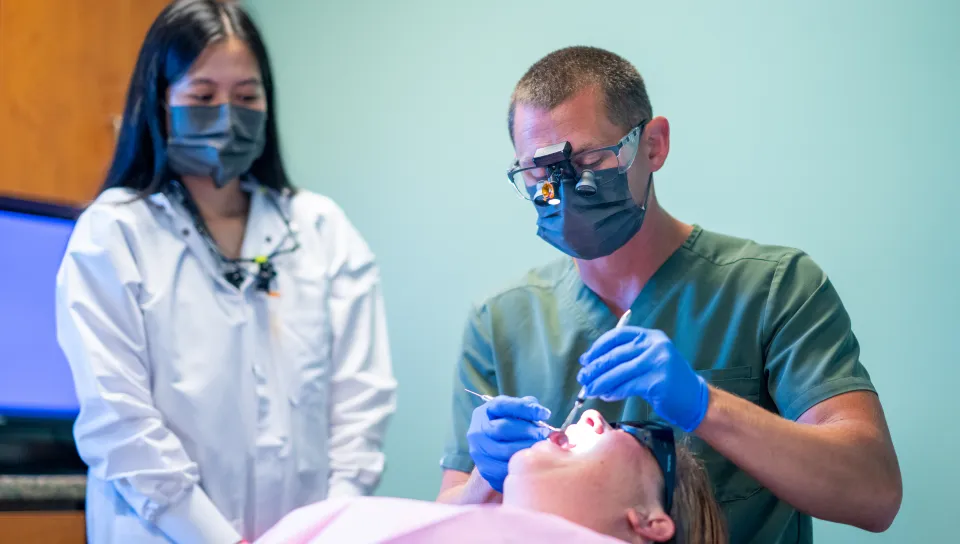
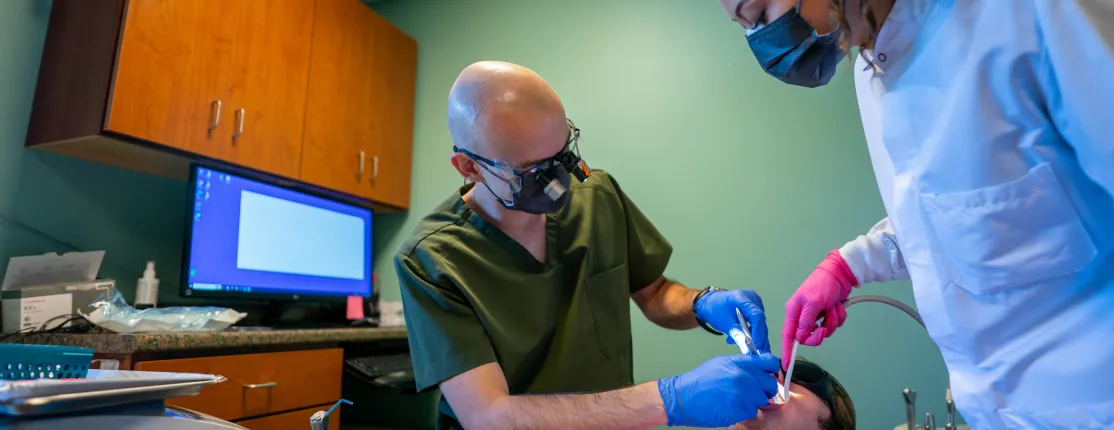
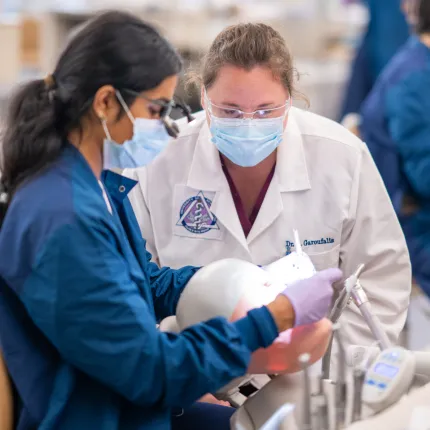
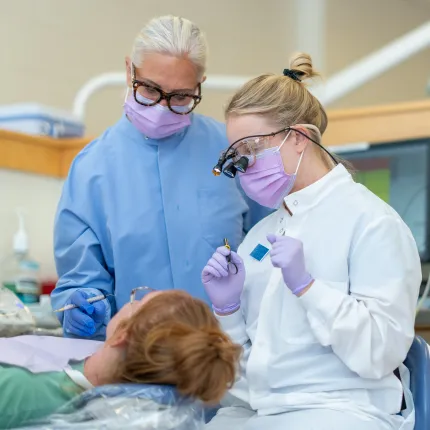
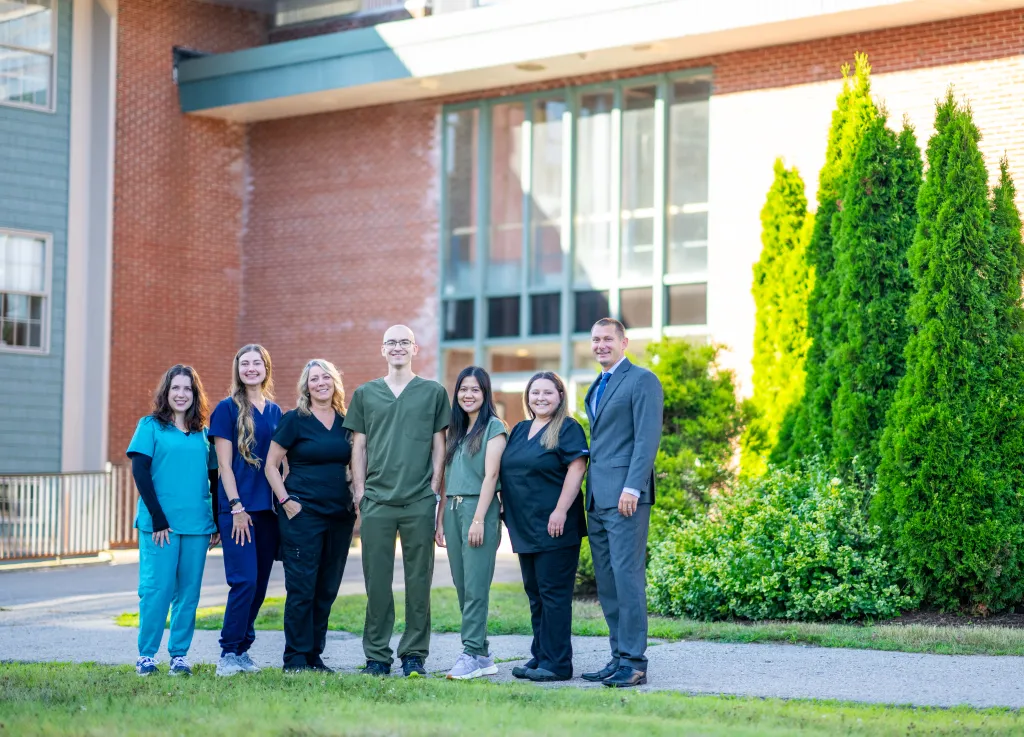
Nguyen isn’t alone in carrying that habit into her career. All eight members of the Nasson Health Care team — four dentists and four dental hygienists — graduated from UNE’s oral health programs: the Doctor of Dental Medicine offered through the College of Dental Medicine and the Bachelor of Science in Dental Hygiene in the Westbrook College of Health Professions. Each learned to care for patients from every economic background, including people who are unhoused, in teaching clinics before ever reaching Nasson Health Care, a Maine community health center in Springvale that serves a large rural patient base from up to two hours away, including New Hampshire.
Benjamin Martin, D.M.D. ’23, a dentist at the health center, points to the structure of UNE’s curriculum itself.
“Dentistry is very hands-on. And the education we get at UNE is very hands-on,” said Martin. “It’s a very clinically focused education, which I like. You’re practicing those skills for the whole time that you’re at UNE, as opposed to just doing coursework in your first year.”
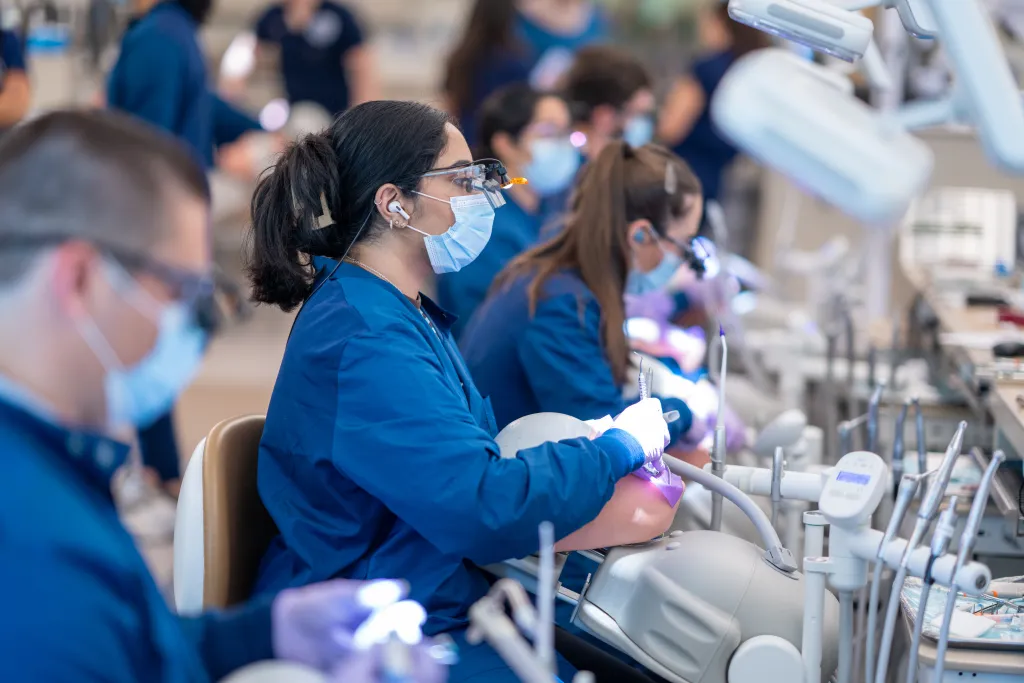
It is a sentiment echoed by a colleague, Nasson Health Care Dental Director Tom Guerrette, D.M.D. ’19, about how closely students in the College of Dental Medicine and the Dental Hygiene program train together, a practice that sets the stage for their work in Maine.
“At UNE, the dental hygiene students would do the cleanings, and then dental (medicine) students would step in and do the doctor exams, just as it would happen in real life,” Guerrette said, adding that the setup taught both sides how to communicate a handoff and trust another provider’s work before they ever stepped off campus. “That’s unique. Not every dental school has that.”
The partnership across colleges is intentional, said Dianne Smallidge, RDH, Ed.D., the director of UNE’s Dental Hygiene program. Dental hygiene faculty and students go to the Oral Health Center at the College of Dental Medicine to introduce the instruments used by dental hygienists and share their role in providing patient-centered care. They also work together on the annual “Give Kids A Smile” event, when nearly 100 elementary school students from coastal Maine come to the UNE Oral Health Center to receive free dental care worth dollar amounts in the tens of thousands.
And in the final year of both programs, dental hygiene and dental medicine students together complete medical emergency training in UNE’s Interprofessional Simulation and Innovation Center, a hands-on learning and research space for students across health disciplines to learn from, and with, each other to strengthen their clinical skills through team-based simulation experiences.
“A lot of dental hygiene schools don’t have dental medicine schools affiliated with them. So it’s very easy to be in silos. We work at doing all the collaboration we can,” Smallidge said.
That close collaboration between students in the healthcare fields at UNE is a key reason Guerrette recruits UNE graduates. He said they can perform at a high level from their first day on the job, a boon for a small team serving a diverse and growing array of clients.
“Just because you’ve earned a degree to be a dentist doesn’t mean you have the skill set to work with other providers,” Guerrette said. “That is a huge component that sets up the UNE dental hygiene and dental students for success on a team that works collaboratively.”
Guerrette credits UNE for preparing him to treat immigrant patients facing language barriers, a specific skill he built during an externship — a type of clinical training practicum — at Portland High School, where students hail from nearly 40 countries and speak over 25 languages, according to the most recent school data.
“That, in conjunction with the clinical hours at the UNE clinic, made me feel very prepared to step into the real world as a dentist,” Guerrette said. “I felt very confident in my skill set, whether it was restorative (care) or oral surgery. I would say I had the cultural competence to treat a diverse population.”
In fact, UNE intentionally exposes dental students to underserved communities. College of Dental Medicine students complete externships and outreach rotations at sites in both rural and urban settings, including the Boston Healthcare for the Homeless Program, a community-based externship site, and the MaineHealth Glickman Lauder Center of Excellence in Autism and Developmental Disorders in Portland, where all third-year UNE dental students learn to care for patients with autism and developmental differences.
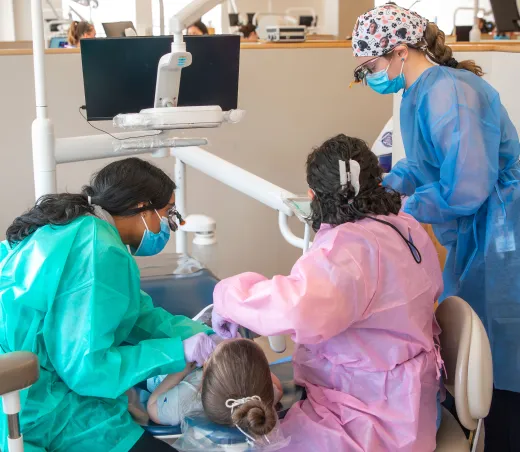
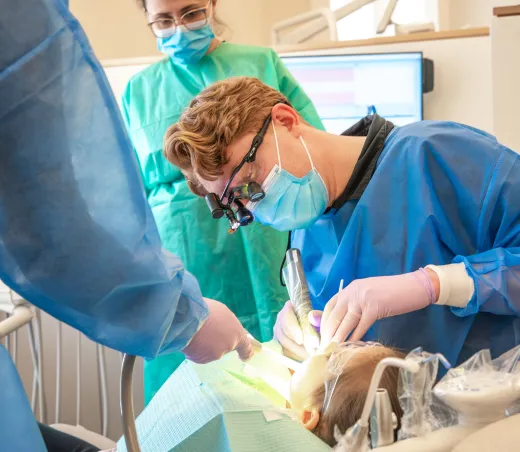
“Our curriculum gives students meaningful outreach opportunities to engage with individuals with special dental care needs and those at risk for poor health outcomes,” said Nicole Kimmes, D.D.S., dean of the College of Dental Medicine. “We seek partnerships that advance our mission and are deeply grateful to the community partners who welcome our students into their clinics and spaces.”
Nasson Health Care is one of those partners. The center serves patients who are unhoused, who have a history of substance use, or who face food insecurity.
Fourth-year dental medicine student Heather Cabral (’27) already knew she wanted to work in public health when she started her externship at Nasson Health Care.
Even so, Cabral said the frontline care the center gives patients with limited prior access to dental care was eye opening. In her first eight weeks alone, she conducted diagnostic exams on more than 70 patients, noting such vast exposure significantly expanded her confidence and deepened her sense of compassion as a healthcare provider.
“I realized when I started here that (your) hand skills are going to just keep getting better and faster over time by simply doing more procedures, such as fillings, crowns, and root canals,” Cabral said. “But what doesn’t get better, unless you are working with and learning from other people, are the diagnoses and knowing exactly what your treatment plans need to be.”
For Cabral, as for the UNE graduates working alongside her, an externship like Nasson Health Care isn’t simply a line on a resume: It’s the practice of a lifelong commitment to providing care for those in need, supported by the tangible skills and habits formed and nurtured through the early days of their education.
“I definitely feel way more prepared now,” she said. “And it’s the kind of work I want to do.”