

UNE students aren’t waiting for a diploma to begin their careers. They’re building them one connection at a time.
On a late wintry afternoon in Biddeford, Angelina Keizer, with a notebook in hand, was trying to ask the director of the community organization Heart of Biddeford a question for a story on downtown holiday lighting when another reporter arrived to cover the same event.
What might have been a routine interview quickly turned into three reporters jockeying for the same answers.

“It felt so surreal and exciting to me that it really felt like what I was doing mattered,” Keizer said. “I was being very respectful to everyone who was also trying to get their interview, but I was also pushing a little bit, and it was really fun.
“It didn’t feel like work or effort to be there,” she said. “I was there because I wanted to be there.”
Keizer (English, ’28) was a sophomore at the time and had been on the job as a Saco Bay News intern for less than a semester.
Experiences like hers are becoming less the exception at the University of New England and more the expectation. Across campus, students are building professional identities years before they cross a graduation stage, guided by faculty, professional staff, and a growing network of employers who treat undergraduates less like interns and more like colleagues in training.
“Employers need students who can function with deliberate speed and autonomy, who can make decisions, who can grow and develop on their own, and who can start to take the lead even if they’re in an entry-level position,” said Colin Pears, Ph.D., UNE’s associate provost for Student Success and chief retention officer, noting that the old academic and career advising models have changed.
“We are going to put students directly in touch with people in the workforce and teach them how to be a professional now,” he said, adding that the career pathway looks different for every student. “Like a mosaic, students get to choose which tiles to pick out and where to place them, arranging their experiences in a way that best represents who they are and where their careers are headed.”
More Than an Internship
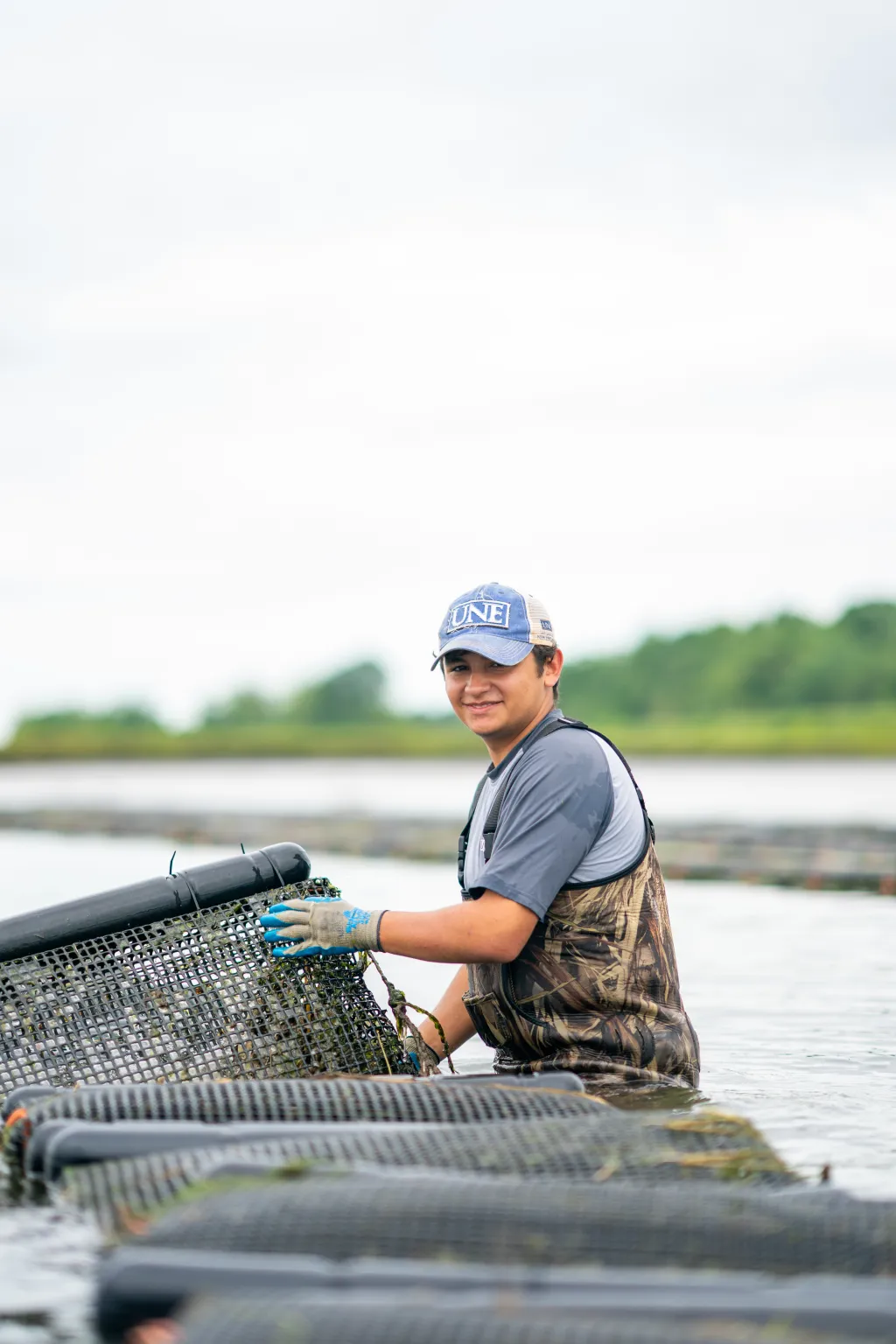
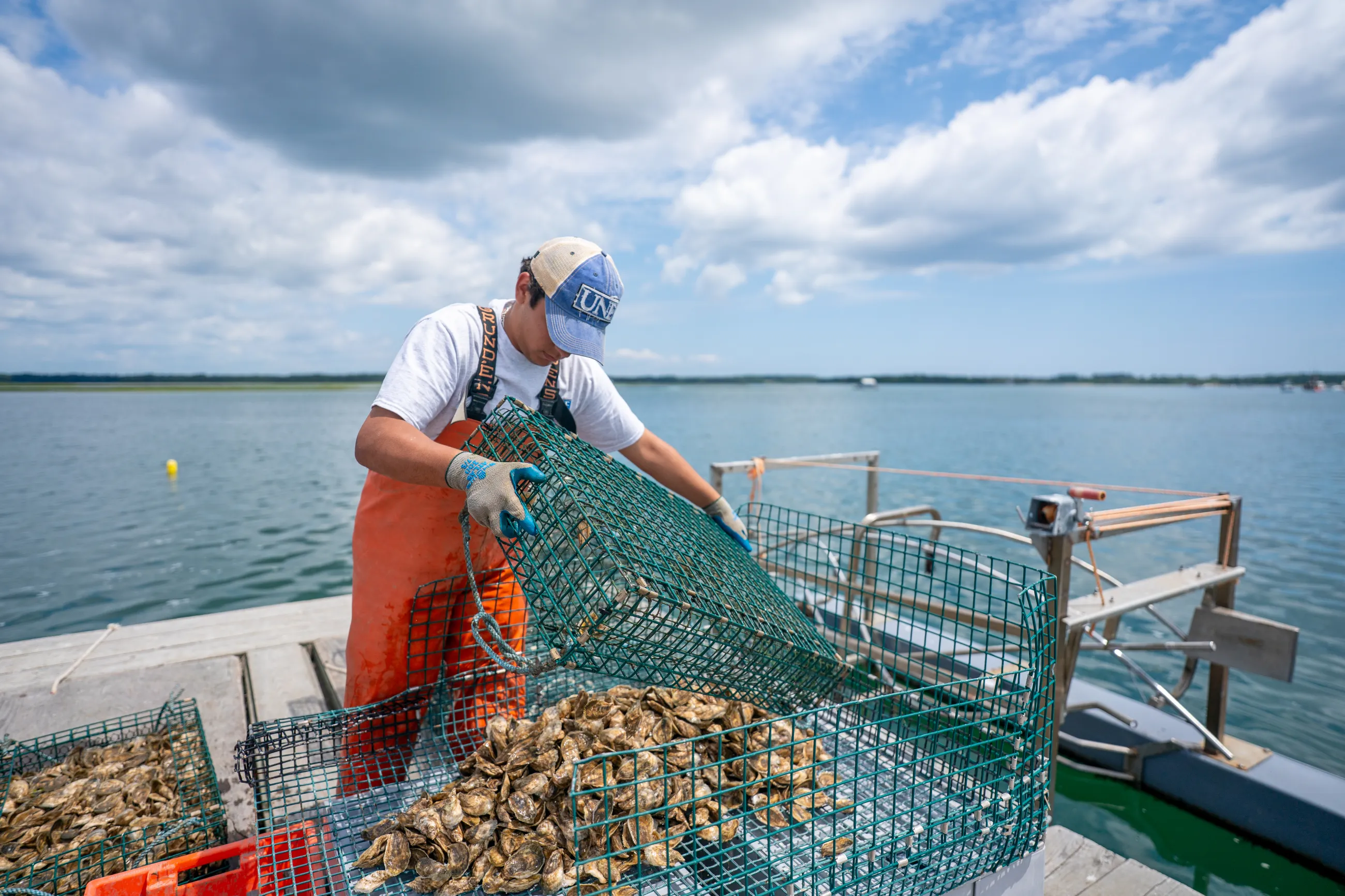
Javier Sanchez (’29) spent his mornings over the summer working around the tide.
A rising sophomore from the landlocked state of Illinois, Sanchez chose UNE for its marine science programs and, within a year, had narrowed his focus to aquaculture.
That focus emerged last semester, when Sanchez completed UNE’s Aquatic Animal Husbandry Badge program, confirming through hands-on lab work with live animals that aquaculture was the field he wanted to pursue before finding his summer internship.
“Food security is important to me,” Sanchez said.
“Aquaculture is a comparatively newer field than agriculture, and it has a lot of potential for what people can do sustainably. That’s something I want to say I’ve had a hand in.”
Ashley Bigda, M.S.Ed., director of UNE’s Office of Career Readiness and Workforce Development (OCR), said that kind of early certainty is possible because the University houses academic and career advising in a single office rather than splitting them as many universities do. “In reality,” she said, “academics and careers are just two sides of the same coin of conversation.”
Bigda said Sanchez’s early start into career exploration used to be the exception. Historically, students passed their classes for four years and then looked for a job and figured out the rest after graduation.
“What we’re doing now,” she said, “is introducing career guidance in the first year.”
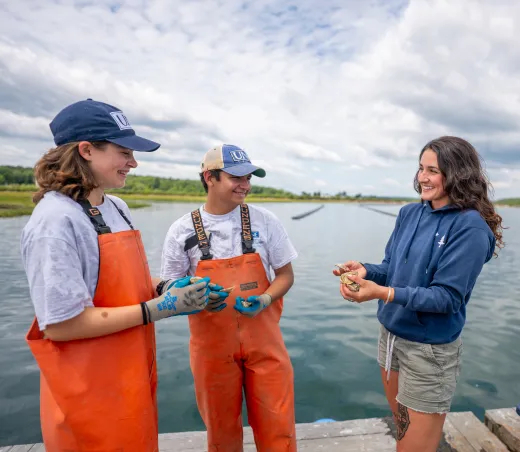
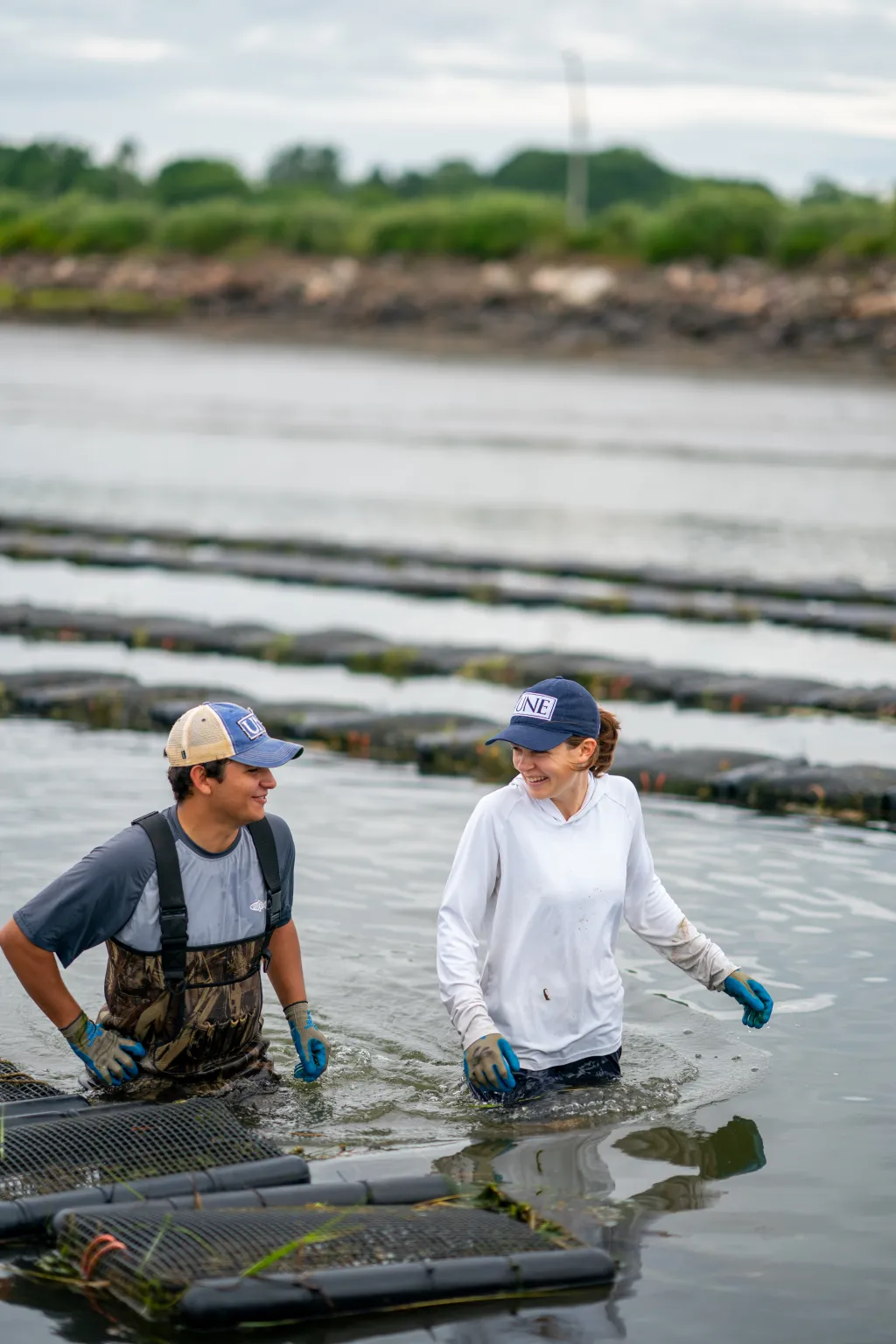
Over the summer, Sanchez completed his internship at Nonesuch Oysters through the Aquaculture Pioneers Program, run by the nonprofit Educate Maine, which connects students on farms up and down the coast with additional industry training.
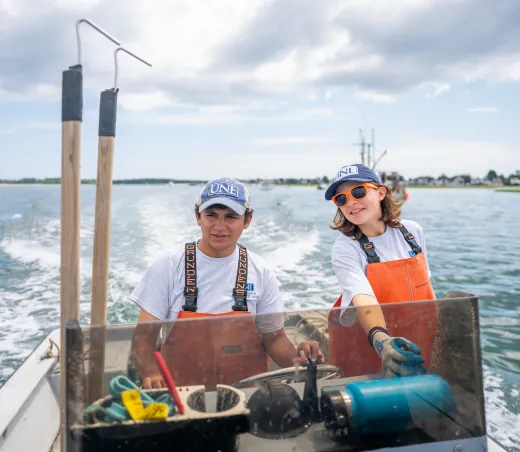
From the outside, Sanchez is sorting oysters by size, running boats, and learning seafaring knots he had never needed before. The work also counts toward a pre-apprenticeship credential he can carry into whatever aquaculture internship comes next.
Sanchez first heard about the internship at an information session OCR hosted on the Biddeford Campus in partnership with Educate Maine. He signed up before he’d even left the room and applied to nearly every nearby farm he could find, he said.
Grant funding tied to the program lets farms hire students with little to no background on the water, an entry point built for students like Sanchez, who didn’t grow up around aquaculture, to break into the industry without needing prior experience.
For Sanchez, the payoff has already begun to take on a more concrete form than course credit. Sanchez said the experience has given him both hard and soft skills he didn’t have previously. He learned to drive a boat and back a trailer into a launch, tasks he had never attempted before.
“If you asked me in April, I would have said I didn’t know how to do that,” he said. He also sharpened his sense of time management, learning to move quickly without cutting corners.
Whatever comes next for him in aquaculture, Sanchez expects the fundamentals to carry over.
“I’ve been there, and I’ve done it firsthand, and my future employers can look at me and my resume and see that,” he said. “It’s very favorable.”
Whatever the next internship looks like, Sanchez added with a smile, “The resume will be golden.”
The Third Internship
When Keizer arrived at UNE, she didn’t plan on becoming a journalist. She considered marine sciences, then psychology, before an introductory course with Jesse Miller, M.F.A., associate teaching professor of writing, redirected her toward writing.
“When I write, something takes over me. I just can’t stop, and something about it just feels right,” Keizer said, reflecting on the decision to change her major. “It’s like a light bulb goes off in my head.”
A single class set off a chain of internships that Keizer credits to the connections of Miller and fellow professor Michael Cripps, Ph.D., director of the UNE School of Arts and Humanities.
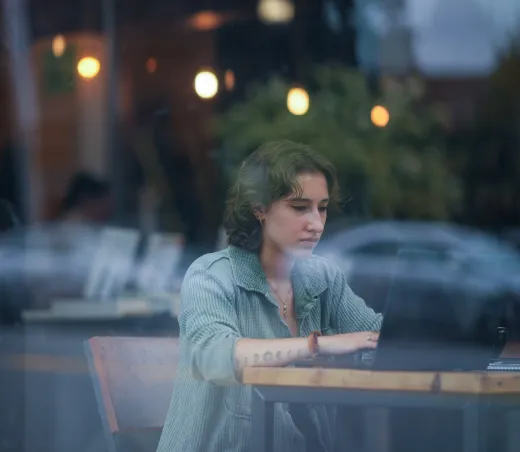
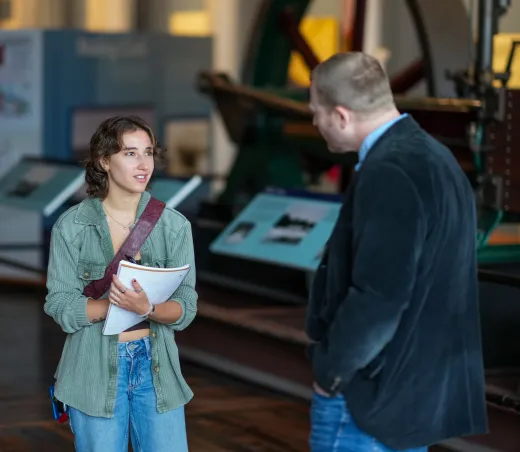
Miller recommended Keizer for her first placement at Saco Bay News. From there, a co-editor invited her into a summer reporting course through Journalism New England, which led to her current work with the Sanford Springvale News. By June, she had a third internship lined up, a magazine copy-editing role, and Cripps was already introducing her to contacts at another news outlet for the semester after that.
“If I did no internships at all or started internships very late into college, I wouldn’t have advanced my skills enough or be as confident as I am going into another internship,” she said. “I take away something new every time.”
Bigda said that kind of chain reaction is common at UNE, not incidental. An introduction turns into a conversation, a conversation turns into an interview, an interview turns into an internship, and then, later, even a job offer.
She pointed to career immersion events, like one Keizer took part in, as an example of how OCR works with faculty to integrate workplace exposure directly into coursework. Cripps brought a group of his journalism students to WMTW News 8, the state’s ABC affiliate, where employees walked them through the studio room by room, explaining how each role fits into the broadcast, before sitting the group down for a presentation on what it takes to work in the field.
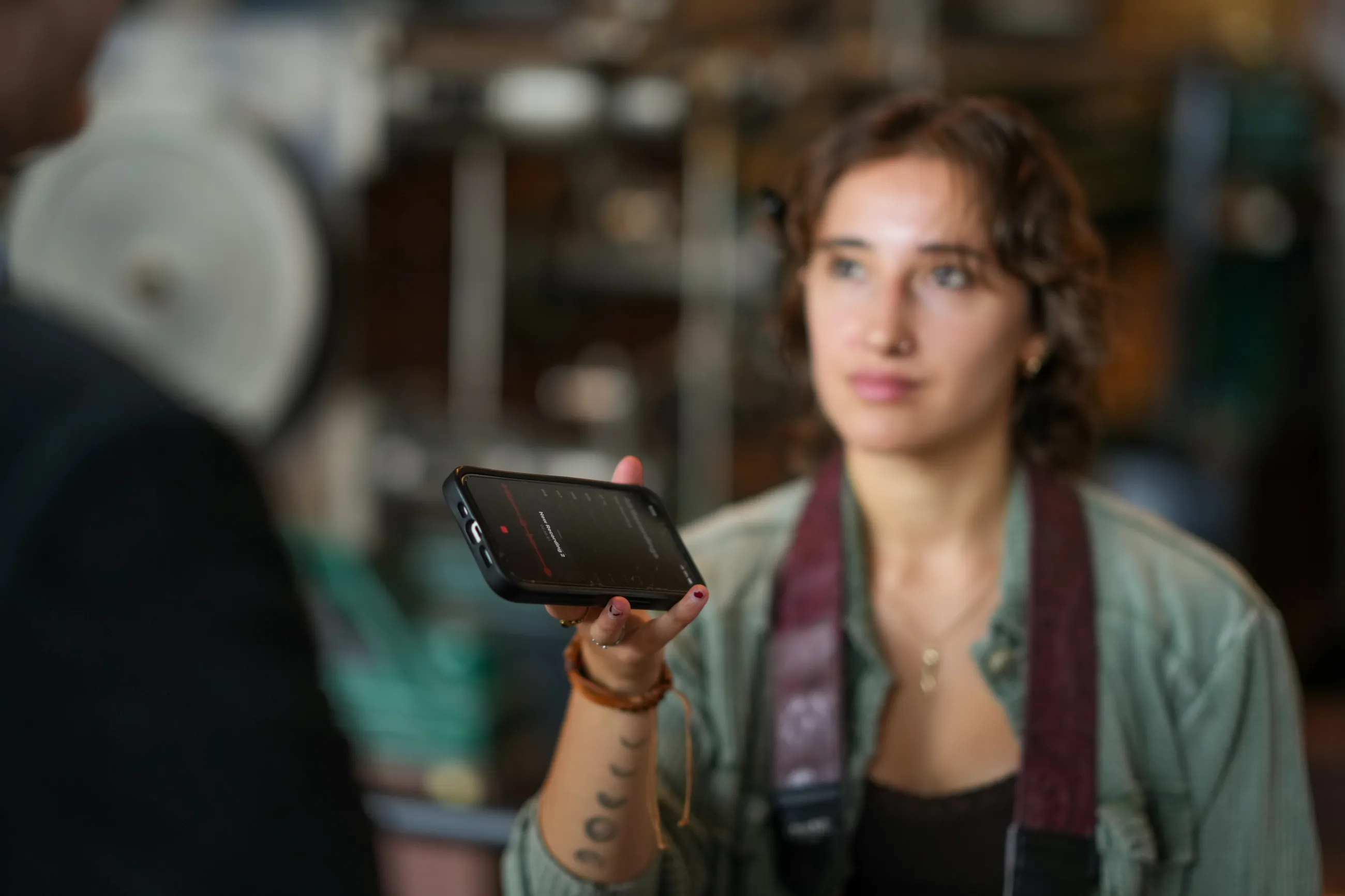
“It was eye-opening to see their impact firsthand and see how much really happens behind the scenes,” Keizer said, noting that the studio surprised her. She said it was smaller in person than it looked on television and that the visit gave her a new appreciation for how much coordination goes into a single newscast.
For Keizer, the internships and workplace experiences have already reshaped how she carries herself in the classroom — with real skills comes confidence. Her supervisor teaches her what a story still needs and how to rearrange and attribute it, editing instruction that usually comes at the onset of a newsroom career. It has also meant learning to keep her composure when an interview turns difficult, a form of on-the-job training a classroom alone can’t provide.
“Walking into my classes, I already feel like a hundred times more confident just knowing that I’m already out in the field and doing things,” she said. “It makes me feel like I’m really on the right path.”
Courting His Own Success
When Kimman Power, B.S. ’26, arrived at UNE from Charlotte, North Carolina, he hadn’t settled on a degree yet, and for a while, he didn’t need to.
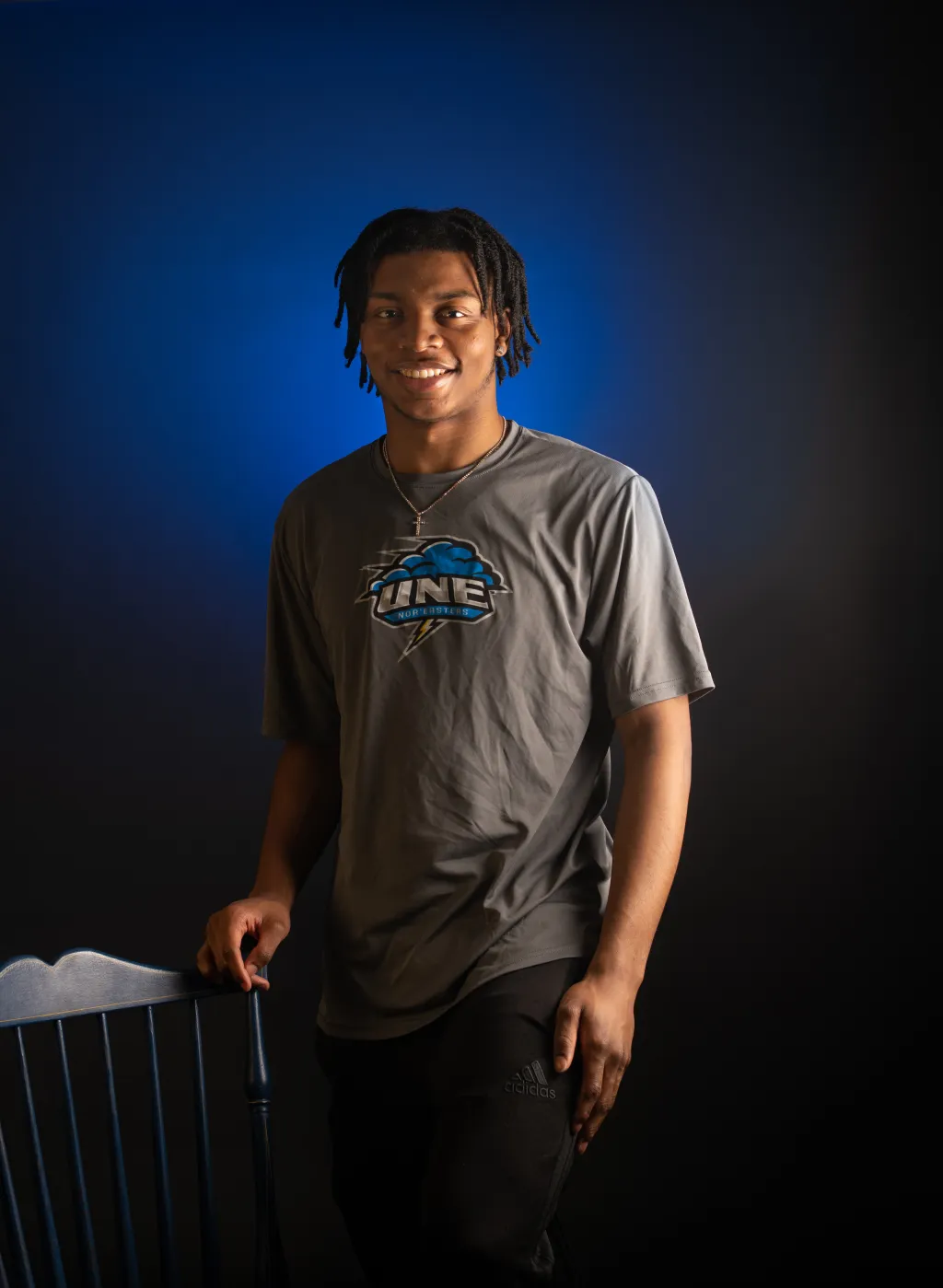
Recruited to play basketball, he enrolled undeclared, one of the first students in UNE’s Guided Undergraduate Studies program, known as GUST, built for students who need time to explore specialties before committing to a major.
“I felt like I had a lot of interests that I wanted to explore,” Power said, adding that each class applied somewhere academically, whether it was for his major or an elective.
“I didn’t know necessarily which route I wanted to go; none of the classes I took while deciding went to waste.”
Power said faculty shaped his decision as much as the coursework did. A conversation after class with Aimee Vlachos, Ed.D., CPRP, associate teaching professor in the College of Business, turned into an introduction to UNE’s Sport Leadership and Management program. That conversation settled it, Power said.
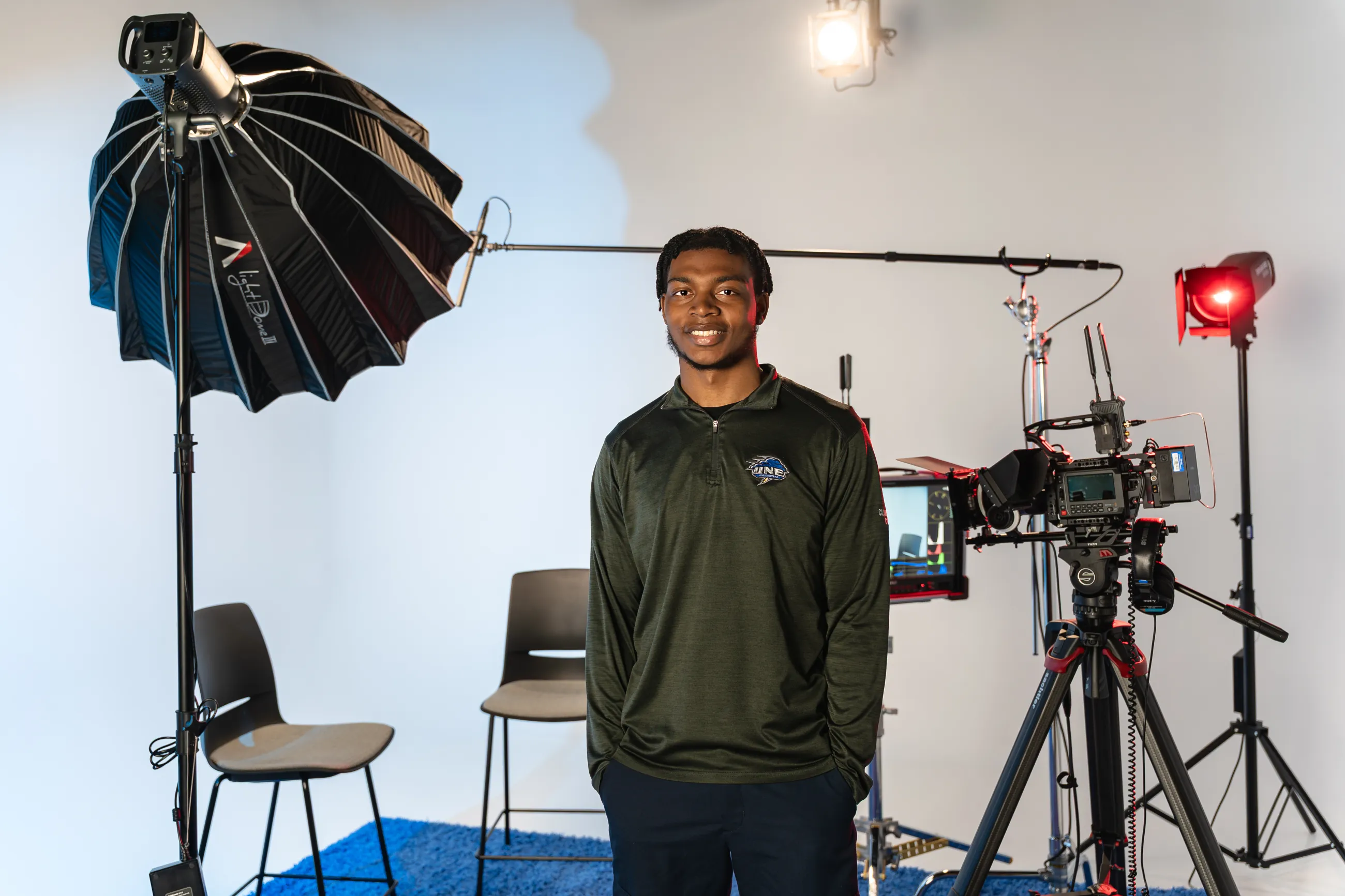
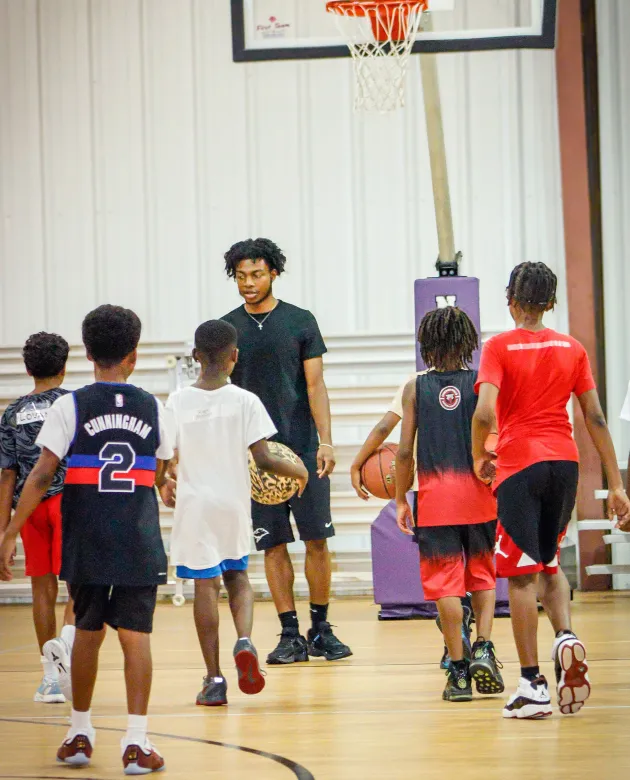
With this newfound academic clarity, Power turned his personal athletic experiences into professional opportunities. As a kid, Power played in tournaments through the Carolina Hoopfest youth basketball organization in his hometown. By his junior year of high school, he was regularly called upon by the organization’s director to help train younger players.
So when it came time to seek an internship, Power didn’t sit on the bench. He used his existing contacts to turn this former volunteer work into a self-directed, formal internship — for credit and with pay.
The internship put his major’s coursework to direct use. Facility and venue management classes helped him run tournament sites, and sports marketing lessons guided his approach to retaining and recruiting new campers. Power additionally said his psychology minor helped him connect with the kids at his camps.
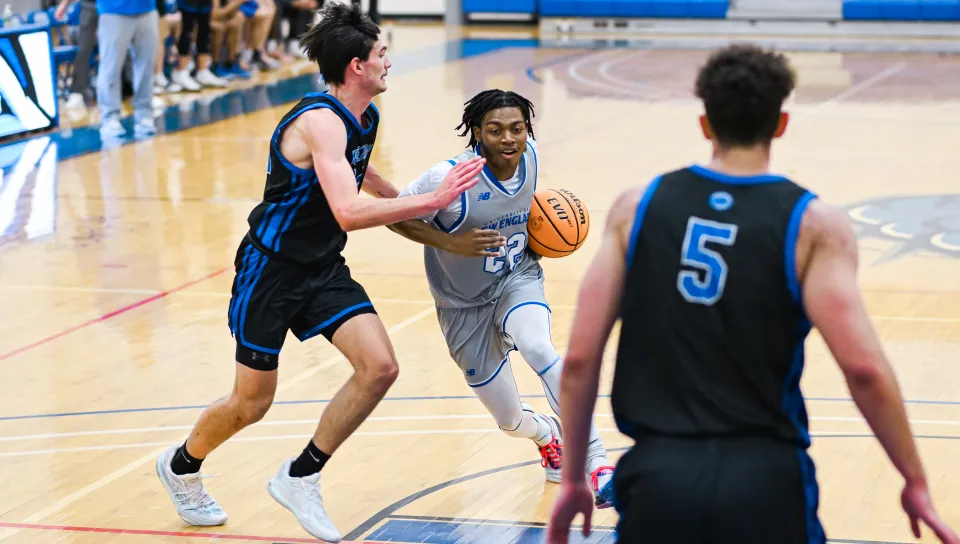
Power said he could draw up his own career playbook with the mentorship and resources afforded to him at UNE, including participation in the Presidential Ambassadors program, through which he worked alongside President James Herbert and his wife, Lynn Brandsma, to build leadership skills and relationships, ensuring lasting success in professional settings.
“I could have gone anywhere academically,” he said. “Choosing to go to school so far from home, I wanted to get involved and make sure I’m making the best out of the experience.”
Power ultimately graduated in three years, moving directly into work he had built himself using a network he had started assembling early on with UNE’s support.
Bigda said experiences like Power’s are not unusual across the student body. “Career readiness at UNE is not just multipronged,” she said. “It is highly individualized. We help students translate their unique interests and skills into professional strengths.”

The Mosaic in Practice
Pears often returns to the mosaic metaphor to describe UNE’s intentional approach to career readiness, inspiring students like Power, Sanchez, and Keizer to carve a layered path through internships, academics, and networking experiences.
“Students get to take all of the things they do and assemble them into the unique pattern that is who they are, and they have control over that,” he said. “Our students can speak to what they’ve learned, not just list it on paper. That’s exactly what employers are looking for.”
That kind of skill doesn’t come from waiting until the last six months before a student graduates, he added. “It has to be something that takes place consistently over time.”
For all three students, there are three different mosaics, and none of them have finished putting the design together.
“UNE students aren’t static,” Pears said. “They are lifelong learners who keep building on what they’ve done here.”