

SeaMade, a snack bar business run by UNE students, is transforming today’s learners into tomorrow’s business leaders.
Almonds. Cranberries. Pumpkin seeds. Honey. Coconut.
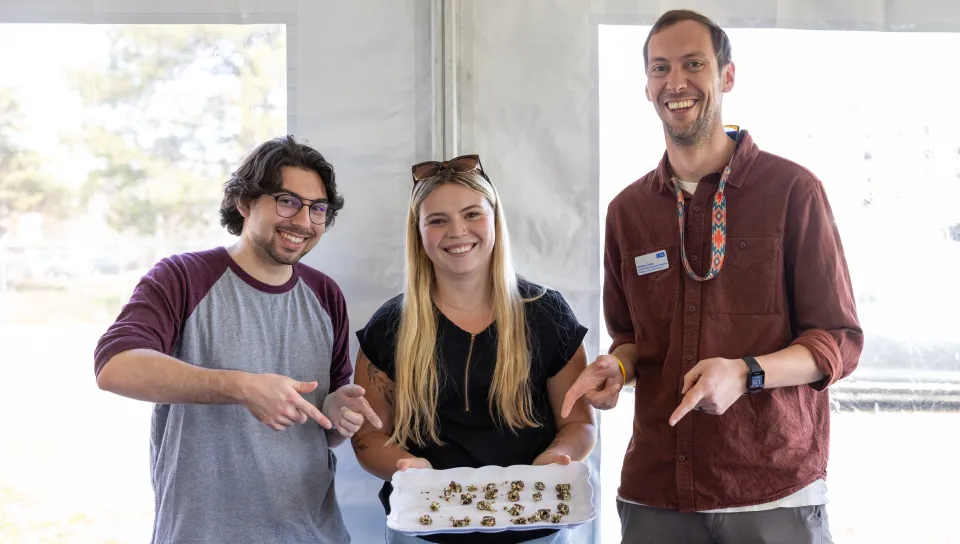
One by one, the ingredients are measured and mixed inside a commercial-grade kitchen, forming the basis of a snack bar under development at the University of New England.
Then comes the ingredient that ties everything together: kelp — and lots of it.
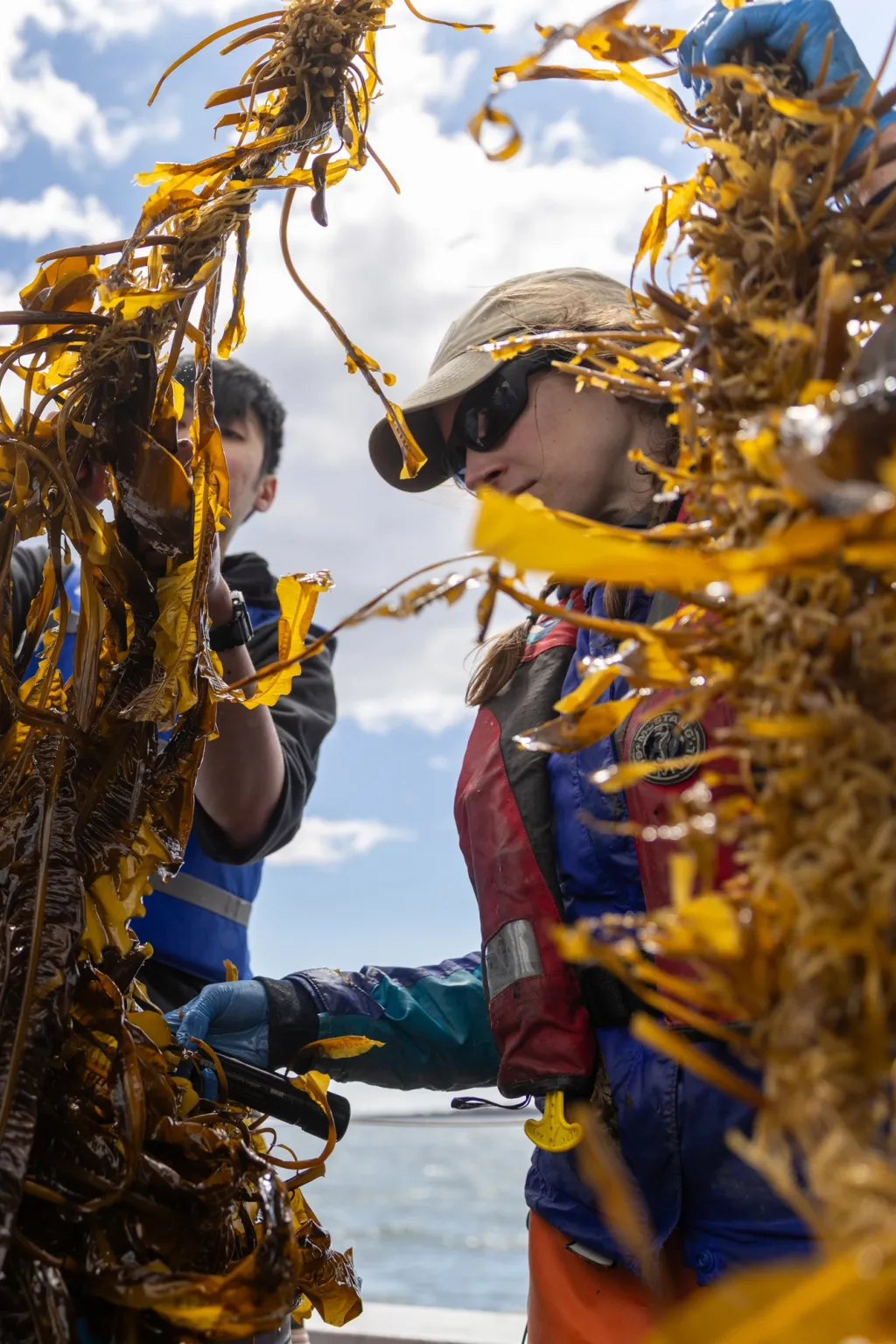
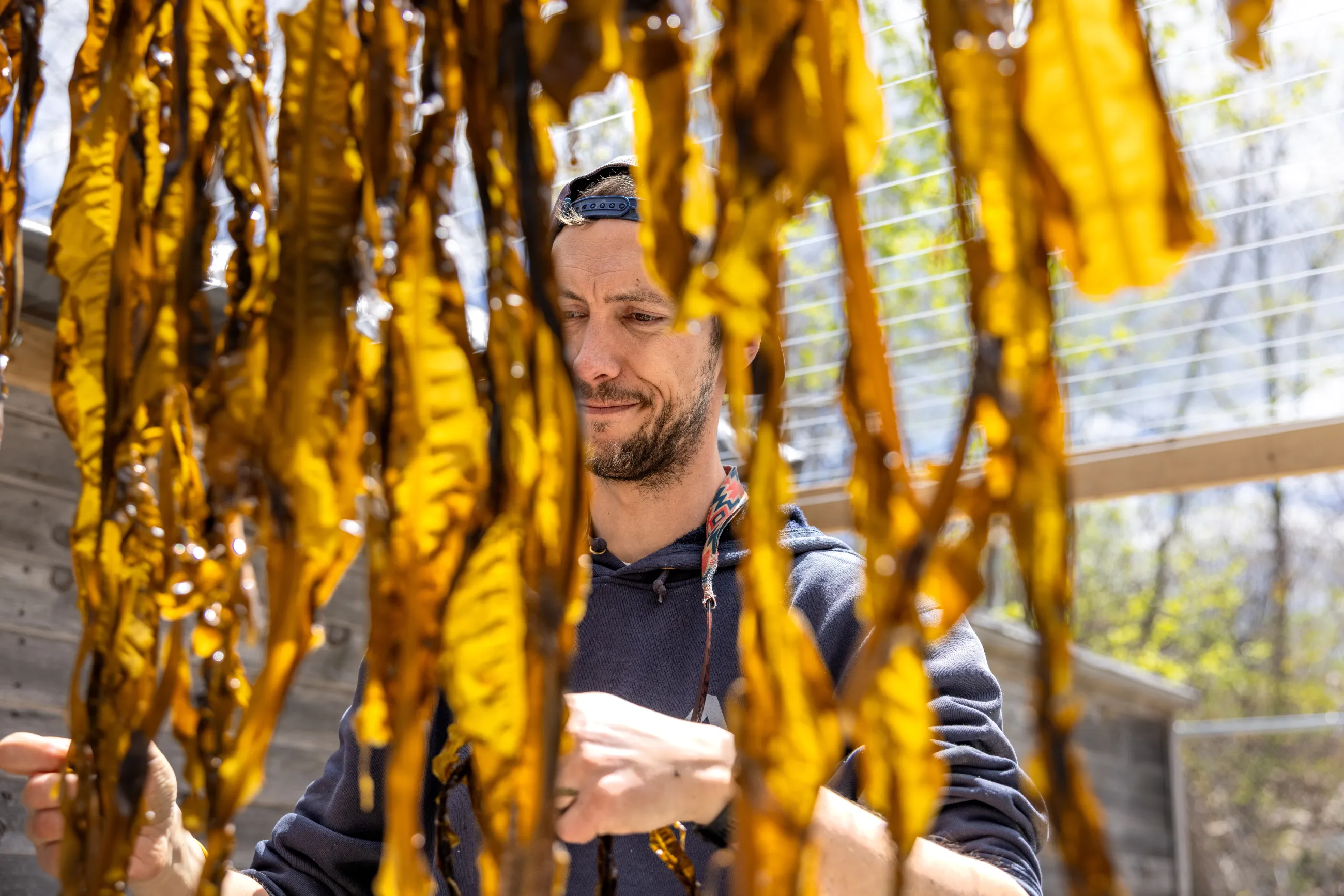
Ground into a fine green powder, the kelp looked very different just weeks earlier, when nearly 1,000 pounds of the thick, floppy ribbons of two varieties — sugar and winged kelp — were plucked from the cold waters of Saco Bay, where the University maintains its own kelp farm.
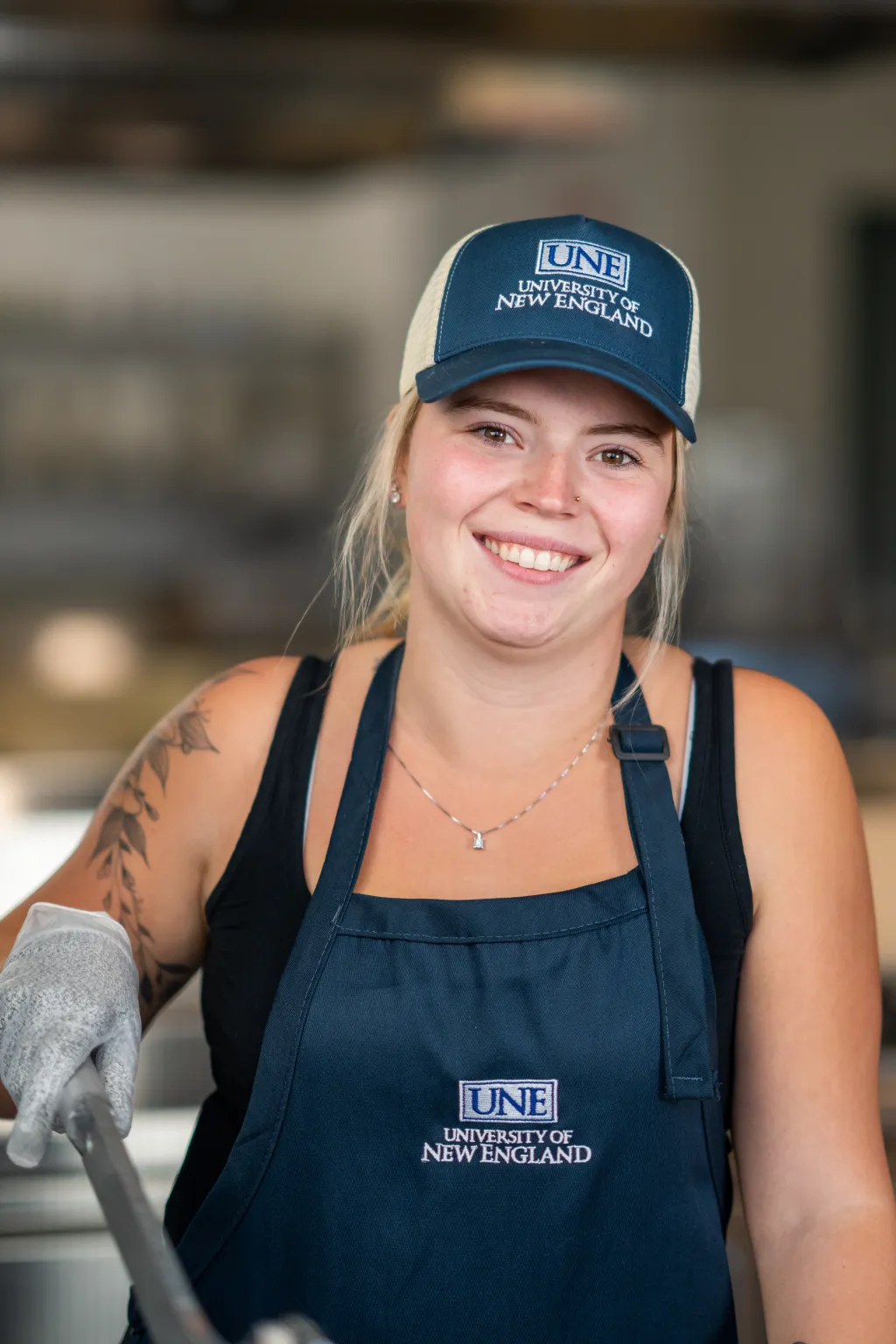
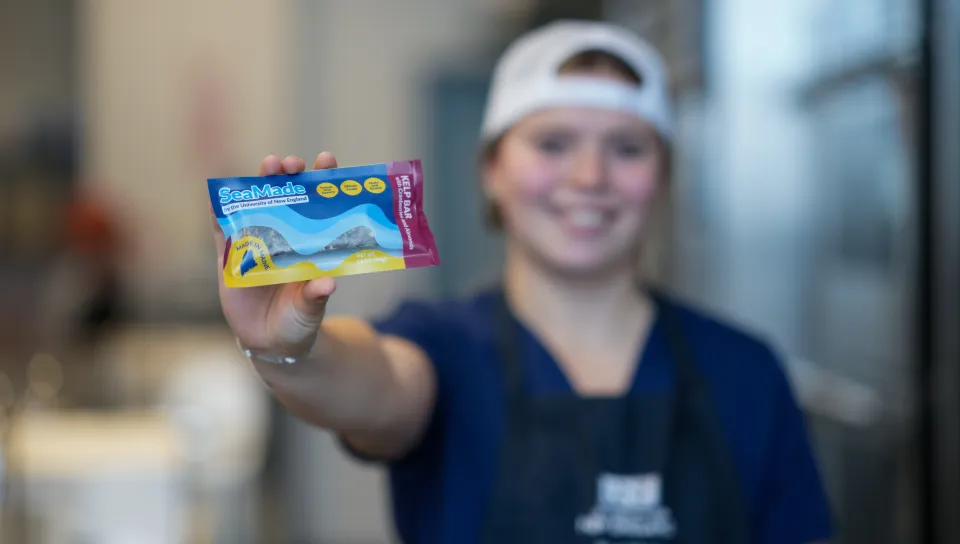
Once pressed into molds and sliced into neat rectangles, the ingredients comprise more than a snack. They are SeaMade, a student-led enterprise rooted in Maine’s emerging blue economy, built around the sustainable use of ocean resources and one of the University’s most ambitious experiments in experiential learning to date.
For Jayden Schoppee (’27), however, the bars themselves are only part of the overall recipe.
A nutrition major and athletic training master’s student, Schoppee has spent the past two years helping lead SeaMade, overseeing everything from production and marketing to budgeting and long-term planning. On some days, that means helping prepare bars in the UNE Teaching Kitchen, a part of the bustling innovation ecosystem on the lower level of Decary Hall.
On others, it means meeting with faculty mentors, coordinating student teams, speaking with community partners, spreading the word on podcasts, or thinking about where the business should go next.
“It’s a lot of emails,” she said with a laugh.
When Schoppee joined the project’s inaugural student cohort, she expected a traditional classroom experience. But instead, she was handed responsibility, a distinction that has become one of SeaMade’s defining characteristics.
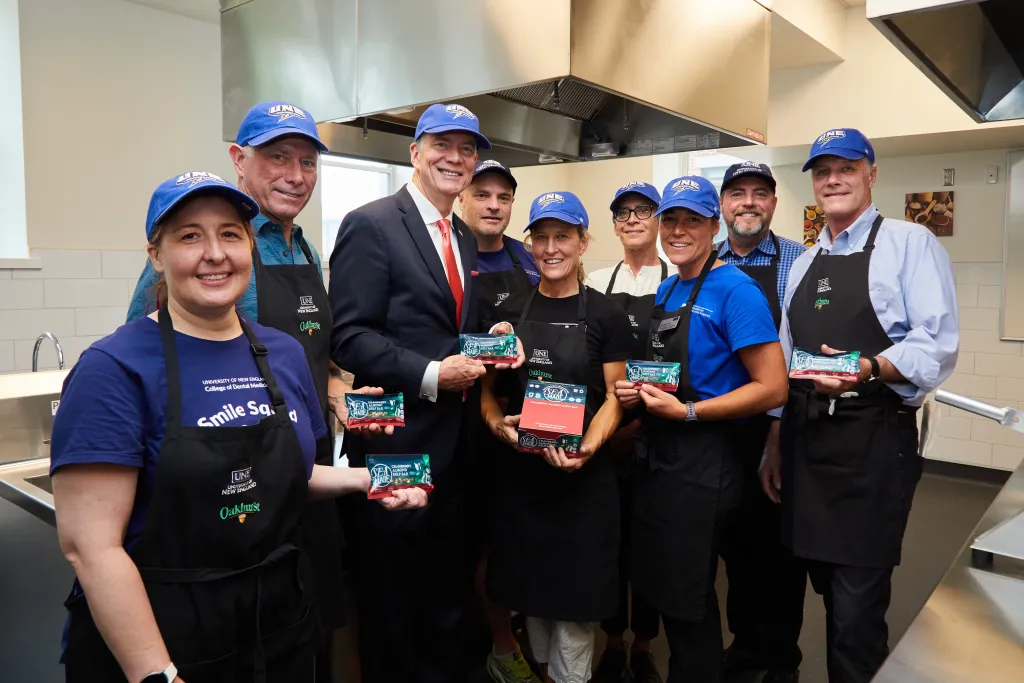
UNE leaders gather with SeaMade founders on Aug. 21, 2024, to share in the first production of the bars at the University.
An Unusual Gift
SeaMade arrived at UNE in 2024, when founders Tara Treichel and Mark Dvorozniak donated their seaweed nutrition bar company to the University. At first glance, the gift appeared straightforward: a sustainable snack made from Maine-grown kelp.
For Schoppee, SeaMade wasn’t about producing a snack bar. It became a way to introduce people to kelp as a nutritious food source while highlighting Maine’s blue economy.
“There really isn’t anything else like it,” Schoppee said. “People don’t realize how nutritious kelp is or how many possibilities there are.”
The project also reshaped her own perspective. Growing up as a competitive athlete, Schoppee always knew she wanted a career helping others improve their health and performance. She enrolled at UNE through the University’s accelerated athletic training program before adding nutrition as a second major.
Leading a business was never part of the plan, she said, yet SeaMade unexpectedly connected those interests.
“I’ve spent my whole life eating granola bars and energy bars,” she said. “When I saw there was a kelp bar business at UNE, I wanted to know what went into making something like that.”
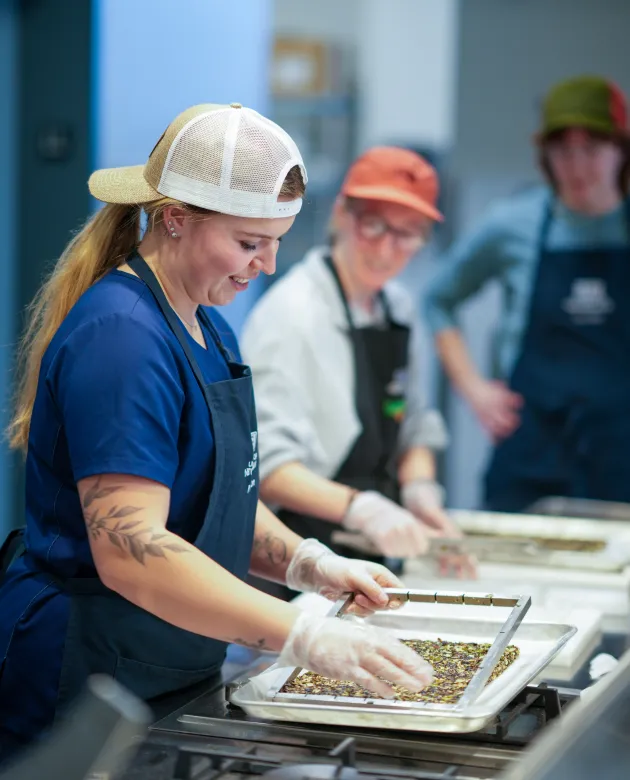
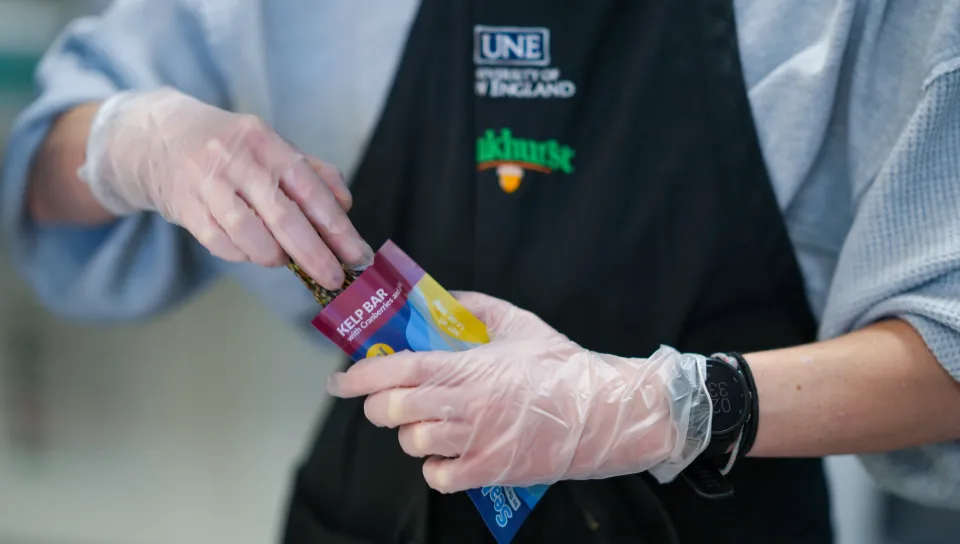
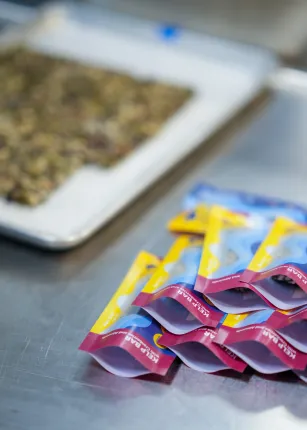
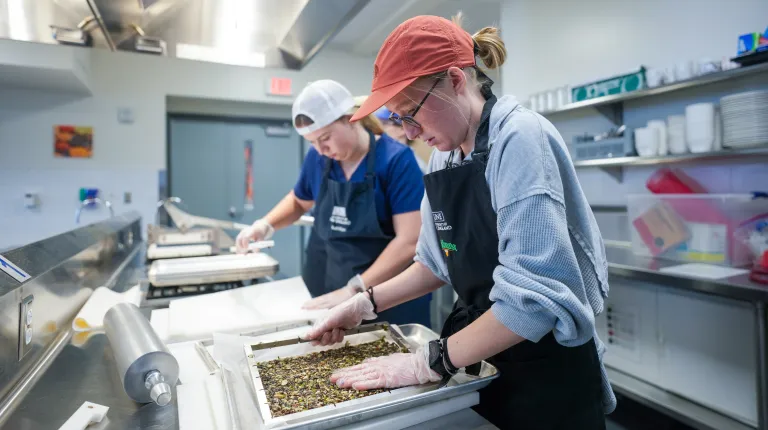
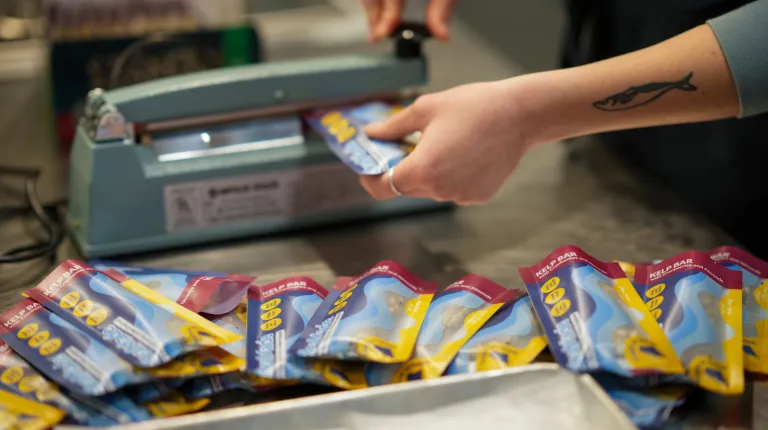
Today, her responsibilities extend far beyond assembly. As student CEO, Schoppee coordinates students across production, sourcing, finance, marketing, and sales, while working with faculty mentors and community partners to set priorities for the business.
The role has required new skills, chief among them communication, Schoppee said, as SeaMade has evolved from an in-house project into something with real customers, community partners, and long-term ambitions.
“So many opportunities have come out of this that I never would’ve expected,” Schoppee said. “I’ve gotten to meet professionals from all different backgrounds and learn from people I never would’ve crossed paths with otherwise.”
Perhaps the biggest lesson has been learning to embrace uncertainty. Running a business, even one supported by a university, rarely follows a straight line.
“Not everything goes perfectly or according to plan,” Schoppee said. “You have to be adaptable. If you don’t expect to fail at some point, that’s not realistic. If you succeed the first time, there are things you would’ve never learned.”
A Supportive Space for Success to Sprout
Viewing setbacks as opportunities, not failures, has become one of the most valuable lessons Schoppee expects to carry into her career.
It’s exactly the transformation UNE hoped SeaMade would inspire when it launched the project as a part of the Shaw Innovation Fellowship program, overseen by the UNE Center for Innovation and Entrepreneurship, said the center’s director, Lisa Herschbach, Ph.D.
Since its inception, SeaMade has united over a dozen students from across disciplines to tackle the challenges of running a business through collaborative, project-based learning. Rather than assigning students hypothetical classroom exercises, the project invites fellows to step into a venture that already exists, where success depends on curiosity, teamwork, and a willingness to adapt.
“Students are applying what they’re learning in the classroom,” Herschbach said. “They’re learning how to do customer discovery, understand the market, collaborate effectively, and connect with an audience. Those aren’t things you can fully replicate in a traditional classroom.”
Unlike most coursework, there are no grades attached to SeaMade. That freedom is intentional, Herschbach said, offering students the sanctuary to test ideas, challenge assumptions, and learn by trial and error. Failure isn’t necessarily a goal, but Herschbach said some of the most effective learning often occurs when outcomes aren’t predetermined.
“The entrepreneurial habit of mind is really about being willing to take calculated risks,” she said. “Even if your hypothesis proves wrong, you’re still learning through trying.”
Running a business centered on seaweed demanded expertise from across the University, said Cameron Wake, Ph.D., director of UNE North, the University’s center for North Atlantic studies.
“When you think about running a business that’s based on nature’s products, you have to integrate a range of different disciplines,” Wake said. “We’re focused on the bar and then asking what disciplines we need to bring together to successfully source, manufacture, market, and sell it.”
Just as importantly, students aren’t learning in isolation. They are working across disciplines and academic majors to address all aspects of running a business, from conception to creation to consumer.
Nutrition majors collaborate with marine scientists. Business students work alongside sustainability scholars. Faculty become mentors rather than lecturers, while industry professionals provide guidance grounded in experience. Every conversation introduces another perspective, another discipline, and another way of approaching a problem.
That environment, Herschbach said, helps students begin developing something that extends beyond technical knowledge: “A professional identity.”
Rather than waiting until graduation to think about careers, students begin building them while still on campus, learning how to contribute, communicate, and lead along the way.
“It’s real life,” Herschbach said. “They’re dealing with the same kinds of decisions entrepreneurs face every day.”
From Sea to Store Shelves
Each spring, students travel to UNE’s sea farm just northeast of Ram Island, where the kelp that eventually becomes SeaMade bars has spent the winter months growing beneath the surface. Harvest day offers a glimpse into another side of the project, one defined less by recipes than by teamwork, adaptability, and the realities of working on Maine’s capricious coast.
Matt Duddy, M.S., kelp farm manager in the UNE School of Marine and Environmental Programs, shared that the experience exposes students to far more than aquaculture.
“They’re learning flexibility,” Duddy said. “They’re learning coordination. They’re learning communication.”
Weather changes. Equipment breaks. Plans shift. Even the 2026 harvest itself was delayed three times by inclement weather.
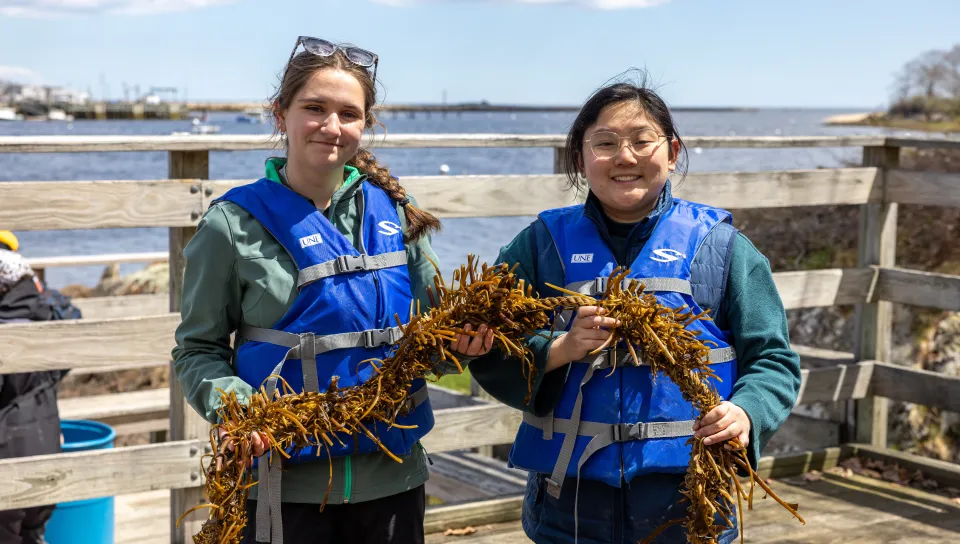
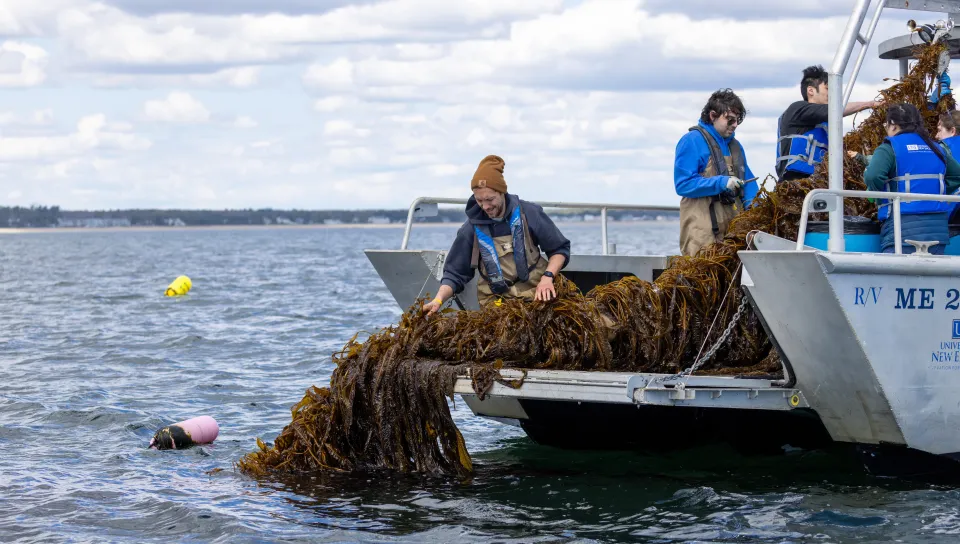
On the water, students solve problems while coordinating with researchers, vessel crews, faculty, and one another. They experience every stage of the process, from cultivating kelp, hauling it aboard a research vessel, and hanging it to dry to seeing it transformed into a finished product back on campus.
“It’s a good synthesis of coordination and hands-on experience,” Duddy said.
Brian Will, B.S. ’23 (M.S. Marine Sciences, ’28), credits experiences like the kelp harvest with helping bridge the gap between student and working professional.
“Hands-on field experiences taught me how unpredictable work can be,” Will said. “Working in the field meant adapting to changing conditions, solving problems in real time, and learning to think on my feet.”
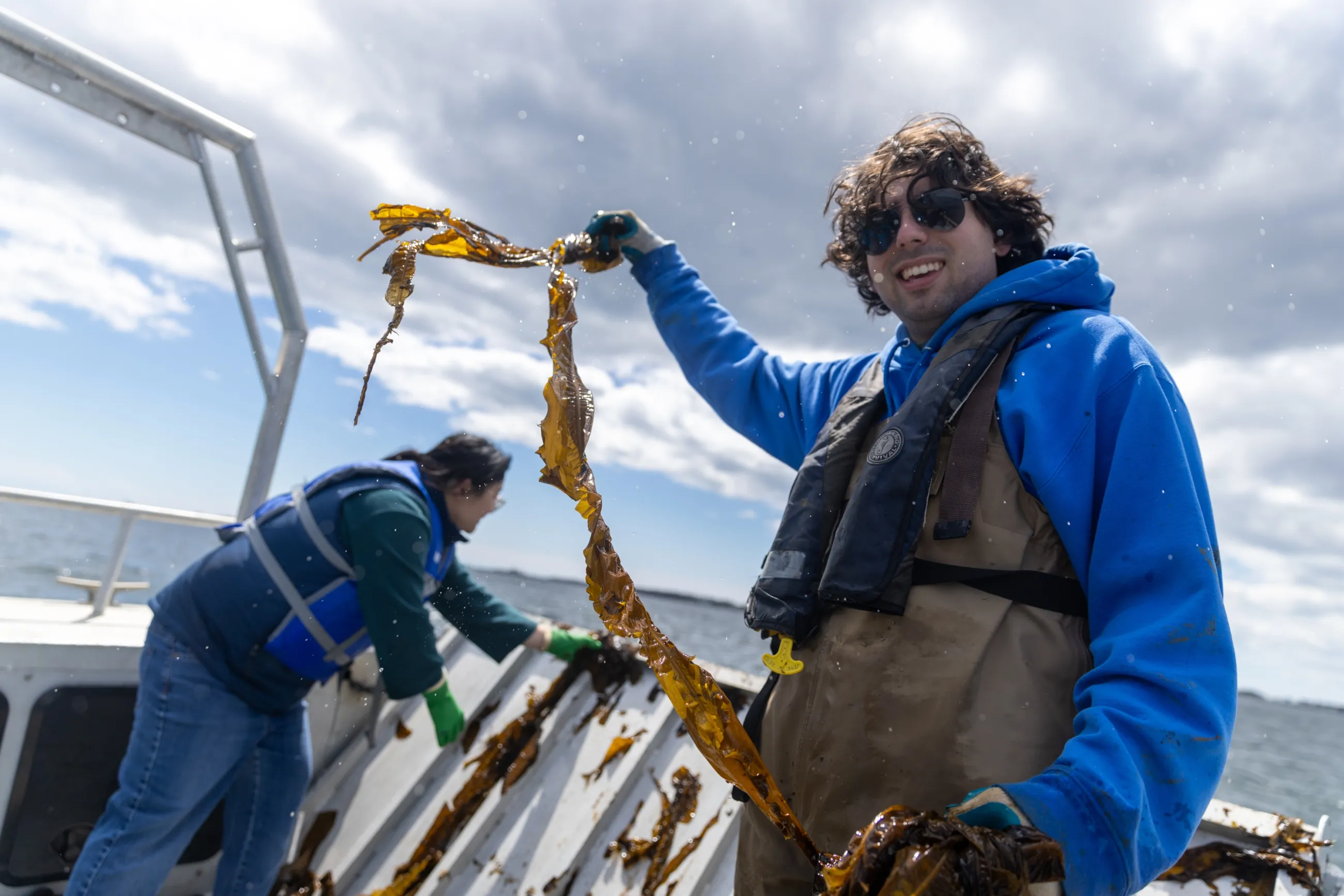
He said experiences like kelp harvesting gave him “practical skills and confidence that simply can’t be developed in a classroom alone.”
That idea resonates throughout SeaMade, which aims not to teach students every answer before graduation but to help them ask the right questions and then seek solutions.
That distinction matters, Wake said, because conversations about today’s students often focus on what they lack rather than what they can accomplish.
SeaMade tells a different story, he said.
“There’s a misconception about today’s young people, and, being here at UNE, I just don’t buy into that,” Wake said. “Sure, we still have some research to do, but SeaMade is living proof that, when given the opportunity and the structure, our young people are extremely capable and can do incredible things.”
In the end, that may be SeaMade’s most important ingredient — not the honey, the oats, or even the kelp, but the recipe itself.
And for Schoppee, the proof is in the package.
“I never thought I’d be the CEO of a business,” she said. “But UNE has helped me realize I’m capable of a lot more than I thought.”