
UNE students turn reproductive health training into public resource for Portland
Created by students in UNE’s Reproductive Health Leadership Program, the “Period Pantry” at the Equality Community Center in Portland offers free menstrual products and will be showcased at Maine’s largest public health gathering
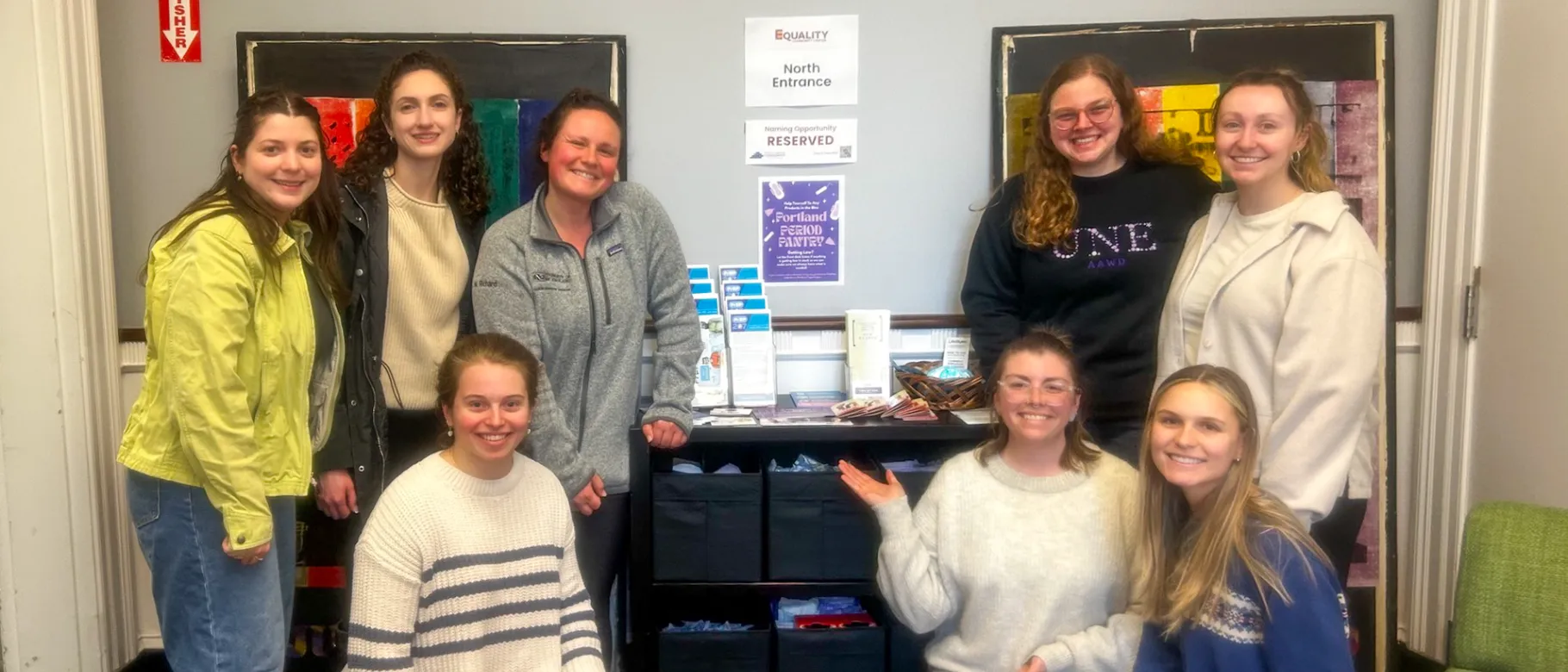
A publicly accessible pantry stocked with free menstrual products is helping people in Maine’s largest city meet an essential health need with fewer barriers, thanks to a team of University of New England students who turned an idea into a lasting community resource.
The “Period Pantry,” located inside the Equality Community Center in downtown Portland, was developed by members of UNE’s 2025 Reproductive Health Leadership Program cohort. On Oct. 1, members of the team will present the project at the Maine Public Health Association’s annual conference in Augusta, sharing how students from several health professions worked with community organizations to create, supply, and sustain the resource.
The yearlong RHLP micro-credential, supplements students’ professional education with training in reproductive health, patient-centered care, and the social factors that shape health and access to care. Offered through UNE’s Office of Service Learning in collaboration with state public health leaders, the extracurricular program brings students together across disciplines for interactive seminars and a student-led service-learning project.
The 2025 cohort included students in UNE’s dental medicine, osteopathic medicine, dental hygiene, nursing, occupational therapy, pharmacy, physical therapy, and physician assistant programs. For Kristi Scamurra (’29), a student in UNE’s College of Dental Medicine, that mix was central to the experience.
“I really liked the fact that it was interprofessional,” Scamurra said. We came together, as students across the various healthcare disciplines, to work on these same issues."
The idea for the Period Pantry came from Suzanne “Sumo” Morgan (D.P.T., ’27), who had seen similar resources take hold while living in Asheville, North Carolina. When RHLP participants learned they could design their own service-learning project, Morgan proposed bringing the concept to Portland and recruited a team of about 10 students from four academic programs.
The work began in fall 2025 and required more planning than the students first expected. They explored possible locations, navigated logistical requirements, identified sources for donations, and considered how the pantry would continue after the cohort completed the program. The Equality Community Center emerged as a natural home because it is centrally located, open to the public, and serves Maine’s LGBTQIA+ communities.
Morgan said the team wanted to offer a discreet, welcoming option for anyone who needs period products, including people experiencing housing instability and transgender or gender-nonconforming people who may feel uncomfortable seeking the products in other settings.
“It was really a push for something more discreet, where somebody could just go in and not have to explain why or feel like they need to spend money in order to get their needs met,” Morgan said.
The pantry opened in May. Donation bins at the Kindling Collective, EVO Rock + Fitness, and the Portland Yoga Project now help keep it supplied, and the UNE chapter of the American Association of Women Dentists has taken responsibility for collecting donated products and delivering them to the pantry as needed, creating a structure designed to outlast the original student project.
That continuity mattered to the team. Scamurra said another UNE student has already expressed interest in creating a second Period Pantry in Portland, a sign that the project may spur the wider network its founders envisioned.
“It starts with just one pantry,” Scamurra said. “Our hope for the future is that it continues.”
The two students will share that process through a poster presentation at the MPHA conference, whose 2026 theme is “Nourish to Flourish: Cultivating Healthy Communities for Today and the Future.” The conference, held at the Augusta Civic Center, is the largest annual gathering of public health professionals in Maine.
The presentation also reflects UNE’s growing connection to Maine’s public health workforce. UNE, through the David Evans Shaw Institute of Public and Planetary Health, is MPHA’s primary academic partner and largest academic member. The partnership creates additional opportunities for UNE students, faculty, and professional staff to develop skills, connect with mentors, and work across disciplines on complex health challenges.
Morgan said they did not imagine at the project’s outset that it would reach a statewide audience. Now, they hope sharing it with public health practitioners will encourage others to adapt the model in their own communities.
“I have hopes that it will inspire others to implement these kinds of things in their community,” Morgan said. “Maybe it will help the one that we have here in Portland grow even bigger and get more hands on deck, because it is an ongoing project.”
As Maine’s top provider of health professionals, UNE prepares students to understand not only clinical practice but also the people and communities they will serve. The RHLP gives future providers a place to learn from other professions, listen for unmet needs, and build practical responses, advancing UNE’s mission to improve the health of people, communities, and the natural world.
For Scamurra, that experience is inseparable from becoming a more effective health professional.
“I genuinely think the people who make the best providers are the ones who can make their patients feel the most comfortable,” she said. “You’re going to get better care when you feel like you can have an open, honest, and comfortable conversation with your provider. This is a way for us, as future health care professionals, to learn how to do that.”
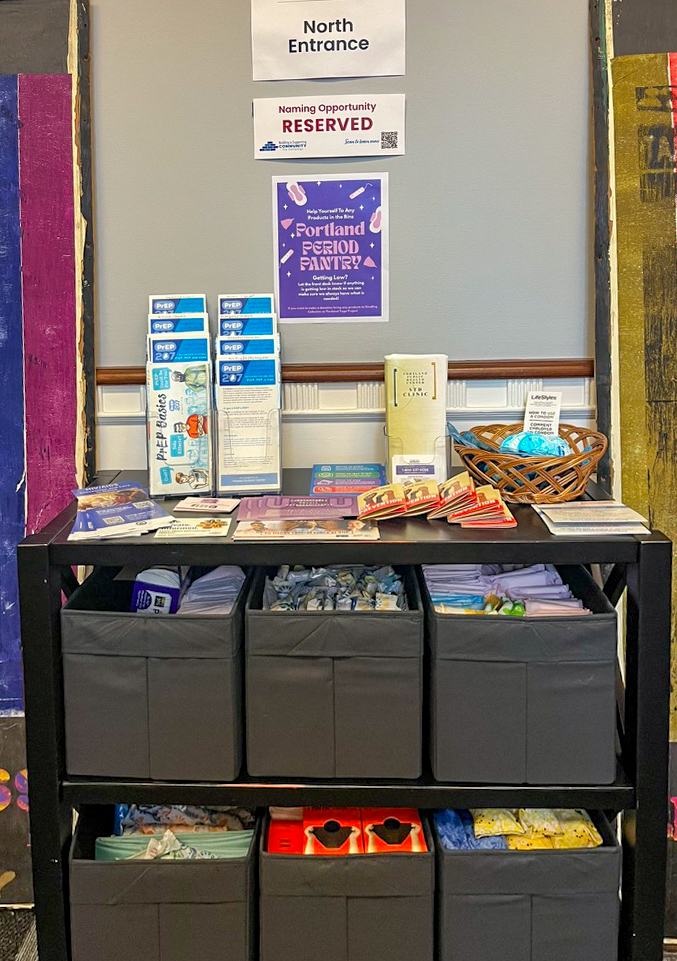
The pantry is located in Portland’s Equality Community Center
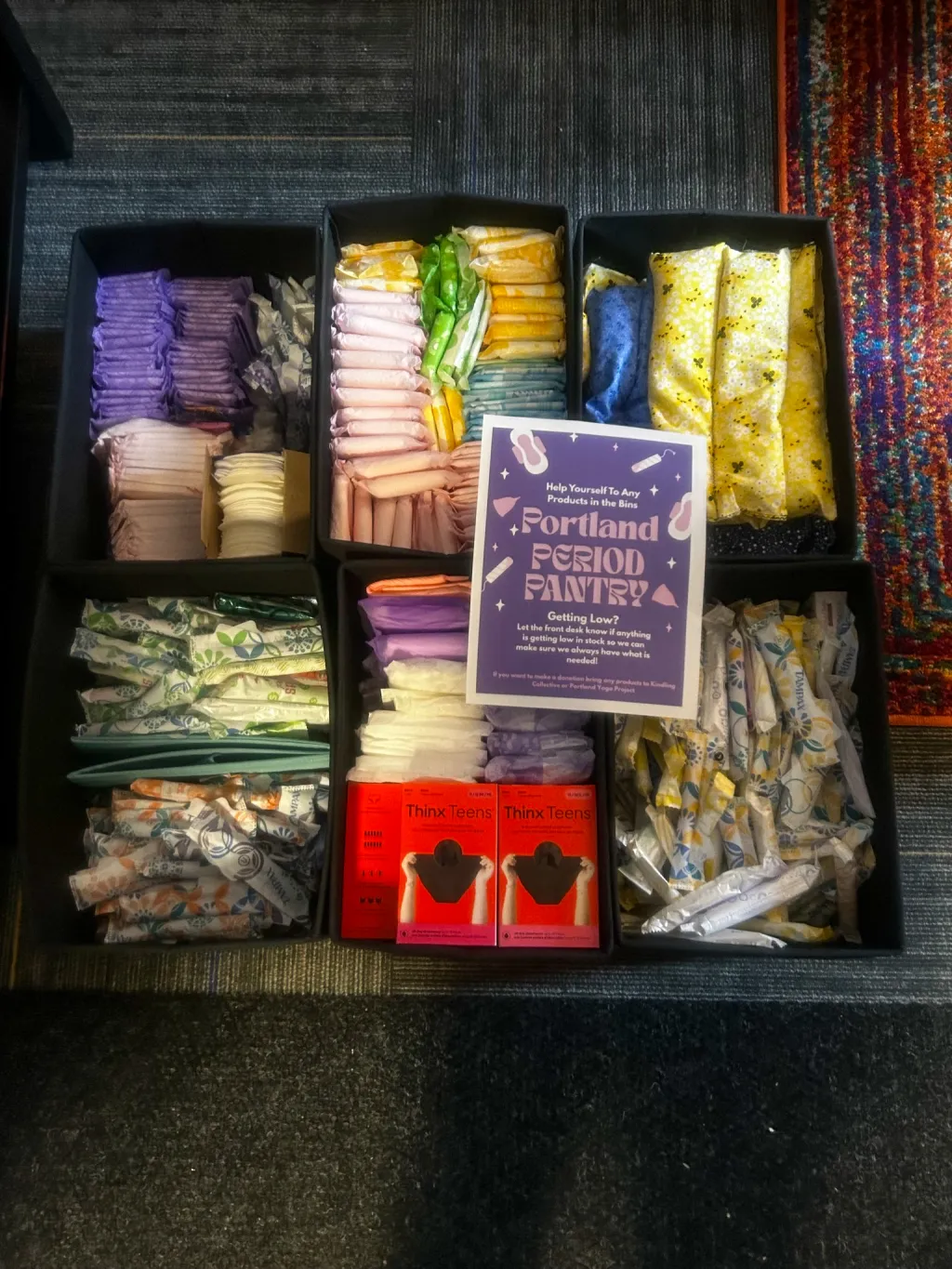
The pantry is open to the public and serves Maine’s LGBTQIA+ communities