
Image

This website uses cookies to understand how you use the website and to improve your experience. By continuing to use the website, you accept the University of New England’s use of cookies and similar technologies. To learn more about our use of cookies and how to manage your browser cookie settings, please review our Privacy Notice.
Interprofessional settings and strategies are allowing occupational therapy students at the University of New England to gain deeper insight into how everyday activities, including eating and meal preparation, can become complex clinical interventions when health conditions affect a person’s ability to swallow safely.
As part of a hands-on learning experience within UNE’s Master of Science in Occupational Therapy (M.S.O.T.) program, students recently worked with blended foods designed for individuals with dysphagia, a condition characterized by difficulty swallowing. The exercise introduced students to food-based therapeutic strategies that occupational therapists may use to support safety, independence, and quality of life across a wide range of ages and care settings.
The experience took place in UNE’s Teaching Kitchen on the Biddeford Campus, where students prepared modified proteins, vegetables, and thickened liquids using techniques commonly employed in clinical and home environments. The kitchen’s design allowed all students to participate simultaneously, observe one another’s approaches, and learn together in real time.
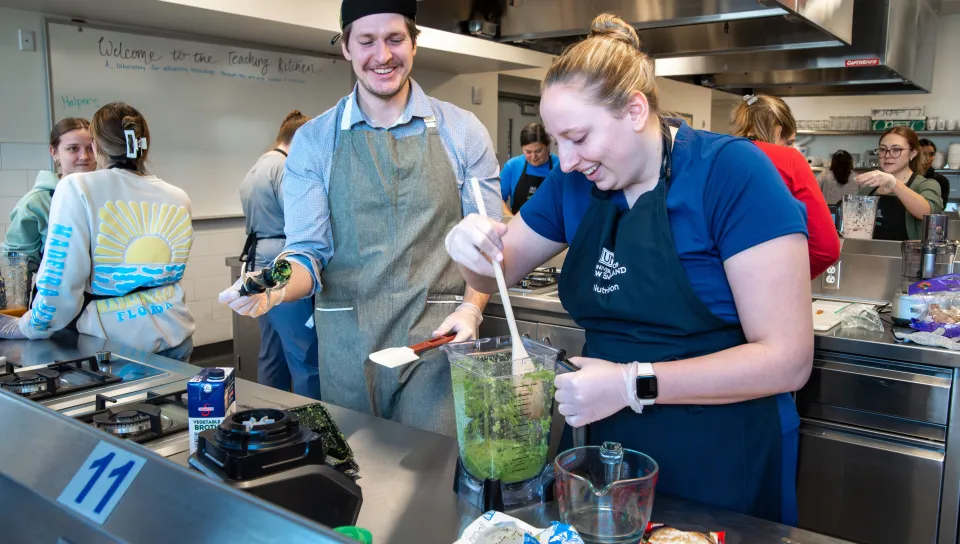
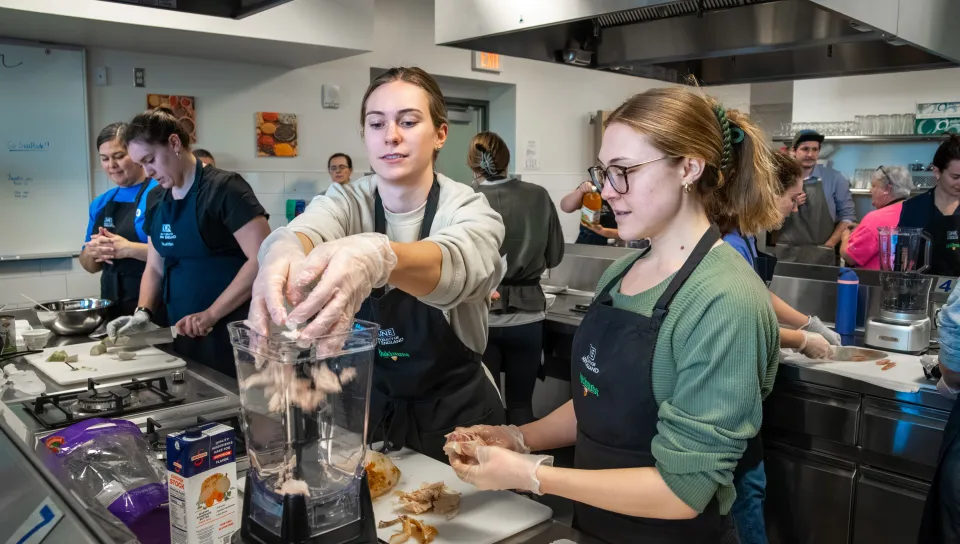
(Left): OT students examine a mixture of blended broccoli as part of a team exercise on preparing foods for patients with dysphagia, or difficulty swallowing. (Right): Brooklyn Braswell, at right, and Erin Libby prepare a roast chicken for processing.
“I enjoyed working in the kitchen because it gave me a better understanding of how foods are prepared for individuals with specific dietary needs,” said Brooklyn Braswell ’27, of Colorado Springs, Colorado. “Having this hands-on experience allowed me to better understand their texture, taste, and the overall experience of preparing the foods.”
Dysphagia affects individuals across the lifespan and can result from neurological conditions such as stroke, Parkinson’s disease, multiple sclerosis, and cerebral palsy, as well as developmental disabilities including Down syndrome. It is also common among people recovering from surgery or radiation treatment, and those with structural or medical conditions that limit endurance, muscle tone, or safe swallowing.
Addressing feeding and swallowing challenges is a component of occupational therapy practice, particularly as it relates to patient safety and supporting nutrition and daily routines, said Kris Winston, Ph.D., OTR/L, FAOTA, associate professor in UNE’s M.S.O.T. program.
“This experience asks our OT students to think clinically about food — how it’s prepared, presented, and adapted — and how those decisions directly affect a person’s safety, dignity, and participation in daily life,” Winston said. “Occupational therapy students are already learning through doing. This experience adds another layer to that.”
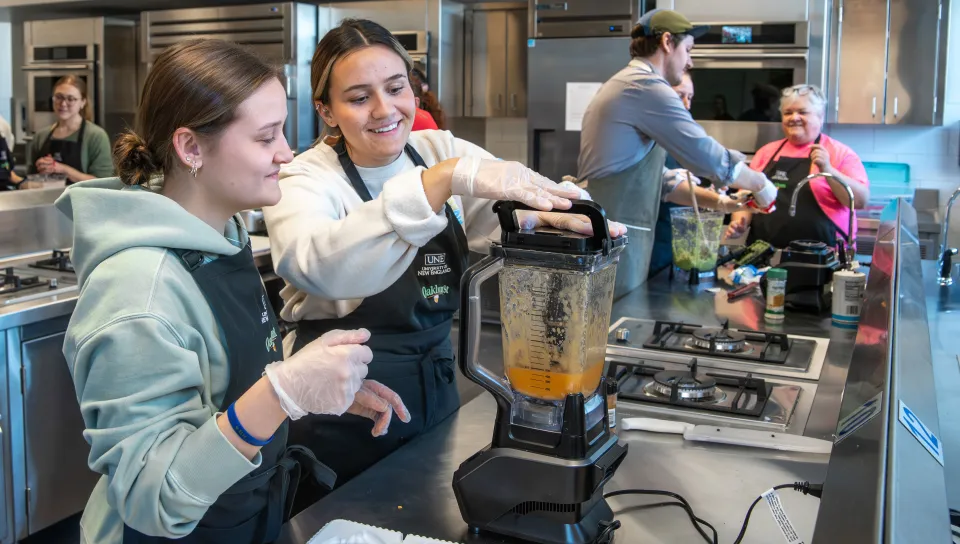
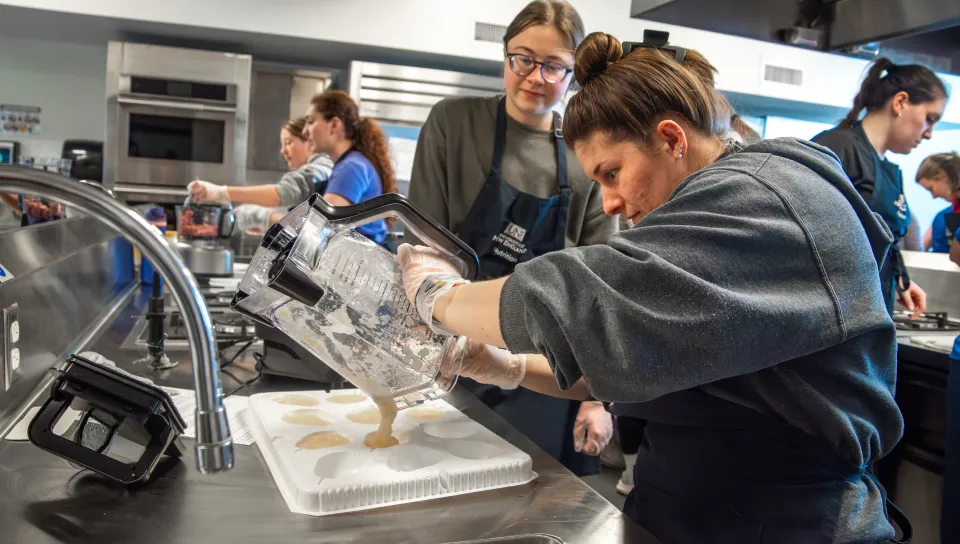
(Left): Students prepare blended peaches, while another group (right) pours a mixture of pears blended with a setting agent into pear-shaped molds to mimic the texture of whole fruit.
During the session, supported by faculty from UNE’s nutrition program, students explored both traditional and emerging approaches to dysphagia diets, including the use of commercial thickeners and technologies that allow pureed foods to retain the visual appearance of their original form.
These techniques are increasingly used to improve the mealtime experience for individuals who rely on texture-modified diets.
The exercise also highlighted UNE’s emphasis on interprofessional and intercampus learning. For occupational therapy students based at UNE’s Portland Campus for the Health Sciences, the experience offered an opportunity to use expanded facilities in Biddeford that support experiential education across all of the University’s programs.
The UNE Teaching Kitchen is part of a growing innovation hub that also includes the Communications Production Studio and multitude of Makerspace resources, showcasing the benefit of such facilities across all of UNE’s academic colleges.
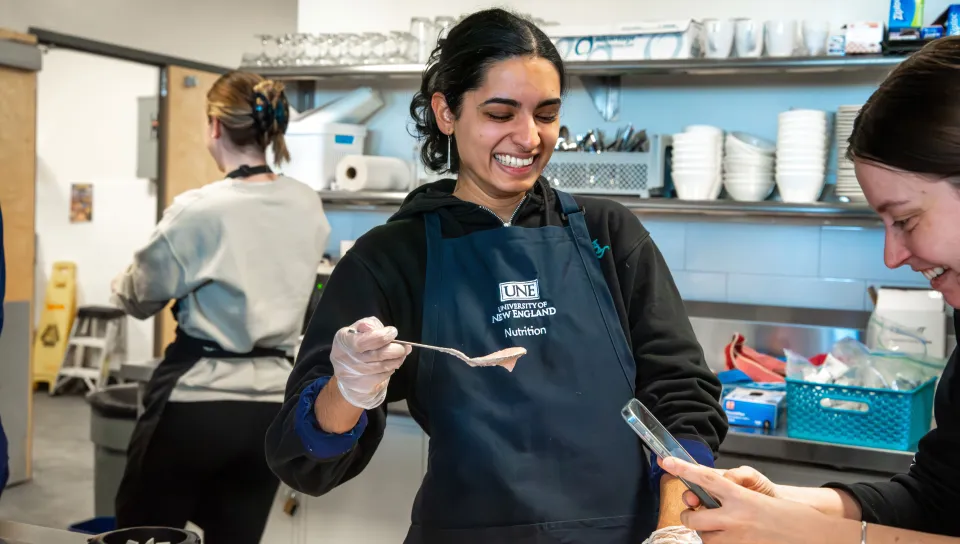
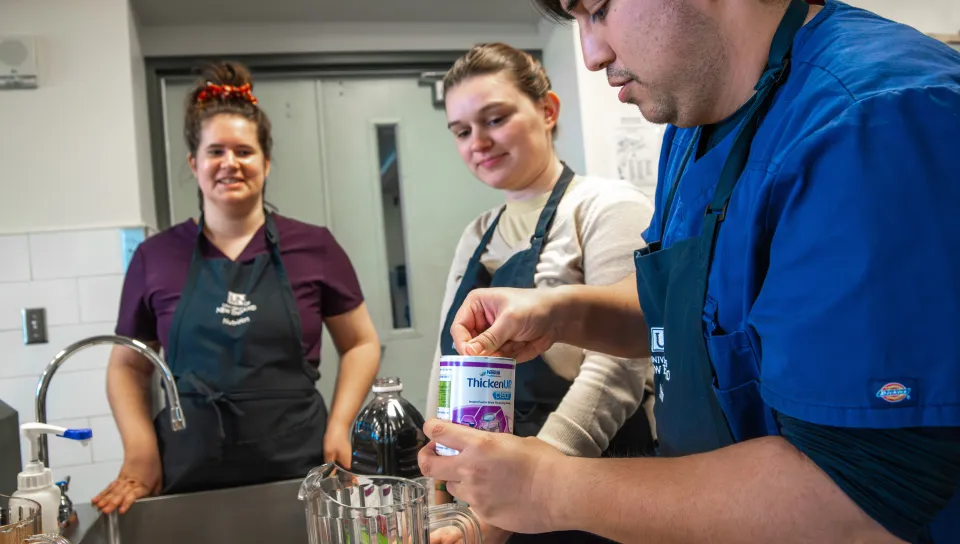
(Left): A student takes a photo with a mixture of blended ham prepared as part of the lesson. (Right): Students add a commercial thickener to a blended mixture to improve texture.
Occupational therapy faculty plan to incorporate similar food-based learning experiences into future coursework, Winston said, including pediatrics-focused classes, reflecting the broad relevance of feeding and swallowing interventions in occupational therapy practice.
Braswell said the experience will inform her practice as an occupational therapist in whichever setting she chooses to work after she graduates next year. And, beyond the blenders and their contents, she said that the most significant takeaway from the day was the importance of empathy.
“I have a better understanding of how various severities of dysphagia require different textures. As a future OT, this will help me to know how a client's food should be prepared based on their challenges with swallowing,” Braswell said. “This will allow me to provide more empathetic and client-centered care.”